The Giant Thai Rodent Left Two Teeth, So Scientists Brought Seven Methods
Scientists estimate Yakamys sirindhornae, known from two teeth found at a Krabi, Thailand, mine, weighed about 66 pounds, twice other rodents of its era.

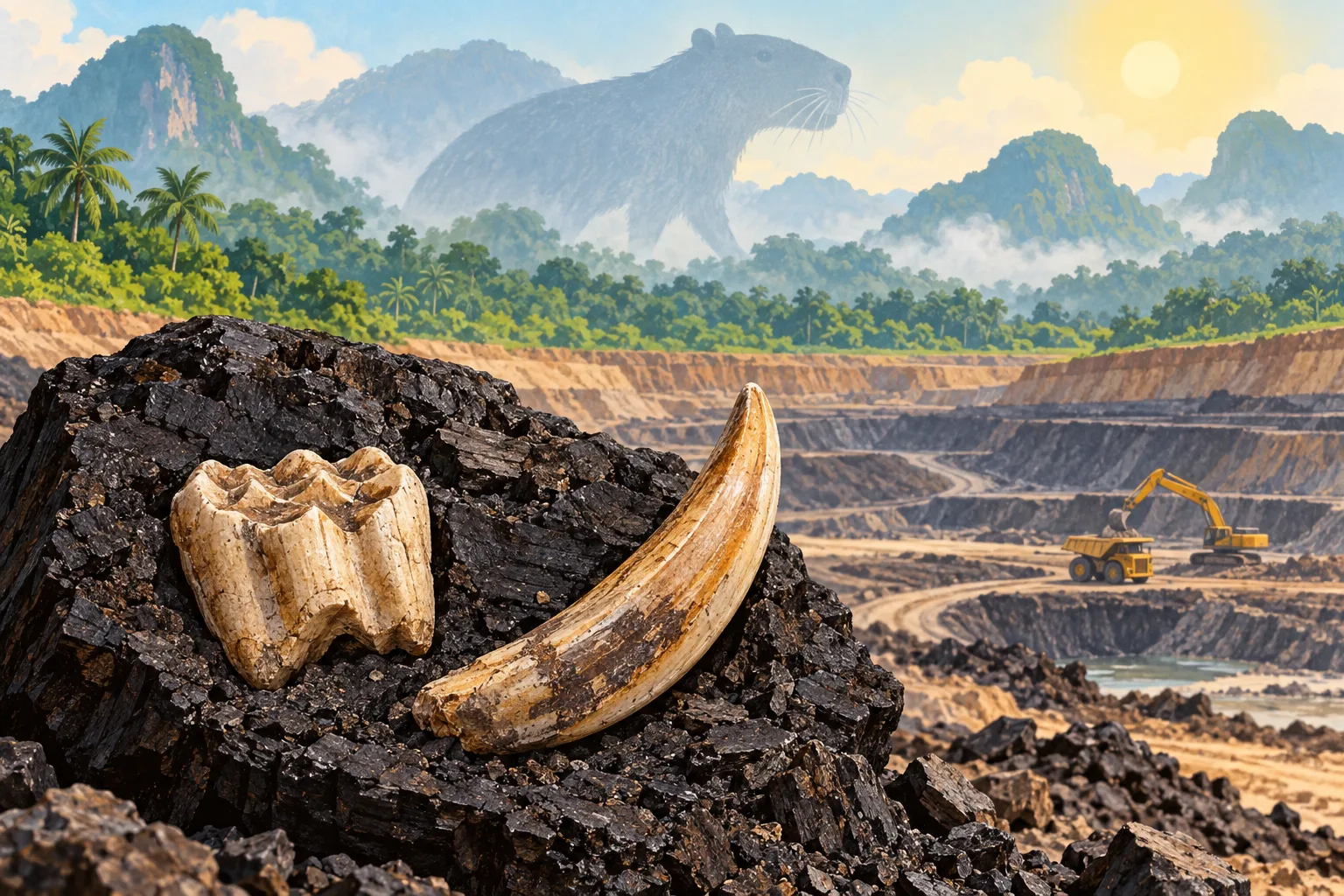
Scientists from Thailand, France and Canada have named a new giant rodent, Yakamys sirindhornae, from two fossil teeth found at the Bang Mark lignite mine in Krabi Province, southern Thailand. In a study published Nov. 4 in Scientific Reports, the team describes an animal that lived about 34 million years ago and may have weighed roughly 30 kilograms (about 66 pounds). That is about twice the size of other known rodents of its time.12
For scale, AFP reported that the animal weighed about half as much as a large capybara, the biggest rodent alive today.6 That is a lot of rodent to read from two teeth, and the researchers are the first to say so.
A big estimate from a small pile of evidence
The fossils are a lower second molar and a lower incisor (a front gnawing tooth).2 The incisor is tied to the same animal only by its size and by being found in the same place.7
To get a weight, the team ran the tooth measurements through seven established estimation methods. They landed on about 30 kilograms, roughly double the weight of contemporaries such as Hulgana.2 Co-author Virginie Millien, a biology professor at McGill University, was careful about that number in the university’s announcement.
“This is only a ballpark figure, as there is substantial uncertainty associated with fossil body-mass estimation.”
The age is a little fuzzy too. McGill puts it at about 34 million years ago, in the late Eocene. AFP and Thailand’s environment ministry say 33 to 35 million years.234 What the animal looked like, what it ate and how it lived are all unknown, and more fossils are needed to fill in the picture.23
Why a big rodent this early is interesting
Yakamys belongs to the ischyromyids, an early group of rodents. The paper says it had a substantially greater body mass than any previously described ischyromyid from the Paleogene, the stretch of prehistory that followed the dinosaurs.1
Giant rodents are not unheard of, but they tend to show up later and elsewhere. “Giant rodents evolved repeatedly during the later history of the group, mostly in South America,” Millien said in McGill’s release.2
Rodent gigantism is usually explained by island life, where animals living in isolation are freed from some of the pressures that keep them small. The authors argue that explanation does not readily fit this Thai giant.1
Thailand’s Natural Resources and Environment Minister, Suchart Chomklin, went further when announcing the find. He called it the largest known Paleogene rodent and said it shows rodents evolved large body sizes 15 to 20 million years earlier than previously understood.45 That is an interpretation resting on two teeth and a ballpark weight, so it is a strong hint for now, not a settled rewrite of rodent history.
A tooth that waited two decades
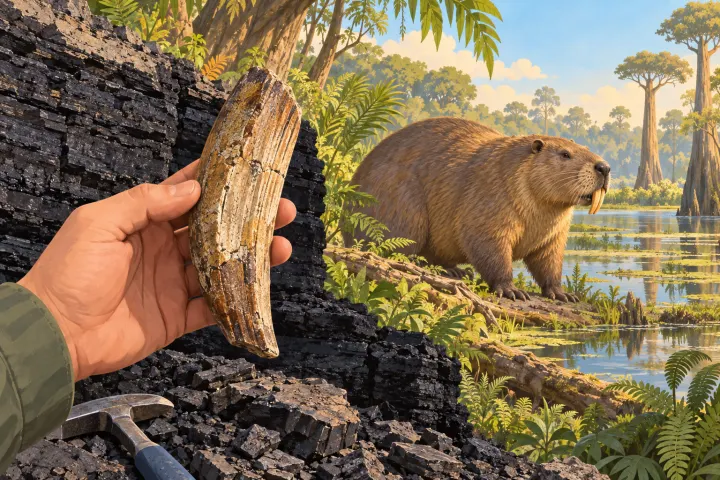
One of the teeth was found more than 20 years ago by Thai researcher Pannipa Tian. Her supervisor told her it was a giant rat’s tooth.36 The detailed analysis came only recently, and it has largely agreed with him, with some Greek added.
The genus name pairs the Thai word “yak,” meaning giant, with the Greek “mys,” meaning mouse or rat.2 The species name honors Princess Maha Chakri Sirindhorn. It is the fifth fossil named for her.4
“The species name, sirindhornae, honors Princess Maha Chakri Sirindhorn, in recognition of her longstanding support for science and paleontological research in Thailand,” Millien said in the McGill release.2
The team includes scientists from McGill, Thailand’s Department of Mineral Resources, and France’s CNRS and Université de Poitiers.24 Their next need is simple to state and hard to fill: more of the animal than two teeth.
Did this make your day? Give it a cheer.
Sources
- A giant eocene ischyromyid from Southeast Asia reveals the early evolution of rodent gigantism Scientific Reports (Nature Portfolio), 2026-11-04
- Scientists discover a giant 66-pound rodent that lived 34 million years ago ScienceDaily (McGill University release), 2026-11-10
- "Giant rat" weighing 66 pounds once roamed Thailand, fossilized teeth reveal CBS News (AFP), 2026-11-05
- Giant 35-million-year-old rodent fossil discovered in Krabi Thai PBS World, 2026-11-04
- 30kg giant rat lived in Thailand 35 million years ago, fossils reveal Khaosod English, 2026-11-04
- Prehistoric 'giant rat' found in Thailand from fossil teeth Malay Mail (AFP), 2026-11-06
- Study: Giant 66-Pound Rodent Once Roamed Southeast Asia StudyFinds, 2026-11-10