Thailand’s ‘Giant Rat’ Wasn’t a Rat, and Two Teeth Are the Whole Case
Two fossil teeth found in 2004 at a coal mine in Krabi, Thailand, belonged to Yakamys sirindhornae, an early rodent about half the weight of a big capybara.

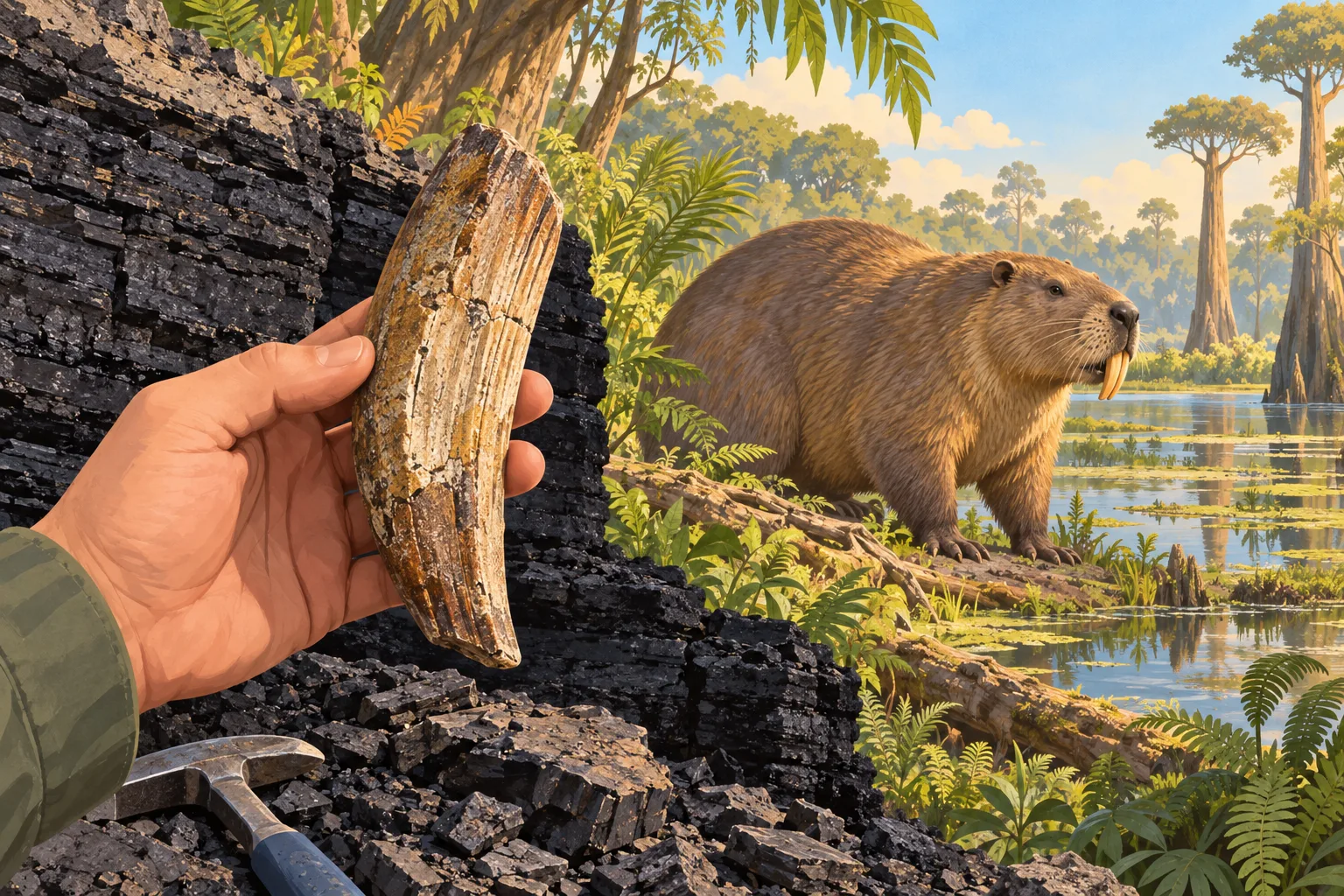
Researchers from Thailand, France and Canada have named a new extinct giant rodent, Yakamys sirindhornae, from two fossil teeth found in 2004 at a coal mine in Krabi Province, southern Thailand. The animal lived 33 to 35 million years ago and weighed an estimated 30 kilograms (about 66 pounds), according to a study published Nov. 4 in Scientific Reports.12
For a rodent, that is a lot of animal. CBS News, in a report from the AFP news agency, put it at roughly half the weight of a large capybara, the biggest rodent alive today.2
It was also remarkably big for its era. The paper calls the 30-kilogram estimate exceptionally large for its family of early rodents. That is why the team says the find helps explain how rodents first evolved giant bodies, a question that reaches back to the late Eocene, a warm stretch of Earth’s history that ended about 34 million years ago.16
A tooth that waited two decades
Geologist Pannipa Tian of Thailand’s Department of Mineral Resources found the incisor at the Bang Mak coal mine. It was so large that she first took it for something else.24
“At first, I thought it was a bone. I showed it to my supervisor, who told me it was a giant rat’s tooth,” Pannipa told AFP.2
The team lacked the evidence and technology to identify the teeth in 2004. More than two decades later, a detailed analysis by the international team finally put a name to them.2 The work was a collaboration between Thailand’s Department of Mineral Resources and scientists from France and Canada, led by Yaowalak Chaimanee of the French research organization CNRS.34
The supervisor’s verdict was close but not exact. Thailand’s Ministry of Natural Resources and Environment nicknamed the animal “Sirindhorn’s Giant Rat,” but it was not a true rat.3 It belonged to the Ischyromyidae, an extinct family that was one of the earliest major groups of rodents.2
What two teeth can and can’t say
The whole species rests on a lower second molar and a matching lower incisor.6 That means its appearance, diet and behavior remain unknown.2 For now, the best-documented thing about this animal is its dental record.
The weight is an estimate, too. The researchers ran seven different models, which gave answers from 21.4 to 47.3 kilograms, with about 30 kilograms as their central figure.16
Even so, Suchart Chomklin, Thailand’s Minister of Natural Resources and Environment, said the find matters well beyond Krabi. “This discovery is significant for the study of mammalian evolution and offers new insights into the historical changes in body size among rodents,” he said, as reported by the Bangkok Post.3
A royal name
The species name honors Princess Maha Chakri Sirindhorn for her longstanding support of science, geology and paleontology. She gave permission for her name to be used, making this the fifth fossil species to receive a royally granted name.246
The Krabi basin has a habit of turning up old neighbors. It has already produced fossils of ancient primates, carnivores and hoofed mammals.2
Pannipa has suggested that ancient rodents may have evolved in what is now Thailand before spreading elsewhere, an idea rather than a settled finding.2 Either way, she sees the teeth as a window into a much older world. “It tells a lot about the diversity of life in the past,” she told AFP.2
Did this make your day? Give it a cheer.
Sources
- A giant eocene ischyromyid from Southeast Asia reveals the early evolution of rodent gigantism Scientific Reports (Nature), 2026-11-04
- "Giant rat" weighing 66 pounds once roamed Thailand, fossilized teeth reveal CBS News (AFP-based), 2026-11-05
- Fossil of 30kg giant rat found in Krabi Bangkok Post, 2026-11-05
- 30kg giant rat lived in Thailand 35 million years ago, fossils reveal Khaosod English, 2026-11-04
- Species New to Science: Yakamys sirindhornae Novataxa blog, 2026-11-04
- Thailand Fossils Reveal a Late Eocene Rodent Estimated at 30 Kilograms EconoTimes, 2026-11-05
- Prehistoric 'giant rat' found in Thailand from fossil teeth Malay Mail (AFP), 2026-11-06