Park Visitor's Facebook Question Leads to 120-Million-Year-Old Dinosaur Tracks
A photo from Thailand's Phu Phra Bat National Park led officials to six meat-eating dinosaur footprints, the first of their kind found in Udon Thani Province.

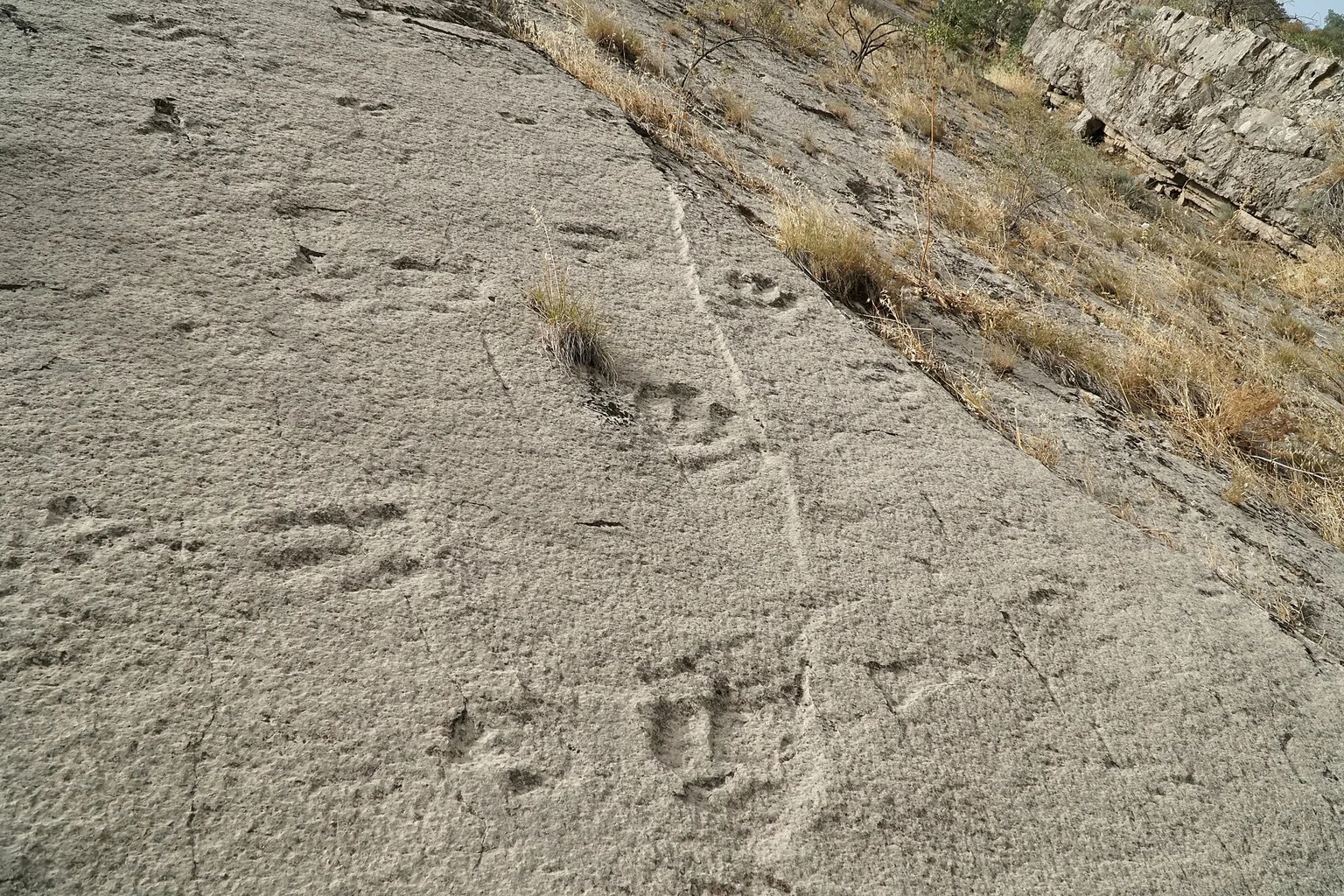
Pichai Prathetsena, 32, photographed deep three-toed marks at Phu Phra Bat National Park in Thailand’s Udon Thani Province and posted the picture to Facebook in October. On Oct. 20, Thailand’s Department of Mineral Resources confirmed they were a trail of six meat-eating dinosaur footprints about 120 million years old.145
He was a visitor to the park. According to reports, he noticed the impressions and asked a Thai Facebook group called “What Is This Creature?” whether they might be dinosaur prints.13
The find matters locally. These are the first carnivorous dinosaur prints found in Udon Thani Province, Nautilus reported, and the department says the site could become a hub for geological and fossil research.1
From comment section to closed park
One account says the photo went up on Oct. 18, when the stream was fairly dry and the rock was exposed.4
Thai government officials saw the post and contacted him.3 Officials reportedly replied in his comment section promising to send a team, and park rangers were at the stream the next day measuring the prints.7 Few comment threads end with park rangers showing up to measure the evidence.
The Department of Mineral Resources then confirmed the marks were dinosaur footprints, and the park was closed so the area could be examined.15 Thailand’s Department of Public Relations described the site this way, as quoted by PetaPixel:
“The find includes a single trail with a total of six prints on the Phu Phan formation, dating back approximately 120 million years to the Early Cretaceous period”3
That age comes from Thai officials. The findings have not yet appeared in an independent, peer-reviewed study.
What the tracks show, and what they don’t
The prints are trace fossils. They are impressions left in soft ground that later hardened, not pieces of the animal itself.1 Think muddy boot prints across a kitchen floor, if the floor then turned to stone. No bones or other skeletal remains were found at the site.4
The footprint in the photo measures about 11.4 inches by 10.2 inches.1 The animal is estimated to have been a theropod (a group of meat-eating dinosaurs) more than 20 feet long.1
Local paleontologists compared its size to the one-ton Siamotyrannus isanensis. That comparison covers size only. The species that made the tracks has not been identified, and more research is needed before anyone can say what it was.15
Protecting the trail
Government agencies are working to preserve the footprints and limit damage from erosion and water.1
The trail joins a growing national record. Thailand has turned up 25 dinosaur species, 13 of them found nowhere else, and many of the country’s finds have been linked to citizen scientists: ordinary people who notice something odd and report it.1
Did this make your day? Give it a cheer.
Sources
- Tourist Posts a Photo to a Facebook Group, Accidentally Discovering 120-Million-Year-Old Dinosaur Footprint Nautilus, 2026-11-03
- Tourist Posts a Photo to a Facebook Group, Accidentally Discovering 120-Million-Year-Old Dinosaur Footprint (Yahoo syndication) Yahoo News, 2026-11-03
- Tourist Snaps Photo of 120-Million-Year-Old Dinosaur Footprint PetaPixel, 2026-10-22
- Tourist's Facebook Photo Leads to Discovery of Six Dinosaur Footprints Dating Back 120 Million Years in Thailand Gujarat Samachar (English), 2026-10-22
- A Tourist Spotted Strange Footprints in Thailand. They Were 120 Million Years Old, Made by a Giant Dinosaur ZME Science, 2026-10-24
- A Tourist Posted a Strange Photo on Facebook. It Turned Out to Be a 120-Million-Year-Old Dinosaur Footprint Daily Galaxy, 2026-10-30
- Tourist's casual Facebook post leads to discovery of 120-million-year-old dinosaur footprints in Thailand 10bmnews.com, 2026-10-22