Isle of Wight Fossil Overlooked Since 1924 Is a New Long-Clawed Dinosaur
Researchers say the skull fragment is Europe’s first known megaraptoran, a clue these clawed hunters took the scenic route from Asia to the southern continents.

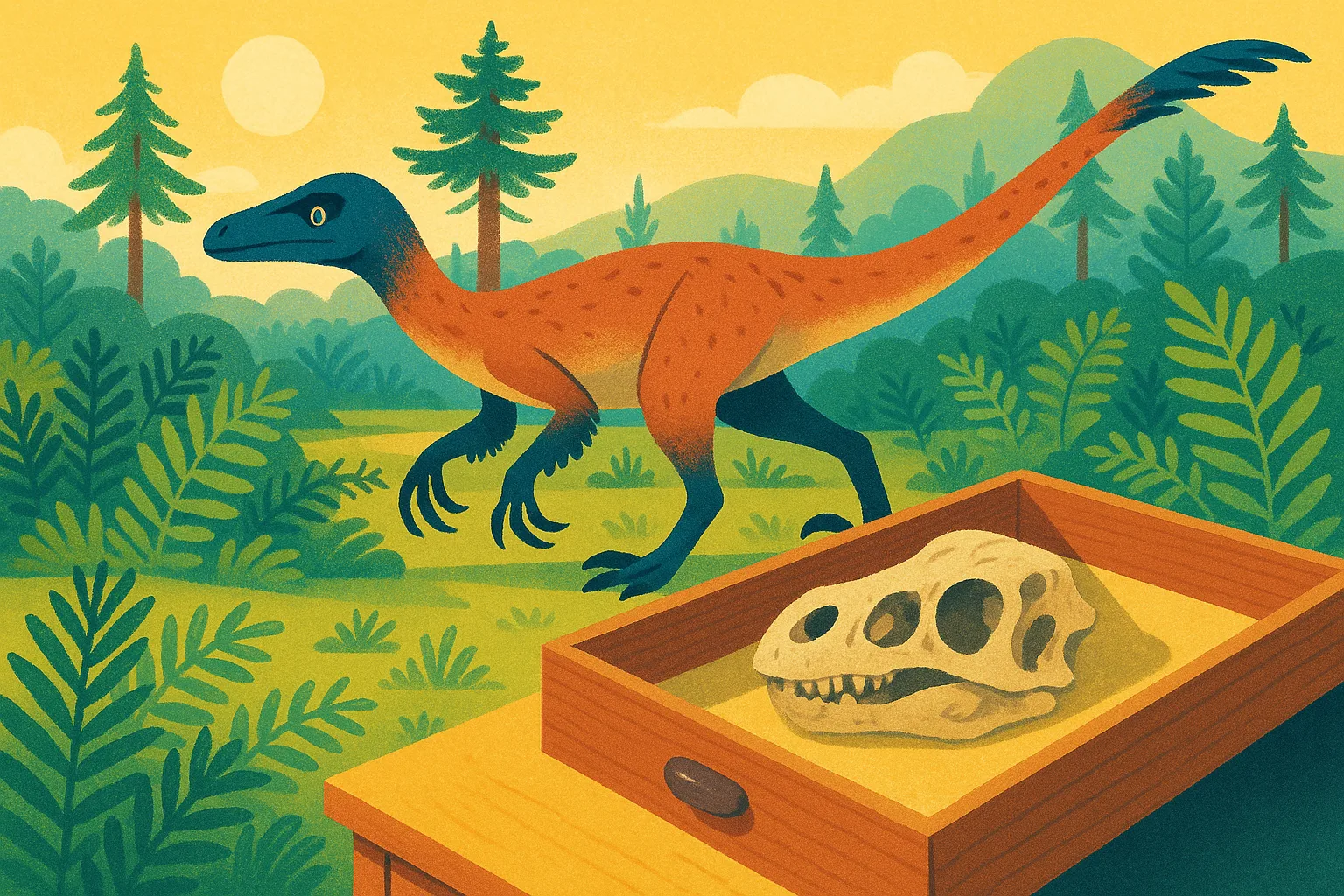
A chunk of dinosaur skull spent nearly a century in a museum collection before anyone noticed it was a brand-new species. That is a long time to wait for a callback. Also, this one hunted with its claws, which is not what you want to hear about anything kept in a drawer.
A team led by researchers at University College London (UCL) has named it Invictibellatrix amberina. The team says it is the first megaraptoran ever found in Europe. The study is published in the journal Royal Society Open Science.1
A T. Rex Cousin That Never Skipped Arm Day
Megaraptorans were close relatives of tyrannosaurs, the family that includes T. rex. But they settled their disagreements very differently. Instead of relying on their jaws, they had slender heads and went after prey with large arms and giant curved claws.1 Same family, very different hobbies.
The new species is one of the smallest and earliest megaraptorans known. It lived in what is now the UK about 120 million years ago, during a period called the Early Cretaceous, which was long before museums had drawers.13
Only part of the skull survives, so the team filled in the rest from its closest relatives. (Think of guessing someone’s height by meeting their cousins.) Based on them, the team estimates it was three to four meters long (roughly 10 to 13 feet) and just over 1.5 meters tall (about 5 feet). It was probably feathered, with claws about 10 to 20 centimeters long (roughly 4 to 8 inches). It likely ate small dinosaurs, lizards and mammals, a buffet where everything on the buffet was also trying to leave.24
The name aims high. Invictibellatrix means unconquered female warrior, a nod to the massive top predators megaraptorans would later become.13 That is a lot of name for a 5-foot hunter, like calling a puppy Thor. To be fair, the family grew into it.
Nearly a Century in a Museum Drawer
Amateur paleontologist Reginald Walter Tooley first found the fossil at the foot of a cliff on the southwest coast of the Isle of Wight. The Natural History Museum acquired it in 1924. Then the fossil settled into a long, quiet career of being largely unstudied.45
“It is a real mystery that this fossil was overlooked for so long, sitting in a drawer for nearly 100 years.” (Dr Cassius Morrison, lead author, UCL Earth Sciences, speaking to Portsmouth News)5
To finally get a good look, the researchers used CT scans (a type of X-ray imaging that builds a picture slice by slice, like a loaf of bread with opinions). That let them make 3D models of the skull piece and the space where the brain sat. Then they compared it with skulls from tyrannosaurs, spinosaurs, raptors and other two-legged meat-eaters, a lineup no witness would enjoy.3
A mix of features set it apart. These included an oval hole where the spinal cord entered the brain and a crest shaped like an hourglass, which feels fitting for a fossil that spent this long waiting. Computer analyses of the skull traits kept placing it in the megaraptoran family.13
A Missing Stop on a Very Long Road Trip
Scientists think megaraptorans started out in Asia and passed through Europe before becoming top predators across Gondwana, an ancient southern landmass that included Africa, South America and Antarctica. Until now, though, nobody had found one in Europe to back that idea up.2 It was a road trip with no gas station receipts.
“This new species is the first proof we have that megaraptorans were also present in Europe and that they reached Gondwana this way rather than island-hopping further south.” (Charlie Scherer, co-author and PhD student, UCL Earth Sciences, in a UCL release)3
One thing to keep in mind: the whole case rests on a single skull fragment, and the first-in-Europe claim comes from the research team itself. Other paleontologists will now get their turn to weigh in.
The work was funded by the Palaeontographical Society, the Royal Society and UK Research and Innovation.6
Morrison thinks the island has more to give.
“Lots of bones are found on the Isle of Wight - who knows what else is waiting to be discovered.” (Dr Cassius Morrison, speaking to PA Media)4
The next clue could turn up at the foot of a cliff. Or, like this one, it could already be filed away in a museum, a century into the world’s longest game of hide-and-seek.
Did this make your day? Give it a cheer.
Sources
- Isle of Wight fossil Europe's first known long-clawed megaraptoran dinosaur Phys.org (University College London release), 2026-10-14
- Forgotten fossil reveals new dinosaur species Scimex (UCL news release), 2026-10-14
- UK Dinosaur Fossil Identified as New Long-Clawed Predator Mirage News (University College London), 2026-10-14
- New dinosaur species found from fossil 'overlooked' for over 100 years Yahoo News (PA Media), 2026-10-14
- New dinosaur species found on Isle of Wight after fossil 'overlooked' for over a century Portsmouth News, 2026-10-14
- New dinosaur species discovered from fossil 'overlooked' for over 100 years Brit Brief, 2026-10-14