Baby Kelp Grows Up on 330-Meter Ropes, Out of Reach of Hungry Sea Urchins
The Tla-o-qui-aht First Nation’s nursery has replanted about 10 basketball courts of kelp in Clayoquot Sound, rebuilding homes for young salmon and herring.

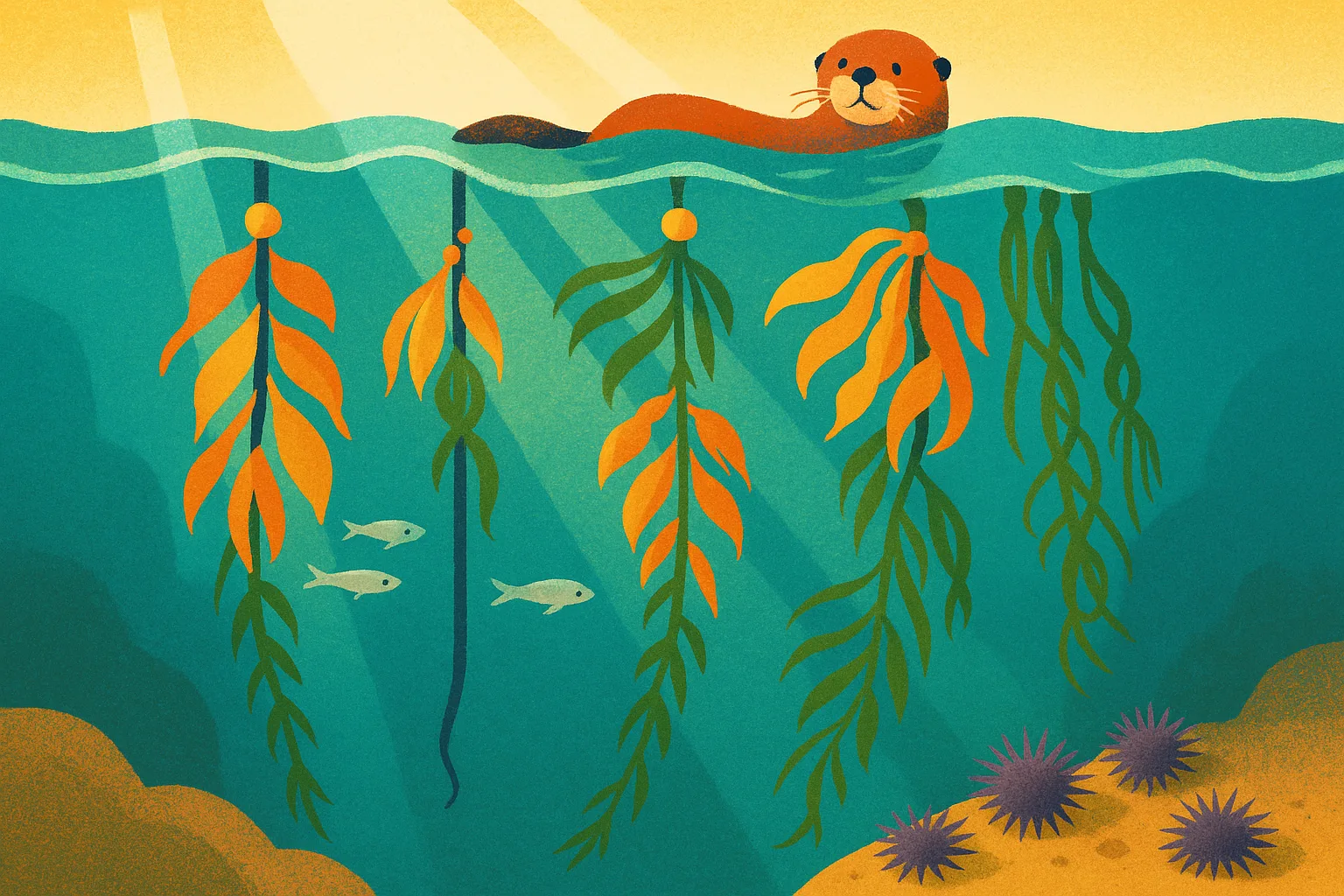
Off the west coast of Vancouver Island, baby kelp is growing up on long underwater ropes, dangling safely out of reach of the sea urchins that would otherwise mow it down like an all-you-can-eat salad bar.
The nursery is the heart of a kelp restoration project run by the Tla-o-qui-aht First Nation, the Redd Fish Restoration Society and West Coast Kelp. Together they are rebuilding worn-down kelp forests in Clayoquot Sound, British Columbia.12
The project launched in early 2026. The team grows young bull kelp and giant kelp, then harvests sections and transplants them to struggling sites around the Sound. Think of it as foster care for seaweed, with a very damp drop-off.2
Why kelp? These underwater forests give shelter to juvenile salmon, Pacific herring and other species, which is a lot of tenants for a building with no walls.34 As Saya Masso, natural resources manager for the Tla-o-qui-aht First Nation, told Ha-Shilth-Sa: “Kelp is an important part of the salmon ecosystem.”3
Kelp Day Care, Now With Urchin-Proof Ropes
The kelp grows on four lines, each 330 meters (1,083 feet) long, hanging below the surface and well above the seafloor where urchins graze. The urchins, presumably, have filed a complaint. The setup is called an In Ocean Nursery System, or IONS, which sounds like a chemistry quiz but works more like a very long, very wet clothesline.3
The nursery sits at Baxter Islets near Tofino, in Tla-o-qui-aht traditional waters.3 Choosing where to replant has drawn on traditional knowledge kept in Tla-o-qui-aht oral history.1
Tatt Charlie, a tribal guardian with the Nation, described the thinking behind it to Mongabay: “My ancestors had a system of reciprocity where they knew not to take too much, and we were always giving back.”1
Redd Fish has flown drones over wild kelp beds along the island’s west coast for several years and has watched them shrink, which is not the before-and-after photo anyone hopes for. The group blames marine heat waves, climate change and disrupted trophic dynamics (a scientist’s way of saying the balance of who eats whom has been thrown off).3
Help is arriving from an unexpected crew. Sea otters, once wiped out in the area by the fur trade, have come back. Otters eat urchins, which gives kelp room to thrive.2 They are the project’s unpaid groundskeepers, and they pack their own lunch.
Ten Basketball Courts of Kelp and a Lot of Cameras
So far, about 4,200 square meters have been replanted, roughly the size of 10 basketball courts (please do not dribble on it). Mongabay describes that as small.2 Organizers call it the largest kelp restoration project on the West Coast of North America, while local outlets describe it as a first of its kind.234
“We have grown a lot of kelp,” Emily Fulton, marine program manager at Redd Fish, told Mongabay, in what may be the most satisfying sentence in all of seaweed.2
The project cost roughly C$240,000, paid for by the provincial government, the Pacific Salmon Foundation, WWF Canada, Sustainable Ocean Alliance and the Clayoquot Biosphere Trust.3 Federal and provincial permits came through in less than a year, which in permit time is basically a sprint. Redd Fish credits that to its formal Letter of Agency from Tla-o-qui-aht.3
In February, Tom Campbell of West Coast Kelp projected that the first season would produce about 2,900 cubic meters of kelp habitat (about 1,900 pickup trucks’ worth, though hauling it that way is not recommended). He said the team plans to double that in year two.3
The fish benefits are expected but not yet measured, and the team is still collecting data. Four underwater cameras each record five minutes of footage every hour. That adds up to an expected 87,000 minutes of video in the first year, or a little over 60 days of nonstop viewing with a plot that is almost entirely fish. Mercifully, software trained to count fish will do the watching.3
“We know that kelp creates habitat, but we don’t have numbers to associate with that, and we want to be able to determine the actual benefit,” Fulton told Mongabay.1
What Happens Next: More Kelp, More Footage
The IONS design isn’t patented, and the camera technology is open access, so other groups can borrow both, no awkward calls from lawyers required.3
“Ecosystem stewardship is a long game, and we work with First Nations to make sure that projects are designed and linked with their priorities,” Campbell told Ha-Shilth-Sa.3
The team plans to keep expanding the nursery and transplanting more kelp. Success will be judged by what those cameras actually show about fish.35 Somewhere off Tofino, a computer is about to binge-watch a great deal of herring. The urchins, meanwhile, will need to find another salad bar.
Did this make your day? Give it a cheer.
Sources
- First Nation-led effort replants kelp forests in Clayoquot Sound Mongabay (Founder's Briefs), 2026-10-12
- Science, Indigenous knowledge team up to restore Canada’s kelp. (Sea otters help, too.) Mongabay (Jennifer Cole), 2026-10-06
- Kelp restoration project aims to rebuild salmon abundance in Clayoquot Sound Ha-Shilth-Sa (Nora O'Malley, Local Journalism Initiative), 2026-02-10
- $240,000 kelp restoration project aims to rebuild salmon abundance in Clayoquot Sound CHEK News, 2026-02-10
- Clayoquot Sound kelp restoration with the Tla-o-qui-aht First Nation Earth to Sea News, 2026-10-10