Congolese Nonprofit to Co-Manage DRC Gorilla Reserve, a First for the Country
Strong Roots Congo, led by a man from an evicted Indigenous community, plans to protect Itombwe by hiring neighbors instead of pushing them out.

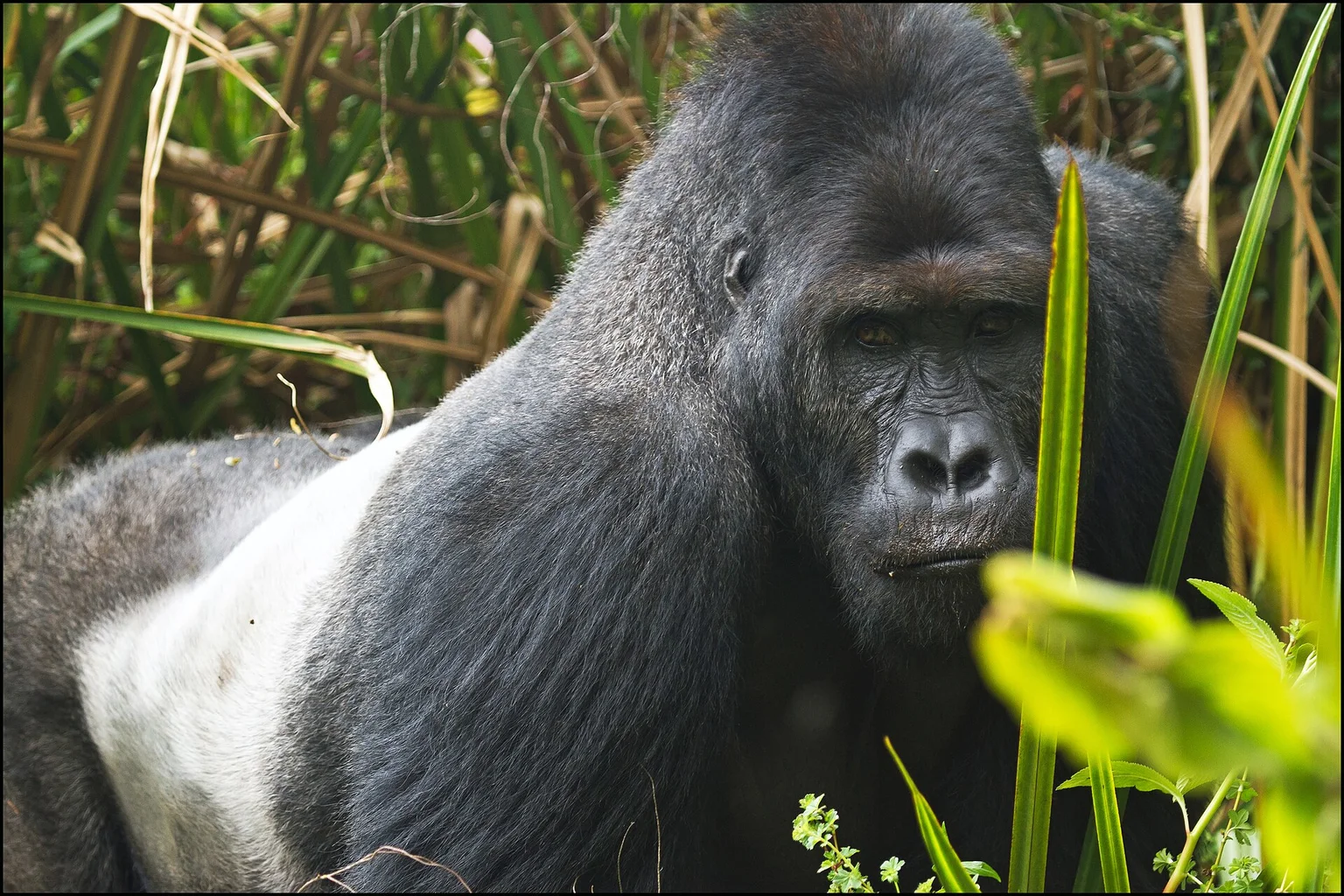
A reserve in eastern Congo that shelters critically endangered Grauer’s gorillas is getting new management, and for once the new managers are from the neighborhood. They are a homegrown Congolese nonprofit, led by a man whose own community was once pushed off its land to make room for a park.
Strong Roots Congo will help run Itombwe Nature Reserve in South Kivu province under a 10-year public-private partnership, Mongabay reported in September.1 The Congolese Wildlife Authority (known as ICCN), the national agency in charge of parks, keeps oversight of the reserve.1 Think of it as the landlord who still holds the master key.
According to Mongabay, it’s the first time in the modern history of the Democratic Republic of Congo (DRC) that a Congolese nonprofit will co-manage a protected area.12
“It is an honor,” founder Dominique Bikaba told Mongabay.1
What Itombwe protects (besides a birdwatcher’s entire weekend)
Itombwe was created in 2006 and covers about 760,000 hectares (1.9 million acres).1 That is a lot of acres to keep an eye on, and approximately zero of them come with sidewalks.
It is home to nearly 600 bird species. At that point a birding checklist stops being a list and becomes a paperback (birdwatchers, pack extra pencils, and possibly a second pencil sharpener).
It also shelters Grauer’s gorillas, also called eastern lowland gorillas, which are critically endangered.1 Presumably the gorillas were not consulted about the change in management, though they have not filed a complaint.
A different way to guard a park
In the DRC, most protected areas were created by evicting Indigenous people. That has led to conflict between park staff and the communities living nearby.12 Bikaba knows that history firsthand. He belongs to an Indigenous community in the area that was evicted for another protected area.1
Strong Roots plans to do things differently. It wants to hire community members for patrols, crack down on poaching and illegal mining, and move away from military-style conservation.1
True to its name, the group didn’t spring up overnight. For about a decade, it has worked to create a 1-million-hectare (2.5-million-acre) corridor, a connected stretch of protected land (basically a very long, very leafy hallway for wildlife), between Kahuzi-Biega National Park and Itombwe.1
The main tool is the community forest concession. That is a legal arrangement under DRC law that lets local communities manage their own forests. Strong Roots gets support for this work from the Tenure Facility.3 So far, it has secured 23 of these concessions covering nearly 600,000 hectares (1.5 million acres).1 Getting one legal agreement signed can feel like a quest. Getting 23 is a franchise.
That groundwork overlaps with Itombwe itself. “Itombwe is made up of seven chiefdoms, and we are already working with four of them in the corridor,” Bikaba told Mongabay.1
He thinks that track record is why his group got the job. “I think the government chose us, because they have observed the work we have done in the biodiversity corridor and the way we have put local communities at the center of conservation,” he said.1 In other words, the résumé spoke for itself.
The timing fits a bigger shift, too. Mongabay notes the news came three months after the DRC adopted a National Forest Policy. That policy recognizes the right of Indigenous peoples and local communities to manage forest areas.2
What happens next
The work won’t be easy. The region has seen clashes involving the M23, Wazalendo and Mai-Mai armed groups.1
Strong Roots hopes that giving local people a real stake in the reserve can help with that. “By working hand in hand, we aim to make the population less likely to turn to armed groups for their survival,” Bikaba said.1
Some details are still unclear. Mongabay’s report did not give a signing date or the terms of the agreement, and Hooray News could not find a separate government announcement. For now, the news rests on Mongabay’s reporting and Bikaba’s account.
If the partnership goes forward as described, the next 10 years will show whether hiring neighbors as guardians can keep both the gorillas and the people around them safer. The birdwatchers, meanwhile, will presumably still be working through that checklist.
Did this make your day? Give it a cheer.
Sources
- For the first time, Congolese NGO to manage a DRC protected area Mongabay (Elodie Toto), 2026-09-16
- In a first for the DRC, a homegrown NGO will co-manage a wildlife reserve Mongabay (Founder's Briefs, Rhett Ayers Butler), 2026-10-13
- Battle for the Forests: DRC's Indigenous communities seek to take back ancestral land Tenure Facility
- Descendants of people pushed out for DRC national park lead forest conservation efforts Mongabay, 2026-06
- Itombwe Nature Reserve Wikipedia