Isle of Wight Dinosaur Skull Waited Nearly a Century for Someone to Open the Drawer
A partial skull collected on England's Isle of Wight belongs to a tiger-sized predator, the first megaraptoran dinosaur ever identified in Europe.

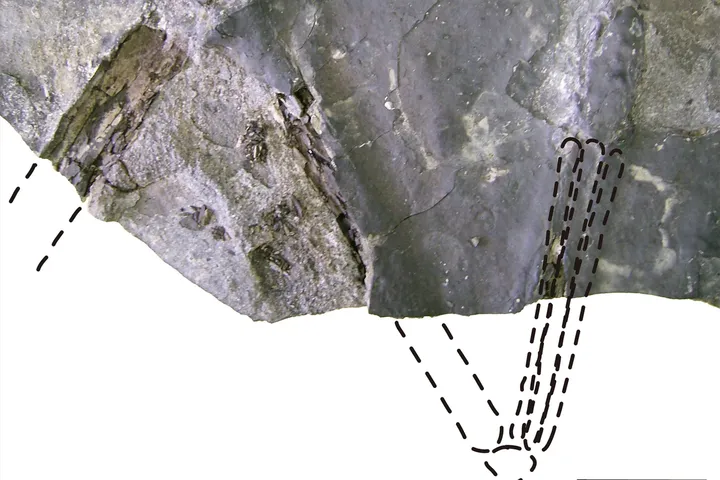
A partial dinosaur skull that London’s Natural History Museum acquired in 1924 belongs to a new species, Invictibellatrix amberina, researchers reported on Oct. 14. The museum and researchers say it is the first megaraptoran found in Europe. The tiger-sized predator lived on England’s Isle of Wight about 120 million years ago.1
It is a rare dinosaur discovery that needed no shovel. The fossil is a chunk from the back of the skull, called the braincase. It had been overlooked by researchers for nearly a century.1
“It is a real mystery that this fossil was overlooked for so long, sitting in a drawer for nearly 100 years,” lead author Dr Cassius Morrison of UCL Earth Sciences said in the museum’s announcement.1
A predator that led with its hands
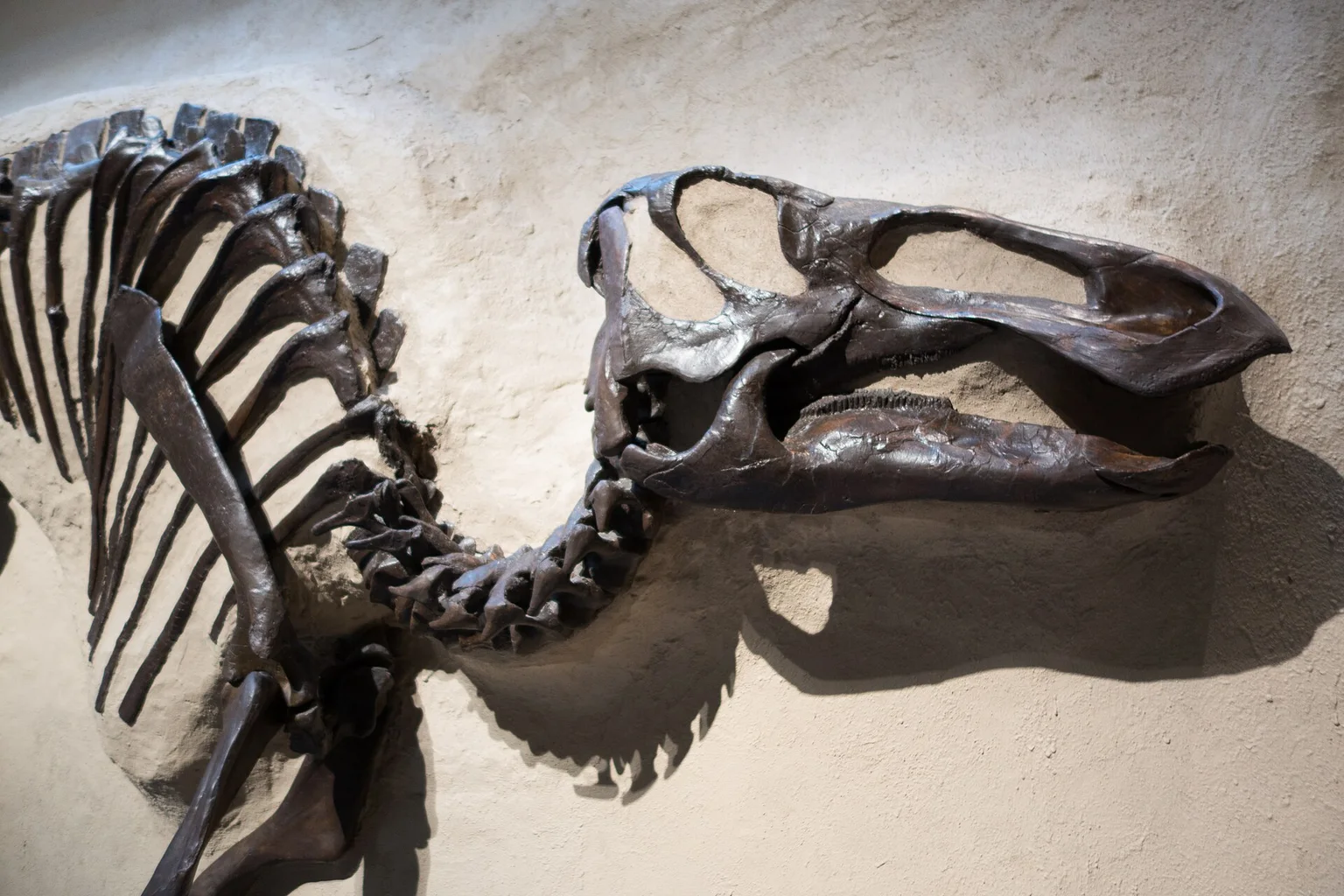
Megaraptorans were agile, two-legged meat-eaters related to tyrannosaurs. Unlike their big-jawed cousins, they had slender heads and attacked with large arms and giant curved claws.1 Later members of the group in the southern continents became massive top predators.
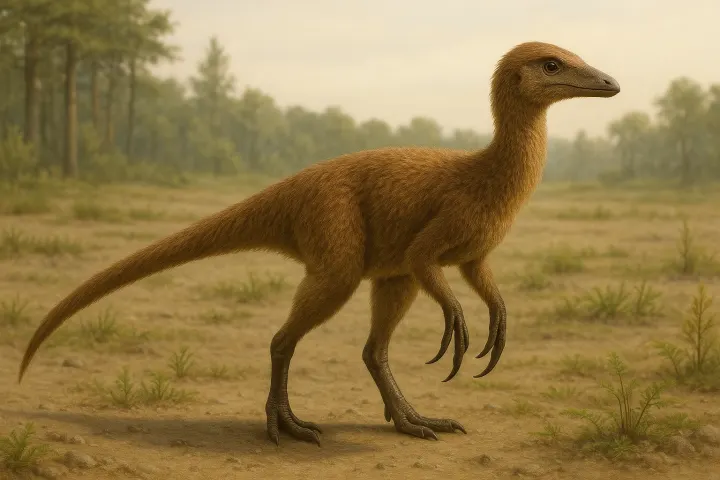
This one was not massive. It is one of the smallest and earliest megaraptorans known.1 Morrison estimates it was three to four meters long and just over 1.5 meters tall, roughly the weight of a large tiger.1
The rest of the picture comes from its relatives, not from the fossil itself. Since only part of the skull survives, Morrison’s view that it likely had feathers, claws about 10 to 20 centimeters long and a diet of small dinosaurs, lizards and mammals is inferred from related species.1
How a skull fragment became a new species
The team, led by University College London, CT-scanned the fossil. That let them build 3D models of the skull piece and of the cavity that held the brain. They compared it with tyrannosaurs, spinosaurs, raptors and other two-legged carnivores.1
A unique mix of features convinced them it was new. These include an oval opening where the spinal cord entered the brain and a crest shaped like an hourglass. Computer analyses consistently placed the animal among the megaraptorans.1
Exactly where it sits in that family depends on the data. One analysis puts it early in megaraptoran evolution, while analyses of a second dataset found it to be the closest relative of Murusraptor, a later species from Argentina.6
The study, published in Royal Society Open Science, was funded by the Palaeontographical Society, the Royal Society and UKRI.15
A missing stop on a long trip
Scientists think megaraptorans began in Asia, passed through Europe and then spread across Gondwana, the ancient southern landmass. Until now, no megaraptoran fossils had turned up in Europe to back that idea.1
“This new species is the first proof we have that megaraptorans were also present in Europe and that they reached Gondwana this way rather than island-hopping further south,” co-author Charlie Scherer, a PhD student at UCL Earth Sciences, said in the announcement.1
The route through Europe is still a hypothesis built on an incomplete fossil record. The team’s modeling also suggested megaraptorans were widespread around the globe in the Early Cretaceous but had likely vanished from the northern landmass, including Europe, by the Late Cretaceous. The study does not say why.1
A name with a purpose
Invictibellatrix means “unconquered female warrior,” a nod to the group’s later role as giant predators. Amberina refers to amber in the rocks where the fossil was found, and to the female name.13 The authors say they chose the name to give hope and strength to people who are bullied, discriminated against, victimized or oppressed.1
The fossil was found at the foot of a cliff on the island’s southwest coast by amateur paleontologist Reginald Walter Hooley. The museum acquired it after his death, along with more than 1,000 of his other specimens.1
Senior author Prof Paul Barrett of the Natural History Museum noted that the Isle of Wight still produces new dinosaurs after more than 200 years of collecting, and that meat-eaters like this one have been especially hard to find.1
“Work like this shows the exceptional value of working with historical museum collections where there are still many discoveries to be made,” Barrett said in the announcement.1
Somewhere in Hooley’s other thousand-plus specimens, presumably, nobody is ruling anything out.
Did this make your day? Give it a cheer.
Sources
- UK dinosaur fossil identified as new long-clawed predator Natural History Museum (press release, with UCL), 2026-10-14
- New long-clawed British dinosaur is the first of its kind in Europe Phys.org (The Conversation, by the study authors), 2026-10
- Fossil of 'unconquered female warrior' dinosaur with long claws found in UK museum drawer after 100 years Live Science, 2026-10
- Dinosaur fossil hidden in London's Natural History Museum for 100 years identified as new species Euronews, 2026-10-16
- A forgotten fossil reveals a fearsome dinosaur with giant claws ScienceDaily (University College London release), 2026-10-14
- A fossil sat in a London museum drawer for nearly 100 years before scientists realized it was a new dinosaur Earth.com, 2026-10