Aratasaurus Died Around Age 4. Its Leg Bone May Still Hold Red Blood Cells
Researchers report traces of heme inside what look like red blood cells in an Aratasaurus leg bone from Brazil, though some outside experts aren't convinced.

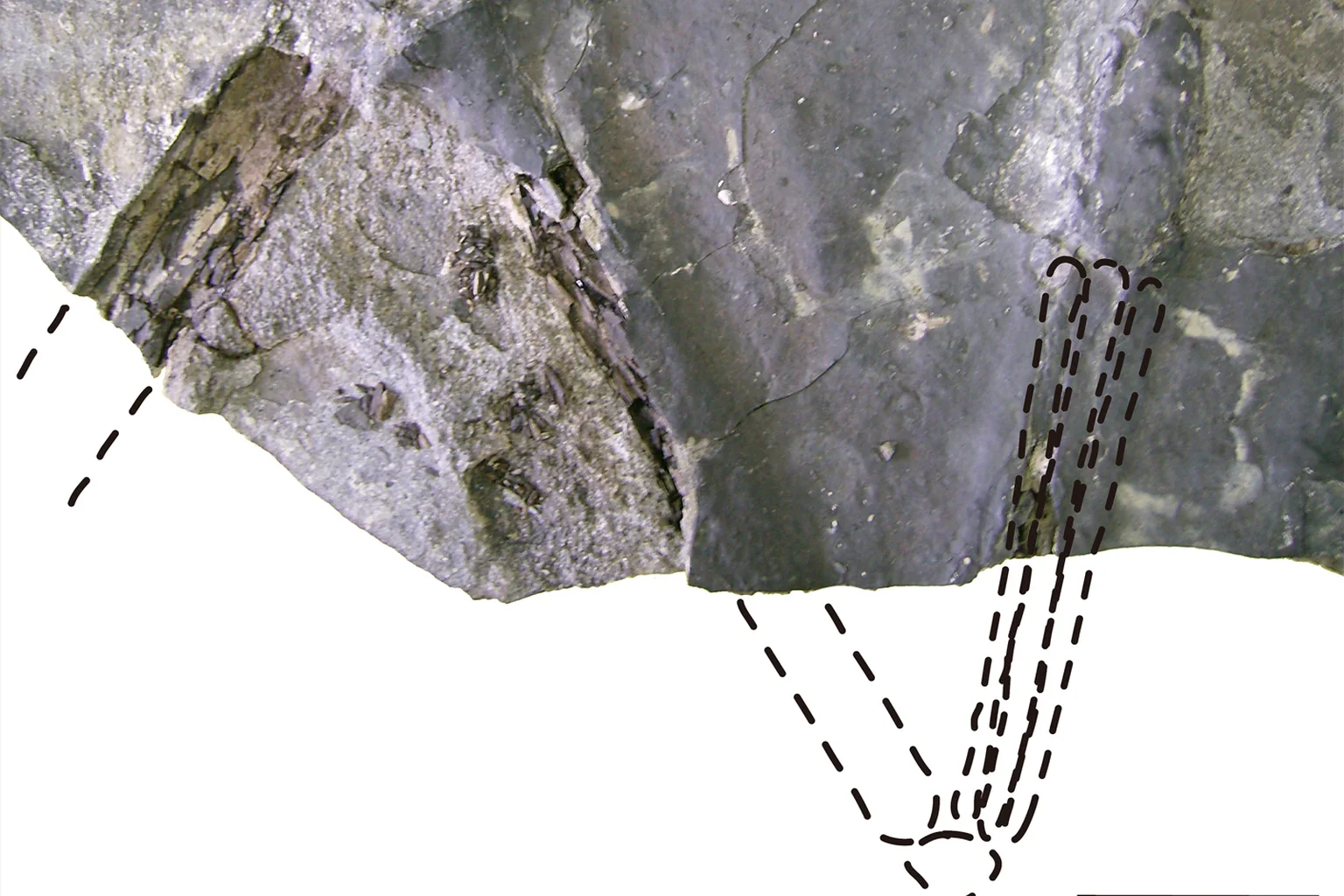
An international team led by Kliti Grice of Curtin University in Perth, Australia, reported on Nov. 2 that leg bones of Aratasaurus museunacionali, a 115-million-year-old theropod dinosaur from northeastern Brazil, contain tiny mineralized structures interpreted as red blood cells. The structures carry chemical traces of heme, the oxygen-binding part of hemoglobin.12
The study, published in the Proceedings of the National Academy of Sciences, matters because blood is rarely what survives in a fossil. If the interpretation holds, it suggests molecules from an animal’s blood can last more than 100 million years, giving scientists a new way to study how extinct animals worked.13
Earlier studies had reported possible red blood cell structures in fossils. The team says this is the first to chemically show hemoglobin-derived molecules inside such cells.2 ScienceAlert describes it as the oldest known example of possible dinosaur blood cells, with earlier finds going back about 80 million years at most.6
“To detect intact heme derived molecules in 115-million-year-old red blood cells is astonishing: this really is a landmark discovery,” Grice said in the university’s release.2
A young dinosaur’s leg, and a careful chemistry check
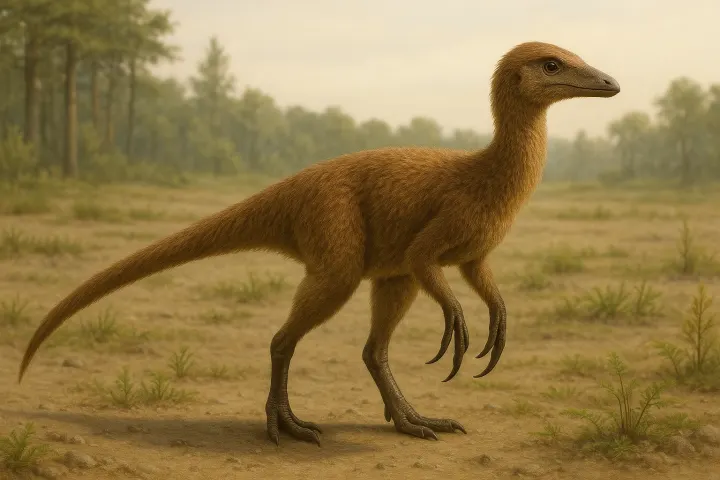
The fossil is a partial right hind limb from an Aratasaurus thought to be a juvenile or young adult, about 4 years old when it died in the Early Cretaceous.35 It was recovered from a mine in Brazil in 2008.6
The oval structures sit inside vascular canals, the tiny channels in bone where blood vessels once ran.1 Using Raman spectroscopy (which identifies molecules by how they scatter light) and transmission electron microscopy (which images objects far too small for an ordinary microscope), the team traced heme signals and heme’s key elements, iron, nitrogen and carbon, to those structures.1
To make sure the heme came from the bone and not from somewhere else, the researchers ran the same tests on the rock around it.7
The team credits the preservation to rapid burial in a low-oxygen, microbe-rich setting, which the authors link to a microbial mat in shallow, oxygen-starved water. A manganese mineral called hausmannite helped stabilize the cells.67
Why some scientists aren’t convinced
Not everyone agrees these are red blood cells. Mary Schweitzer of North Carolina State University, who was not involved, said she did not find the red blood cell data convincing.4
The authors acknowledge the structures differ in size and shape from red blood cells in living birds and crocodilians. They caution that modern species may not be the best comparison and that the fossils may not have kept their original shape. CNN notes the structures might not be red blood cells at all.3
Mauricio Barbi of the University of Regina, who was also not involved, called the evidence convincing for mineralized structures consistent with red blood cells, but said identifying them as such still involves interpretation.4
“We are not talking about intact blood cells or preserved haemoglobin, but rather chemical remnants and mineralised structures that may retain information about the original tissues,” Barbi said, according to ABC News.4
The work also does not involve dinosaur DNA. The cells are fossilized and contain no trace of it.7
What could come next
Grice said that if similar evidence turns up in more fossils, it could help researchers ask much more sophisticated questions about the physiology of extinct animals.3
“It not only extends the known fossil record of blood, but also offers a direct molecular window into the physiology of long-extinct animals so we may better understand them and the world they lived in,” she said in the release.2
Did this make your day? Give it a cheer.
Sources
- Heme signatures in mineralized red blood cells within vascular canals of a 115-million-year-old dinosaur bone Proceedings of the National Academy of Sciences, 2026-11-02
- Dinosaur blood: oldest discovery rewrites what fossils can reveal about the past (Curtin University release) Scimex (Curtin University release), 2026-11-02
- Scientists say they've found the strongest evidence yet of red blood cells in a dinosaur bone CNN, 2026-11-03
- Mineralised 'red blood cells' detected in 115-million-year-old dinosaur bone ABC News (Australia), 2026-11-03
- Evidence of red blood cells seen in dinosaur fossil from Brazil Reuters (via Yahoo), 2026-11-02
- Dinosaur Blood Cells Detected in 115-Million-Year-Old Fossil ScienceAlert, 2026-11-03
- Scientists find red blood cells in dinosaur bone in 'landmark discovery' Discover Wildlife, 2026-11-02