The World Watched a Starfish. Scientists Found 57 New Species.
Our 10-minute film: a live stream from Argentina’s deep sea, a horned sea cucumber called Loki, and the scientists racing to name 57 new species.

Chapters
In August 2025, around four million people watched a live stream from the bottom of the ocean and fell in love with a bright orange starfish that looked exactly like Patrick Star. But the starfish wasn’t the discovery. Down in Argentina’s Mar del Plata Canyon, nearly twice as deep as the Grand Canyon, a robot had collected animals no one on Earth had ever named.
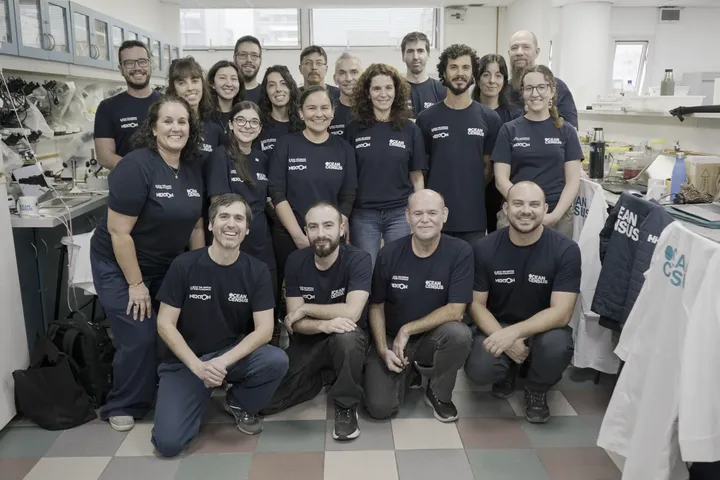
A year later, 20 scientists from Latin America and Europe gathered in Buenos Aires for two weeks and identified 57 species that look new to science, plus 5 new genera, including a horned sea cucumber nicknamed “Loki.” They only had time to examine 10% of the copepod samples, and every single one was new.
In this film
- The Brazil–Malvinas Confluence, where warm and cold currents collide and life explodes
- How a “Patrick Star” starfish became an internet sensation
- The live moment scientists spotted a “chanchito,” a sea cucumber walking on tiny legs
- Loki, the horned Peniagone, found 2,577 meters down
- Why it takes more than 13.5 years, on average, to formally describe a species
Explore the species
Every discovery is logged on Ocean Census NOVA, an open database anyone can browse. You can also watch Schmidt Ocean Institute’s deep-sea dives.
Footage: Schmidt Ocean Institute. Interviews: The Nippon Foundation-Nekton Ocean Census. Spanish interviews shown with English subtitles. Narration: AI voice. Music by Kevin MacLeod (incompetech.com), CC BY 4.0.
Did this make your day? Give it a cheer.
Sources
- 57 new deep-sea species from the Mar del Plata Canyon Hooray News
- Follow-up: our interview with Ocean Census Hooray News
- Ocean Census NOVA The Nippon Foundation-Nekton Ocean Census
- Schmidt Ocean Institute Schmidt Ocean Institute