A 1960s Copy of This Roman Glass Got Close, and a Sheffield Technician Got Closer
A Sheffield technician grew gold and silver nanocrystals in molten glass to mimic the Lycurgus Cup, and the results hint at how fussy the Romans' job was.

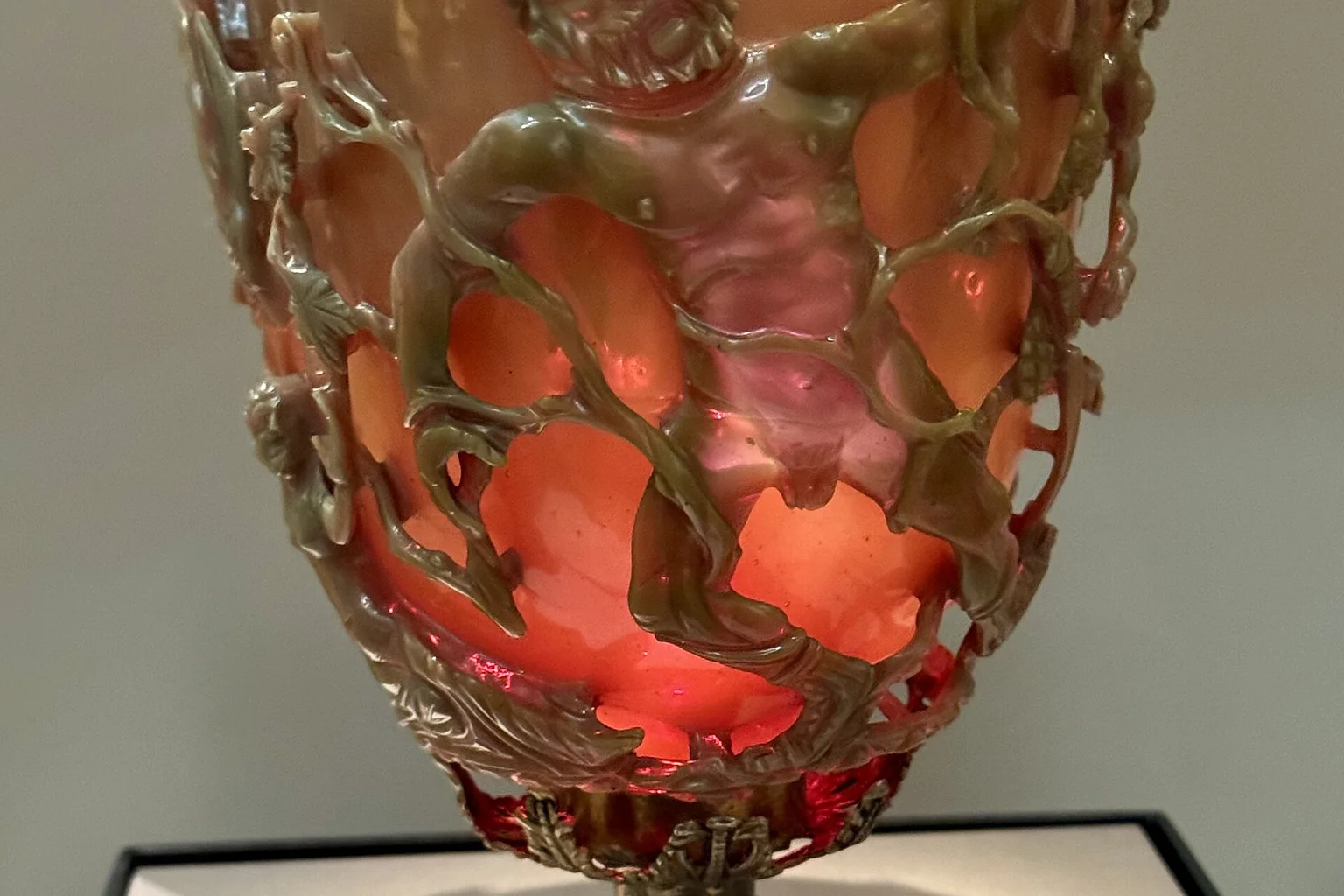
The Lycurgus Cup has spent 1,600 years doing one trick extremely well. In ordinary light it looks jade green. Light it from behind and it glows ruby red.1
Now a researcher at the University of Sheffield has reproduced that color-changing behavior in new glass. According to a report in the Guardian, she used an ancient recipe derived from a fragment of Roman “dichroic,” or two-colored, glass.1
This is not the first copy. A similar-colored glass was made back in the 1960s. Ian Freestone, an emeritus professor of archaeological materials at University College London who was not part of the work, said Sheffield’s version comes much closer to the cup’s real green and red shades.1 “This is more ambitious and more precise,” he told the Guardian.
How a cup changes color
Scientists already knew why the cup behaves this way. Around 1990, electron microscopes revealed tiny particles of gold and silver scattered through fragments of similar glass.3 The hard part has been making those particles appear in the right way.
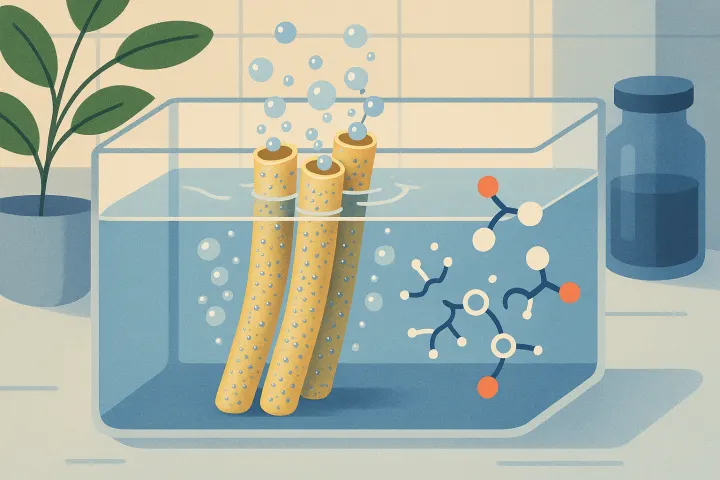
The particles involved are each about a thousand times smaller than a grain of sand.1 Dr. Lisa Hollands, a technician in Sheffield’s school of chemical, materials and biological engineering, made a thick molten glass. As it cooled from well over 1,000 degrees Celsius, gold and silver nanocrystals grew around particles inside it.1
Hollands explained the effect this way: when light shines through the glass, the metal particles block blue and green light and let reds and oranges pass. Light bouncing off the surface gets scattered instead, which produces the opaque green.1
She called the project “a labour of love.” Her verdict on the result was shorter: “To me, it’s magic.”1 Hollands worked with Prof. Caroline Jackson, a leading expert on Roman glass, on the early research.1
A clue about the Roman workshop
The experiment also says something about the people who made the original. Freestone said the final color depended heavily on furnace conditions and even on where the glass sat inside the furnace.1 That suggests the Romans would have found it very hard to control.
Anyone who has baked cookies in an oven with a hot back corner will understand the problem, minus the gold.
The cup, now in the British Museum, was named one of the seven glass wonders of the world by an international panel in 2022, the Guardian reported.1
Atlas, now holding a cup
The university also commissioned a separate artwork. Glass artist Elliot Walker has made a contemporary sculpture that blends the Lycurgus story with the Farnese Atlas, with the globe swapped for a cup.1
“For me, it’s a connection with the Roman makers,” Walker told the Guardian.
The sculpture will be unveiled at the Millennium Gallery during Sheffield’s Festival of the Mind, which runs November 6 to 15, 2026, in the city center. It will then go on permanent display at the Turner Museum of Glass.1 The festival’s lineup also includes an exhibition called “Ancient Secrets, Modern Light: The Lycurgus Project,” about the cup’s secrets.2
Did this make your day? Give it a cheer.
Sources
- ‘It’s magic’: scientists rediscover how to make ancient Roman colour-changing glass (Guardian article, syndicated on AOL UK) AOL UK / The Guardian, 2026-10-25
- Festival of the Mind returns to Sheffield with mind-blowing free events across the city University of Sheffield, 2026-10-15
- Lycurgus Cup Wikipedia
- Sheffield scientists recreate ancient Roman colour-changing glass UA.NEWS, 2026-10-25