A Lot Rides on 1 Amino Acid in the Latest Bid to Put a Face on the Denisovans
Ancient proteins from two bones tie the Xujiayao fossils to the Denisovans, giving scientists a fuller sketch of a long-mysterious human relative.

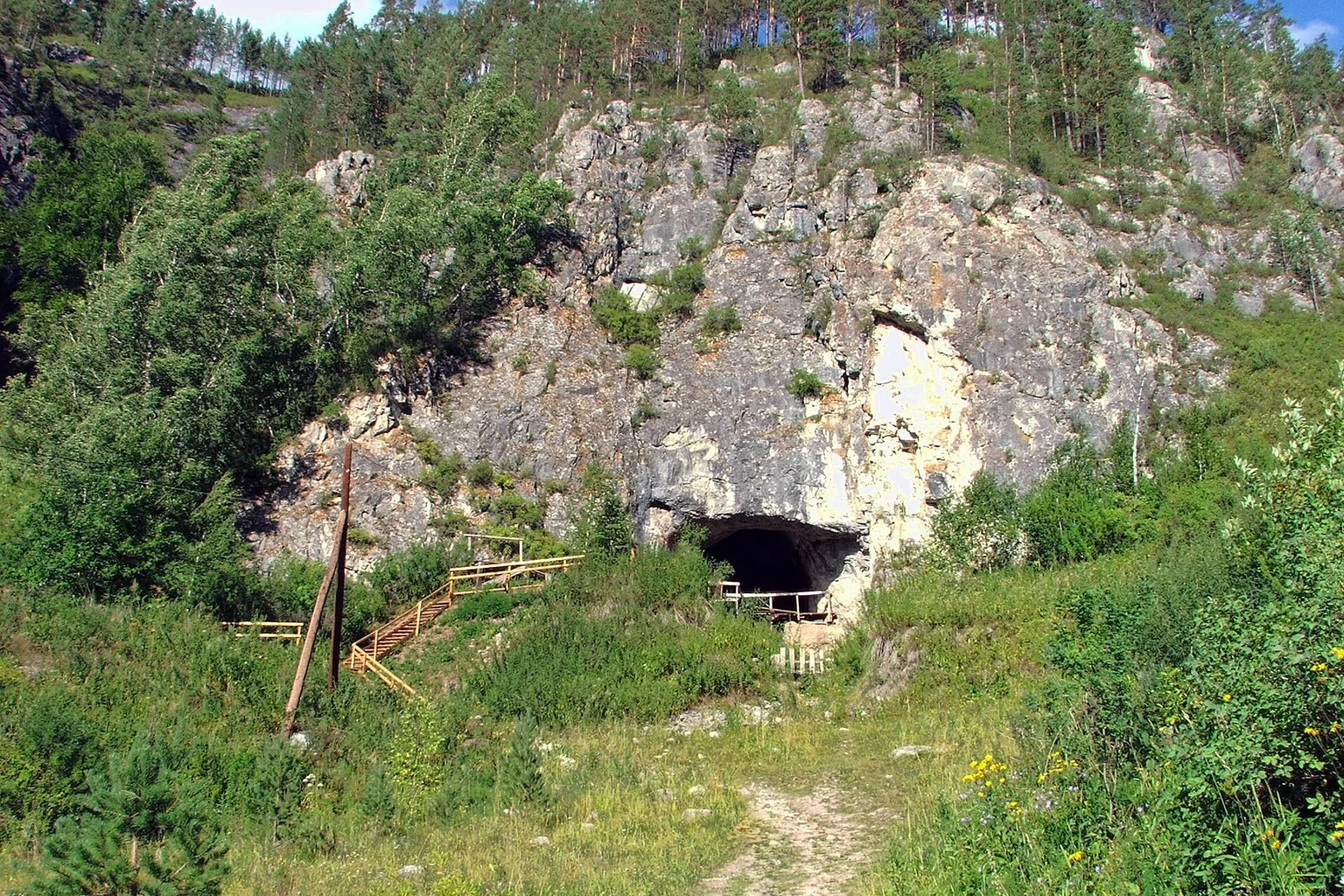
Between 1976 and 1979, archaeologists at Xujiayao in northern China excavated about 20 human fossils. For decades, nobody could agree where they belonged on the human family tree.14 A new study says at least some of them were Denisovans, an extinct group of ancient humans that scientists have long struggled to picture.
The study was published in Nature on October 21, 2026. It was led by Qiaomei Fu and Song Xing of the Chinese Academy of Sciences.12 The finding matters because it gives researchers a second set of Denisovan fossils to study. Until now, the main skull tied to the group by molecular evidence was the Harbin cranium, nicknamed “Dragon Man,” which Fu’s team linked to Denisovans in 2025.46 With two sets of fossils, scientists can start comparing them and describing the features they share.
How proteins named the bones
The Xujiayao fossils come from clearly layered ground dated to roughly 199,000 to 138,000 years ago.1 The team analyzed two of the specimens and found 18 endogenous proteins, meaning proteins that came from the ancient individuals themselves rather than from later contamination.1
One of those proteins is a form of collagen, a protein found in bone. It carries a mutation called COL1A2-996 R>K, in which a single building block of the protein is swapped for another. That variant is known only from Denisovans. It is absent in Neanderthals and modern humans.14
That is a lot of weight for one amino acid to carry, and coverage of the paper says so. The molecular evidence covers two bones out of about 20. It rests on a single amino-acid difference. And the reference set that makes the marker “Denisovan-only” is small, just five individuals.7
The face that emerges
By comparing the Xujiayao skull and jaw material with the Harbin cranium, the researchers describe a common Denisovan look. The skulls are long and low, with thick bones, heavy brow ridges and foreheads that slope backward. Faces are broad and flat across the cheeks, with little forward jut around the mouth and wide nasal openings.4
Nautilus’s account of the study describes a skull that borrows from across the family. The thick, wide skull cap resembles Homo erectus, the inner-ear cavity resembles a Neanderthal’s, and the tall sides of the vaulted skull look like a modern human’s.5 It reads a bit like a family reunion held inside one head.
“We are finally starting to put a face to the Denisovan,” Sally Wasef, a palaeogeneticist at Queensland University of Technology, said in Nature’s news coverage, as reported by ZME Science.4
Bones only go so far. Skin tone, hair and the exact appearance of a face cannot be known from fossils, so any lifelike image of a Denisovan involves artistic interpretation.4
A bigger, more varied family, possibly
The authors go a step further. They found shared traits between the Xujiayao and Harbin fossils and several other East Asian fossils from the same broad period, including fossils from Jinniushan, Dali and Hualongdong. They argue all of these belong to the Denisovan lineage.1
“Molecular phylogeny and shared morphological traits classify Xujiayao, initially assigned to different lineages, as Denisovan,” the study’s authors wrote, as quoted by Phys.org.3
Some of these fossils had been placed in other proposed species, such as Homo longi and Homo juluensis. The Xujiayao braincase, estimated at about 1,700 cubic centimeters, had been assigned to Homo juluensis. The authors suggest that differences like skull size may not justify separate lineages, and that the fossils instead represent one varied Denisovan lineage.4
That wider claim is less certain than the Xujiayao identification. ZME Science notes the conclusion is stronger for specimens identified by proteins or DNA than for those linked only by resemblance.4 For Dali, Jinniushan and Hualongdong, resemblance is the evidence so far.
The map of where Denisovans lived, meanwhile, keeps growing. Denisovan fossils and molecular evidence now reach across a large part of Asia, from Siberia and the Tibetan Plateau to northeastern China and the Taiwan Strait.4

Did this make your day? Give it a cheer.
Sources
- The proteome of Middle Pleistocene Xujiayao and common Denisovan morphology Nature, 2026-10-21
- This is what the mysterious Denisovans looked like Nature (news), 2026-10-21
- Rare fossils reveal what ancient Denisovans may have looked like Phys.org, 2026-10
- What Did Denisovans Look Like? Scientists Have Their Best Answer Yet ZME Science, 2026-10-23
- We Now Know What Denisovans Looked Like Nautilus, 2026-10-22
- The Face of a Ghost: 146,000-Year-Old Skull Finally Reveals What Denisovans Looked Like ZME Science, 2025
- Denisovans get a face from fossils dug up in China in the 1970s martincid.com, 2026-10