Roman Space Telescope Got an Eye Exam in Orbit and Came Out Sharper Than Required
After in-orbit tweaks, including a mirror nudge one-sixteenth the width of a human hair, Roman's main camera shows less optical error than required.

NASA’s Nancy Grace Roman Space Telescope has had its focus adjusted in orbit, and its main camera came out ahead of target. After a round of corrections, the team measured the Wide Field Instrument’s optical error at 63 nanometers RMS. The requirement was about 90 nanometers, NASA said in an Oct. 14 mission blog post.1
That matters because the Wide Field Instrument is the camera behind Roman’s big sky surveys, including its work on dark matter and dark energy.1 “All of the images from Roman’s cosmic surveys will be even sharper than we expected,” Alden Jurling, a senior optical engineer on Roman at NASA Goddard, said in the agency’s post.1
What “nearly 30%” means
NASA says the 63 nm result is nearly 30% better than the roughly 90 nm the team predicted and required.1 That is a 30% cut in optical error, not a promise that every image is 30% sharper in every respect.
For scale, NASA notes that 90 nm is about 1,000 times thinner than a human hair.1 The team came in under that.
The figures come from NASA’s own team. Other outlets, including ScienceDaily, republished the agency’s account.2
Launched out of focus, then nudged
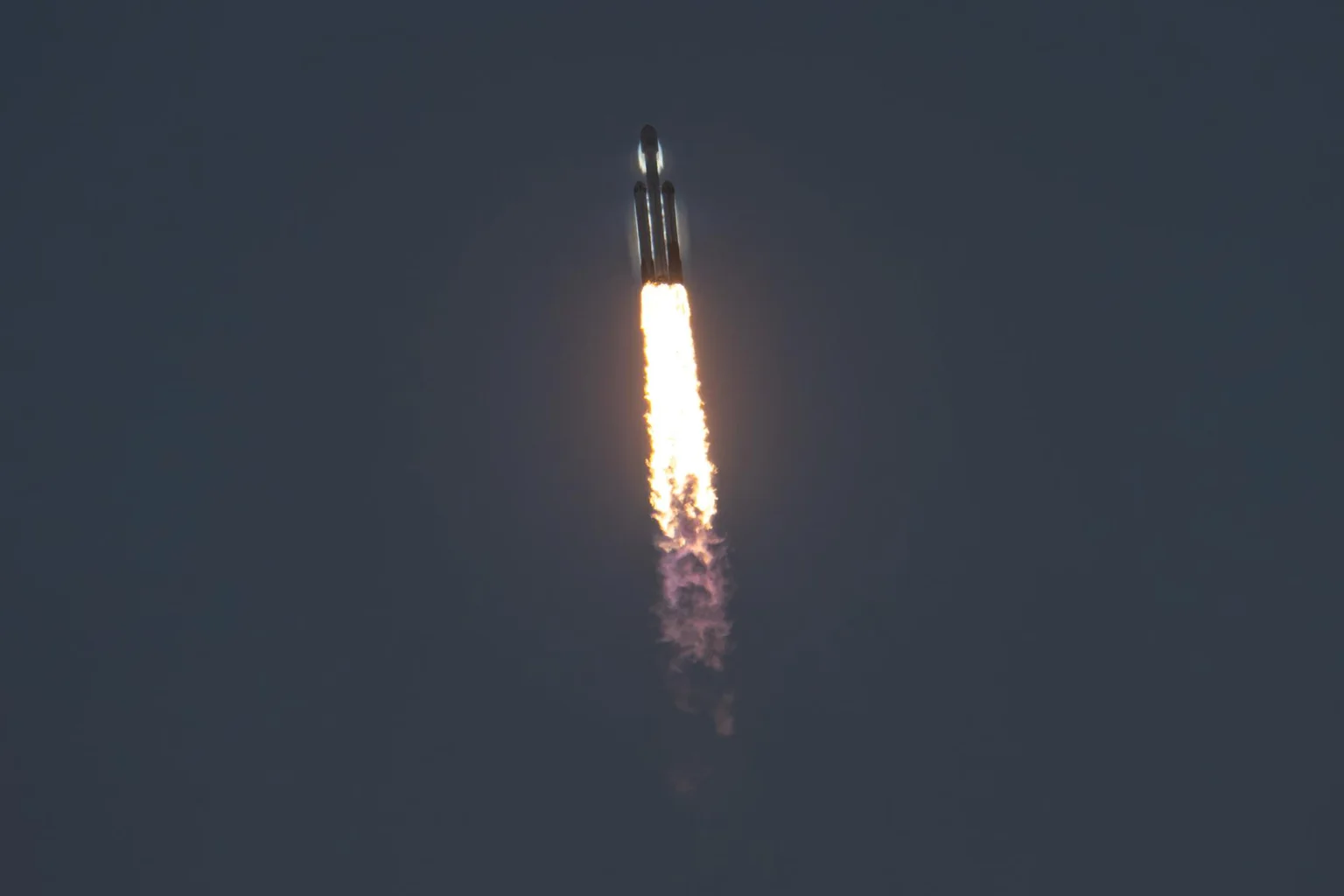
Roman launched on Aug. 30, 2026, and the Wide Field Instrument was switched on in September.12 Since then, the team has tested the instrument’s 18 detectors and their electronics, its wheel of filters, an internal LED system used for calibration, its alignment mechanism and its thermal system.1
“Calibrating an instrument is like tuning a piano or guitar before a concert,” Maxime Rizzo, a Wide Field Instrument systems engineer at NASA Goddard, said in the blog post.1
Part of the tuning involved undoing a launch setting. The alignment mechanism flew in an out-of-focus position used for launch, and the team moved it to its predicted best-focus position.1
Engineers also adjusted the secondary mirror’s height above the primary mirror. “We moved the secondary mirror by about one-sixteenth of the diameter of a human hair,” Jurling said.1 Scaled up to the Empire State Building, NASA says, that move would be a bit less than one U.S. penny stacked on the tip.1
Roman’s second instrument needed help too. The Coronagraph Instrument, which is built for light-blocking work, was first producing images that were slightly out of focus, though less than the team had anticipated. NASA says the fix was relatively simple and the instrument now meets expectations.1 The Wide Field Instrument then received a further round of adjustments.1
Ground testing paid off
Roman’s optical systems lead credited testing done before launch, at Goddard and by contractors L3Harris and BAE Space and Mission Systems. He said that work left only small corrections to make in orbit, and that both instruments matched or beat their predicted performance.1
Dave Hickey, another Wide Field Instrument systems engineer at Goddard, summed up the mood in the post: “it’s both exciting and a huge relief to see that it’s working well!”1
The coronagraph team is still calibrating its camera settings and its deformable mirror. It plans to demonstrate the instrument’s light-blocking ability in the coming weeks.1
Did this make your day? Give it a cheer.
Sources
- NASA Roman Team Checks Out Main Instrument, Sharpens Telescope's Focus NASA Science (Roman mission blog), 2026-10-14
- NASA's Roman Space Telescope exceeds expectations by nearly 30% ScienceDaily, 2026-10-17