Bat Mothers’ Hearts Raced for Their Own Pups. Whether It’s Love or Alarm Is Unclear
In colonies of up to 200 bats, heart monitors showed four Japanese house bat mothers reacting to their own pups' calls but not to other pups'.

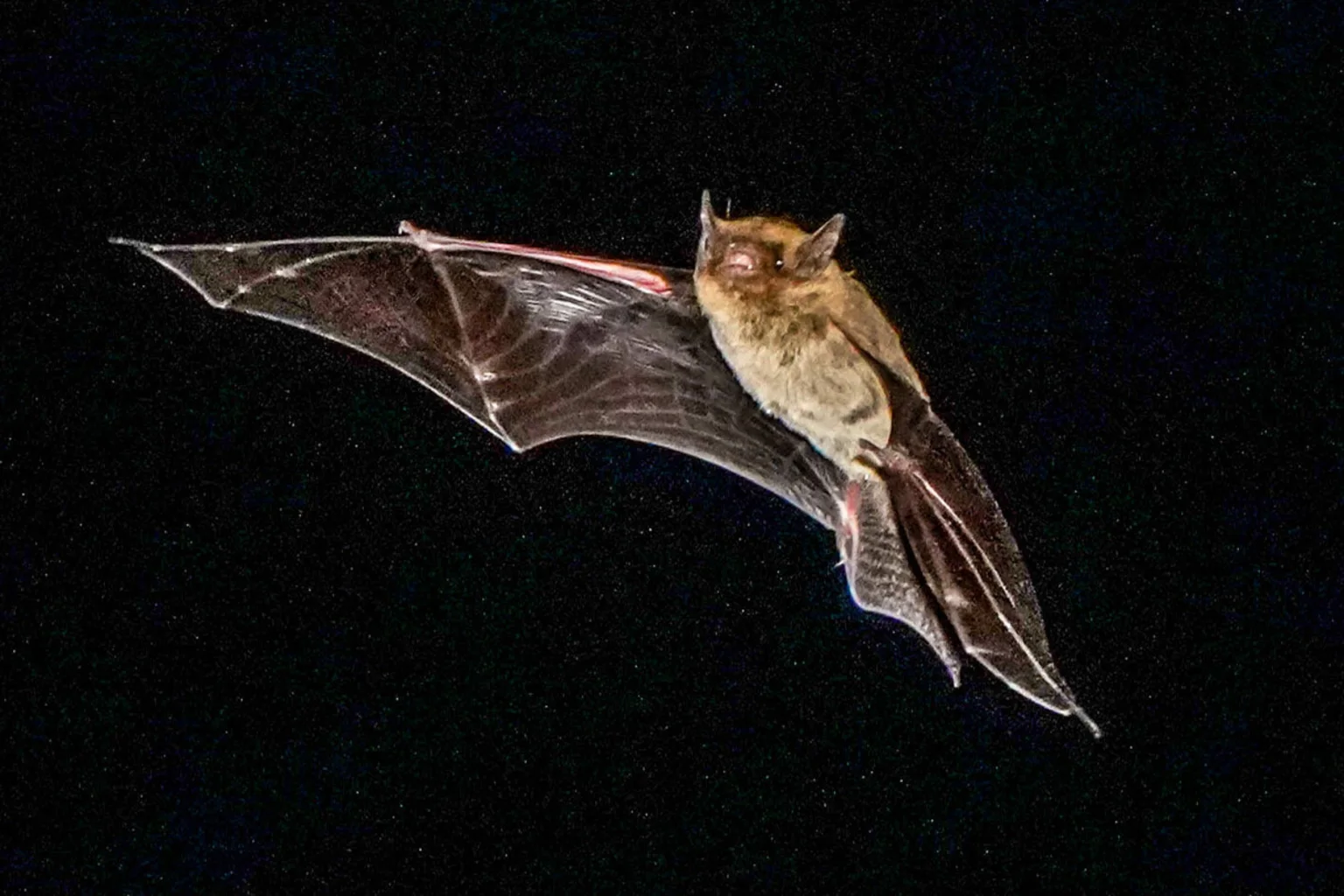
A Japanese house bat mother raises her young in a crowd. The species lives in colonies of 50 to 200 animals. A small new study from Doshisha University in Japan suggests a mother’s body can still pick out her own pup: her heart rate jumped when she heard recordings of her pup’s calls, and it held steady for other mothers’ pups.1
The study was published October 23 in the journal Frontiers in Ethology. It tested only four mothers, and the authors say a larger sample is needed before the result can be generalized.1 Still, it offers a measurable look at how bat mothers recognize their young, using a heart monitor rather than anything that harms the animals.
A hunch from the lab colony
The idea started with something the researchers noticed in their own bats. When a pup got separated from the roost, only its biological mother rushed over to retrieve it.1
“The inspiration for our study began with a striking observation in our laboratory colony. When a pup was separated from their roosting area, only the biological mother immediately rushed over to bring it back,” lead author Dr Kazuki Yoshino-Hashizawa said in the Frontiers announcement.1
To test whether mothers know their pups by sound, the team recorded two kinds of calls. Isolation calls, the cries a stranded newborn makes, came from 2-day-old pups. Echolocation calls, the sonar-like sounds bats use to find their way in the dark, came from 30-day-old pups. Only male pups’ calls were used, so differences between male and female voices wouldn’t muddy the results.1
Pups grow up fast. They began echolocating at about 8 days old, quit making isolation calls after about 12 days, and by about 30 days could fly and echolocate like adults.1 The researchers played the recordings to the mothers while an ECG (an electrocardiogram, the same kind of heart tracing used on people) recorded their heart rates.
What the mothers’ hearts did
Heart rates rose significantly when mothers heard their own pups and did not rise for calls from other mothers’ pups.1 An earlier version of the work, posted in July 2025 as a preprint (a draft shared publicly before peer review), reported the same core result.4
“The fact that the mother’s strong heart rate increases in response to her own pup’s call suggests that these vocalizations instantly physiologically prime the mother to engage in maternal behavior,” Yoshino-Hashizawa said in the announcement.1
The details are less tidy than a newborn’s cry tugging at a mother’s heart. The mothers were tested 38 to 45 days after giving birth, when their pups were already independent. One of the four mothers died before the second day of testing.
The biggest reaction, about 130 extra beats per minute at its peak, came from the pups’ older echolocation calls. The newborn isolation calls produced a smaller rise of about 70 beats per minute. Because each call type came from pups of a different age, the design can’t fully separate the effect of the call from the effect of the pup’s age. So the mothers responded most strongly to their offspring’s grown-up voices, not the baby cries the headlines tend to mention.
What a racing heart can’t say
A faster heartbeat shows that an animal is aroused. It doesn’t say whether the feeling is good or bad, and the authors are direct about that.1
“While measuring overall heart rate allows us to gauge the intensity of physiological arousal, it cannot distinguish between positive emotions, such as maternal motivation, and negative ones, such as stress or alarm,” Yoshino-Hashizawa said.1
The mothers’ hearts also sped up significantly for one other recording: the calls of an unfamiliar adult male. The authors suggest that could be a defensive or watchful response, though they say it is only one of several possible explanations.1
To get closer to the feeling behind the heartbeat, the researchers say future studies should add heart-rate variability, the small shifts in timing between beats. That measure isn’t yet well understood in bats.1
Did this make your day? Give it a cheer.
Sources
- Mother bats’ hearts beat faster at the sound of their own babies’ cries Frontiers (science news / press release), 2026-10-23
- Bat mothers' hearts beat faster when they hear their pups Popular Science, 2026-10-23
- Mother bats' hearts beat faster at the sound of their own babies' cries Phys.org, 2026-10-23
- Mothers respond to biological pup calls with heart rate changes in Japanese house bats, Pipistrellus abramus (preprint) bioRxiv, 2025-07-21