A Waikato Mountain Now Has 5 Kākāpō and an Extremely Small Dating Pool
A sanctuary marking 25 years of restoration adds two young male kākāpō to a trial testing whether fenced mainland forest can house a growing population.

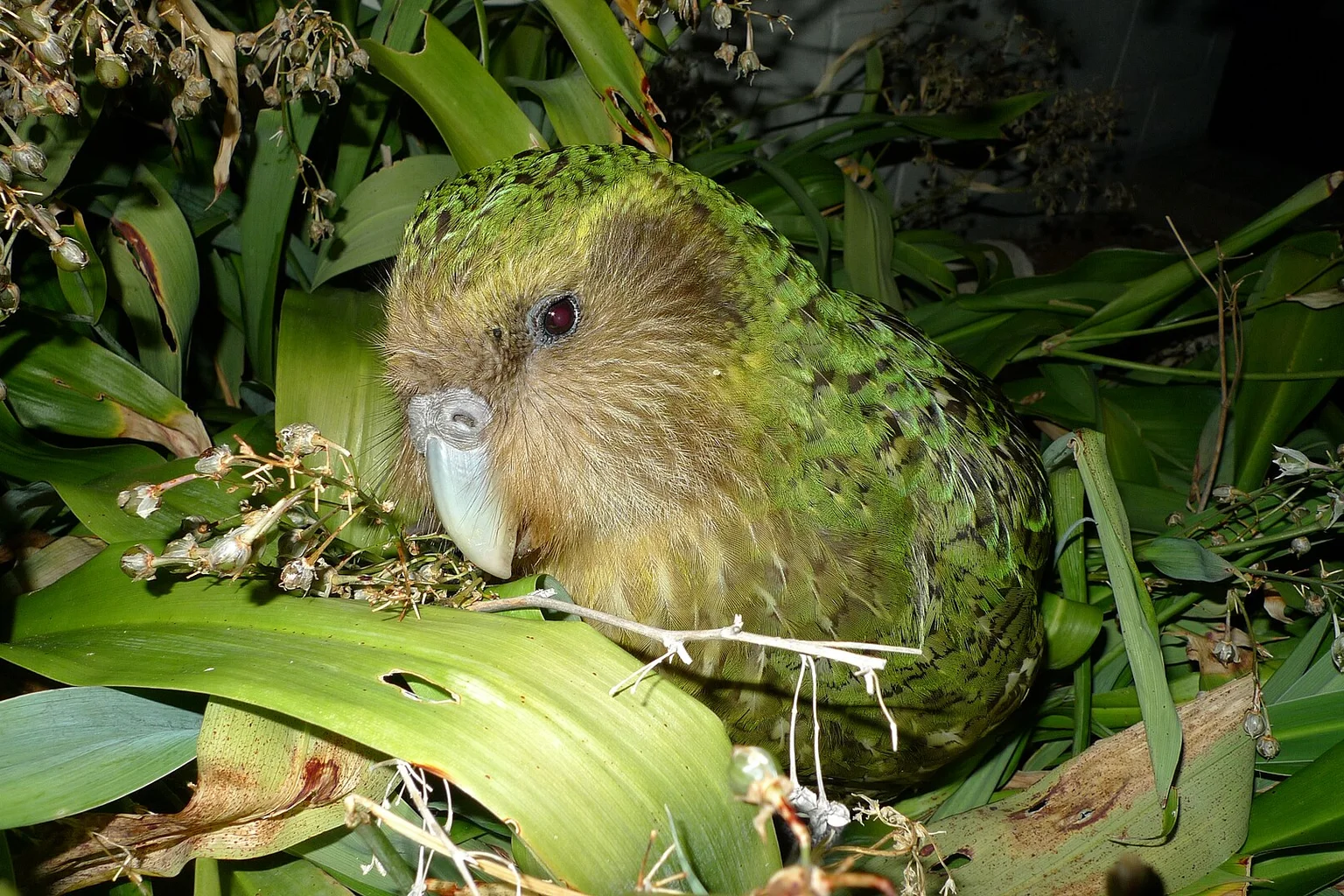
Two juvenile male kākāpō and 122 Mahoenui giant wētā have been released at Sanctuary Mountain Maungatautari in New Zealand’s Waikato region, as the sanctuary marked 25 years of ecological restoration.21
The release matters because kākāpō have a space problem. The Department of Conservation (DOC) says a key challenge for kākāpō recovery is finding enough suitable predator-free habitat for a growing population.2 Maungatautari is part of a trial testing whether a fenced site on the mainland could be one answer.
Two young males join a mainland kākāpō trial
The newcomers join three males that have lived at the sanctuary since 2023, bringing the total there to five.12 The sanctuary’s announcement names the two juveniles as Awarua A2 and Tiwhiri A4.2
“The two males joining today will join the three who have lived at the site since 2023, helping build our understanding of how kākāpō use fenced mainland habitat,” Annie Wallace, DOC’s acting operations manager for kākāpō, said in the sanctuary’s announcement.2
Both birds hatched in this year’s breeding season. According to the sanctuary’s announcement, that season produced a record 90 chicks and lifted the kākāpō population to 325, the highest of the recovery era.2 More birds is the goal, and it is also why they need more places to live.
Releasing young birds lets researchers learn how juvenile kākāpō set up their first home ranges, meaning the patch of ground each bird settles into and uses, inside fenced mainland habitat.2
Kākāpō first returned to the North Island mainland at Maungatautari in July 2023, after an absence of about 40 years, according to the local paper Te Awamutu News.3 The paper also reported that the sanctuary’s trust hopes eventually to add female kākāpō and start a breeding programme.3 For now the mountain remains an all-male household, which puts a firm ceiling on the breeding side of things.
The trial is a partnership between DOC’s Kākāpō Recovery Programme, Te Rūnanga o Ngāi Tahu and mana whenua, the local Māori people with customary authority over the land.12
“With the urgent need to find new homes for the manu, it is important that we continue to try new things working alongside our mana whenua partners,” Tāne Davis, the Ngāi Tahu representative on the Kākāpō Recovery Group, said in the announcement. Manu is the Māori word for birds.2
122 giant wētā join an established population
The wētā arrived in rather larger numbers. The 122 Mahoenui giant wētā were bred through DOC’s recovery programme and the Ōtorohanga Kiwi House, in partnership with Ngāti Maniapoto, mana whenua and DOC.2 They join a population already established on the maunga, or mountain.
The species is classed as Threatened – Nationally Critical, and Maungatautari is one of its translocation sites, places where the insects are moved to build new populations.4 This release came about 14 months after the last significant one, when 192 wētā were moved there in August 2025, according to the sanctuary.2
Twenty-five years behind a fence
The sanctuary covers more than 3,363 hectares of native forest inside a 47-kilometer fence built to keep out pests and predators.2 It protects more than 730 native species, including 15 returned through iwi-to-iwi tono tikanga, the customary process of formal requests between tribes.12
Chief executive Helen Hughes framed the anniversary as a milestone rather than a finish line, in comments reported by RNZ. Taonga is the Māori word for treasures.1
“The arrival of these new kākāpō and Mahoenui giant wētā taonga is a reminder that this is not a finished story.”
Did this make your day? Give it a cheer.
Sources
- Waikato ecosanctuary welcomes more kākāpō and Mahoenui giant wētā RNZ, 2026-10-22
- New Kākāpō And Mahoenui Giant Wētā Arrivals Mark 25-Year Milestone Sanctuary Mountain Maungatautari (press release via Scoop), 2026-10-23
- More kākāpō for the maunga Te Awamutu News, 2026-10-22
- Māhoenui giant wētā Department of Conservation
- Sanctuary Mountain Maungatautari marks 25 years of conservation work NZ Herald, 2026-10-22