A Fossil Owl's Last Meal, a Shiny Cockroach, Hints Early Owls Hunted by Day
A 47-million-year-old owl from Germany's Messel Pit died with an iridescent cockroach in its stomach, a clue to when owls switched to the night shift.


Researchers at Germany’s Senckenberg Research Institute have described a new owl species, Masillastrix blattophaga, from a nearly complete 47-million-year-old fossil found in the Messel Pit. Its stomach holds an iridescent cockroach, which suggests this early owl was active by day. The study was published Nov. 2 in Current Biology.12
That is an odd fit for a bird family that is practically shorthand for staying up late. Most owls today hunt at night, and scientists have long wondered when that habit began.
“It is still unknown when, in the evolutionary history of owls, the transition from a diurnal to a nocturnal lifestyle took place,” lead author Gerald Mayr said in Senckenberg’s announcement.2
Diurnal simply means active during the day. Nocturnal means active at night.
A tiny owl, with its dinner still inside
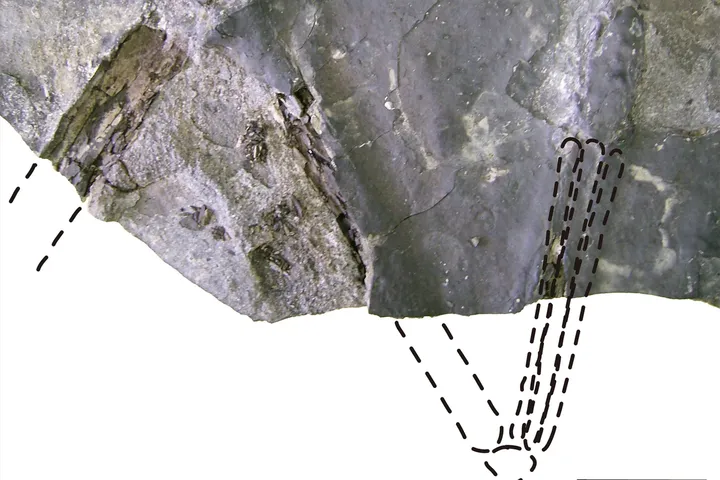
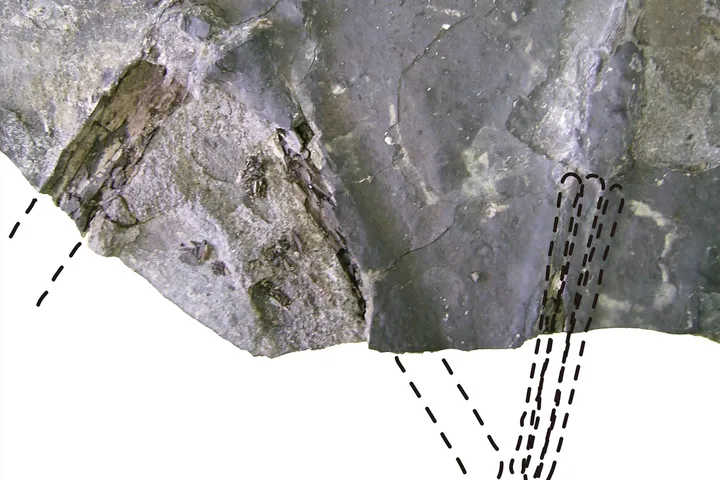
The fossil came out of the ground during the 2025 excavation season at the Messel Pit, a UNESCO World Heritage Site known for unusually well-preserved fossils. Only the skull is missing, and the wing and tail feathers survived.23
“Except for the skull, the bird’s skeleton is complete and exceptionally well-preserved,” Mayr said in the announcement.2
The owl was about 12 centimeters long. It is only the second owl species known from Messel.2
In its stomach area sit the remains of a greenish-blue, iridescent insect. The researchers identified it as a cockroach from the structure of its wings. A similar cockroach, in much better shape, turned up near the owl fossil at the same site.23
According to the paper, this is the first identifiable insect found as the last meal of a fossil bird. Most last meals are forgotten by breakfast. This one made it into a scientific journal 47 million years later.1
Why a shiny cockroach points to daylight
In cockroaches, iridescence goes along with being active by day. So an owl that caught a shiny cockroach was plausibly hunting in daylight. The paper calls this the “strongest evidence to date” for daytime habits in early owls. Live Science notes one catch: the owl could have eaten the insect at dawn or dusk.13
“Therefore, the cockroach found in the little owl’s stomach provides an important clue about the bird’s own period of activity,” Mayr said in the announcement.2
The rest of the owl backs up the cockroach. Its flight feathers lack the features of modern nocturnal owls. Its humerus, the upper wing bone, is much shorter and stockier than in owls today. The team reads that as a sign the wings were not yet built for the silent flight modern owls use to sneak up on prey after dark.23
Narrowing down when owls took the night shift
The oldest known owl with modern-style wing bone proportions lived in what is now France about 35 million years ago. From that, the team infers that owls probably became nocturnal sometime between about 47 and 34 million years ago, in the middle to late Eocene.23
That window is an estimate. Owl fossils are scarce, and the timing is the researchers’ own interpretation, which Senckenberg’s announcement describes as the team’s speculation.2
Still, the timing matters. The paper concludes that it rules out some earlier explanations for why owls went nocturnal, such as competition with daytime birds of prey or a rise in night-active mammals. Live Science points out that those groups diversified about 20 to 25 million years ago, well after the switch.13
Why owls moved to the night is still an open question. Mayr thinks the new date range is a step toward answering it.
“by narrowing down the time frame when owls became nocturnal, our study may eventually contribute to solving this mystery,” he told Live Science by email.3

Did this make your day? Give it a cheer.
Sources
- Evidence for diurnal habits in an exceptionally preserved Eocene owl Current Biology (via ScienceDirect), 2026-11-02
- Not a "night owl" yet: An extraordinary bird fossil from the Messel pit Senckenberg (press release, via PresseBox), 2026-11-03
- Perfectly preserved owl fossil from 47 million years ago could help to solve a major evolutionary mystery Live Science, 2026-11-06