Dinosaur Bone Has Heme Molecules. Whether It Has Blood Cells Is Another Argument
Researchers report heme molecules inside cell-like shapes in a Brazilian dinosaur's bone, though an outside expert doubts they are red blood cells.

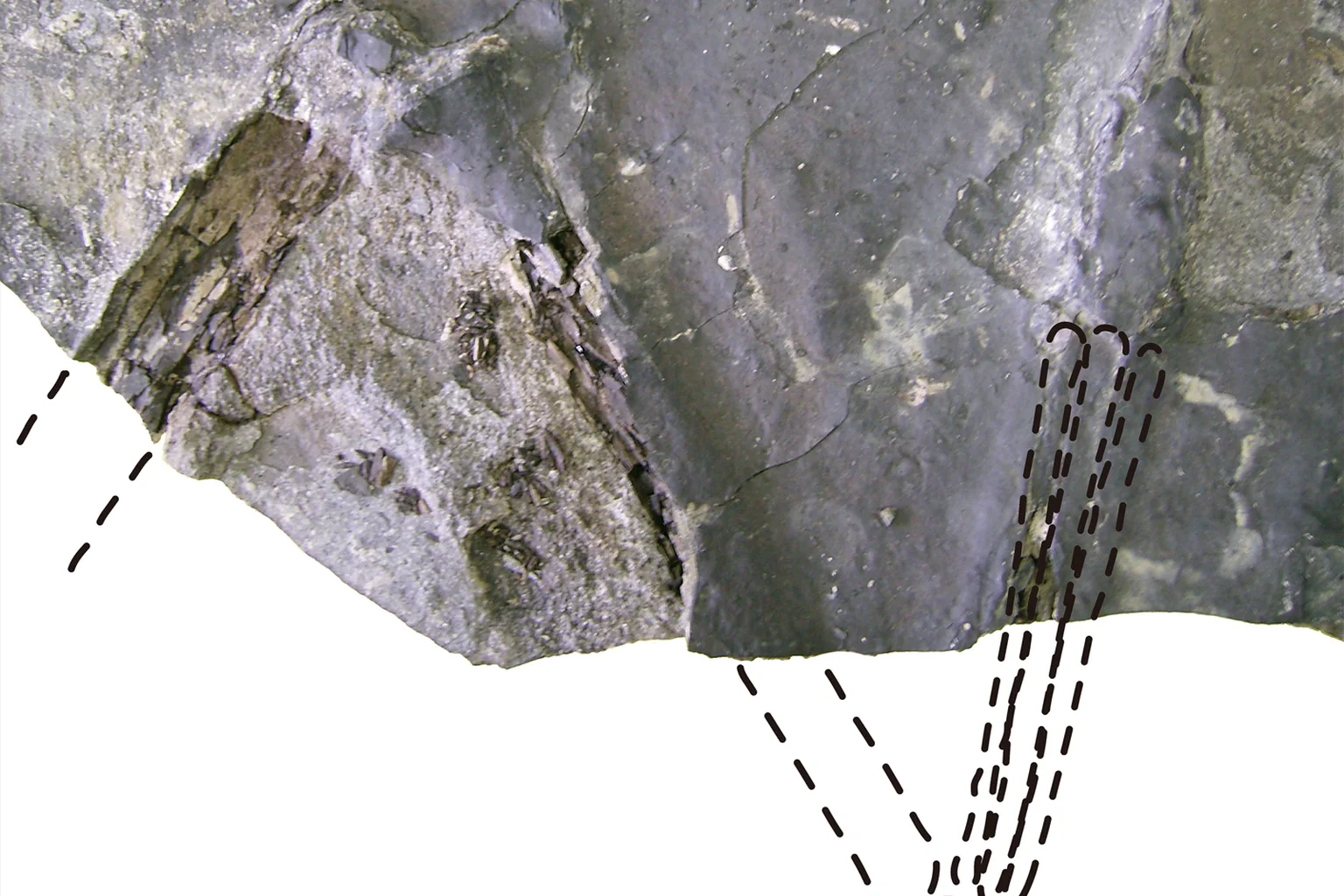
On Nov. 2, an international team led by Australia’s Curtin University reported in the journal PNAS that limb bones of Aratasaurus museunacionali, a 115-million-year-old meat-eating dinosaur from northeastern Brazil, hold heme-derived molecules inside tiny structures that resemble red blood cells. Heme is a component of hemoglobin. One outside expert doubts the structures are blood cells.26
To be clear about what was found: this is not dinosaur blood. Sci.news notes that the discovery does not mean intact blood or hemoglobin proteins survived for more than 100 million years.3 What the team reports is closer to a chemical fingerprint, a set of molecules consistent with blood, found in canals that once held blood vessels.
That still matters. If the result holds up, it suggests fossils can carry molecular clues about how long-dead animals lived, not just what their bones looked like.1
What the team found inside the bone
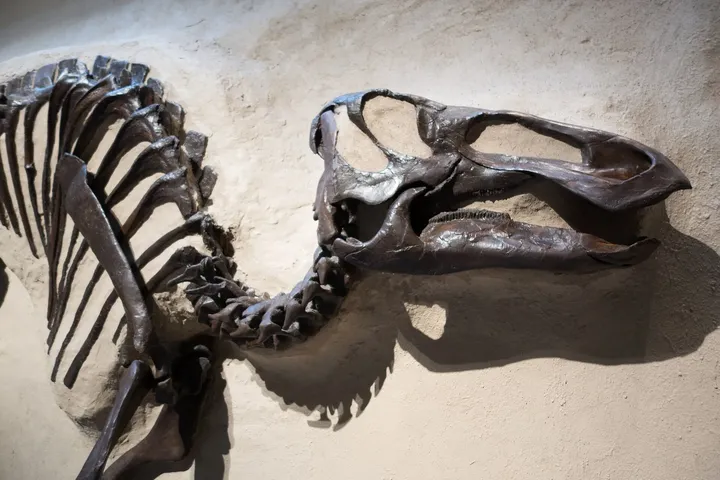
Aratasaurus was a meat-eating theropod that grew to about 3 meters (10 feet) long. It lived during the Early Cretaceous.13
Inside its limb bones, the researchers found numerous mineralized, red-blood-cell-like structures. They sat in vascular canals, the narrow passages that once held blood vessels.2
Chemical tests picked up heme B, a component of hemoglobin, along with a chemically altered version called 3,8-diethyl heme B.34 The team did its chemistry in place on the fossil, so imaging and spectroscopy could tie those heme signatures to the same microscopic structures.23 The fossil also held amino acids associated with collagen.1
“To detect intact heme-derived molecules in 115-million-year-old red blood cells is astonishing: this really is a landmark discovery,” lead author Kliti Grice of Curtin University said in the university’s release.1
Curtin and the authors describe this as the first study to chemically show heme molecules inside fossilized dinosaur red blood cells, noting that earlier work reported only possible blood-cell-like structures.1 That claim of a first comes from the university, and not everyone agrees on what the structures are. Live Science, framing it more cautiously, describes the work as the first to use chemical methods to find heme signatures in dinosaur bones.2
The project brought together Curtin University, the Japan Agency for Marine-Earth Science and Technology, Brazil’s National Museum, the Regional University of Cariri and Johns Hopkins University, with support from Grice’s 2021 Australian Research Council Laureate Fellowship.1
An outside expert has doubts
Mary Schweitzer, a molecular paleontologist at North Carolina State University who was not involved, accepts that endogenous molecules, meaning ones that originated in the animal, can persist in fossils. Her objection is about shape.2
Birds and reptiles keep a nucleus in their red blood cells, which gives each cell a bulge. The structures in this bone are concave, have no bulge and are smaller than typical non-mammalian red blood cells, Schweitzer said, according to Live Science. “I am not convinced that the images they figure are remnant RBCs,” she said.2
How anything lasted this long
The authors credit hausmannite, a manganese oxide mineral with the formula Mn3O4, for helping preserve the material. They also suggest the animal was buried quickly in a low-oxygen setting covered in microbial mats, which are thin layers of microbes.15
“These findings challenge longstanding assumptions that certain biomolecules such as hemoglobin cannot survive deep time,” Grice said in the release.1
What could come next
The authors say the approach could open the door to molecular-level paleontology, including studies of how blood, metabolism and activity levels evolved. Curtin also suggests, more speculatively, that it could inform the search for ancient life beyond Earth.1
Did this make your day? Give it a cheer.
Sources
- Scientists just found dinosaur blood that survived 115 million years ScienceDaily (Curtin University release, written by Sam Jeremic), 2026-11-06
- Traces of ancient blood found in 115 million-year-old dinosaur fossil, new study claims Live Science, 2026-11-02
- 115-Million-Year-Old Dinosaur Bones Preserve Chemical Traces of Red Blood Cells Sci.news, 2026-11-03
- Dinosaur Fossil Preserves Chemical Traces of Blood The Scientist, 2026-11-05
- Evidence of Ancient Blood Found for the First Time in a 115-Million-Year-Old Dinosaur Fossil Discover Magazine, 2026-11-03
- Dinosaur blood – oldest discovery rewrites what fossils can reveal about the past Curtin University via EurekAlert, 2026-11-02
- Dinosaur blood—oldest discovery rewrites what fossils can reveal about the past Phys.org, 2026-11-02