Mars’s North and South Differ by an Everest, Yet Their Soils Look Alike on the Map
University of Sydney's Daniel Irving told Hooray News his 2,000-class map of Martian soils is a first iteration, and finding Earth look-alikes comes next.

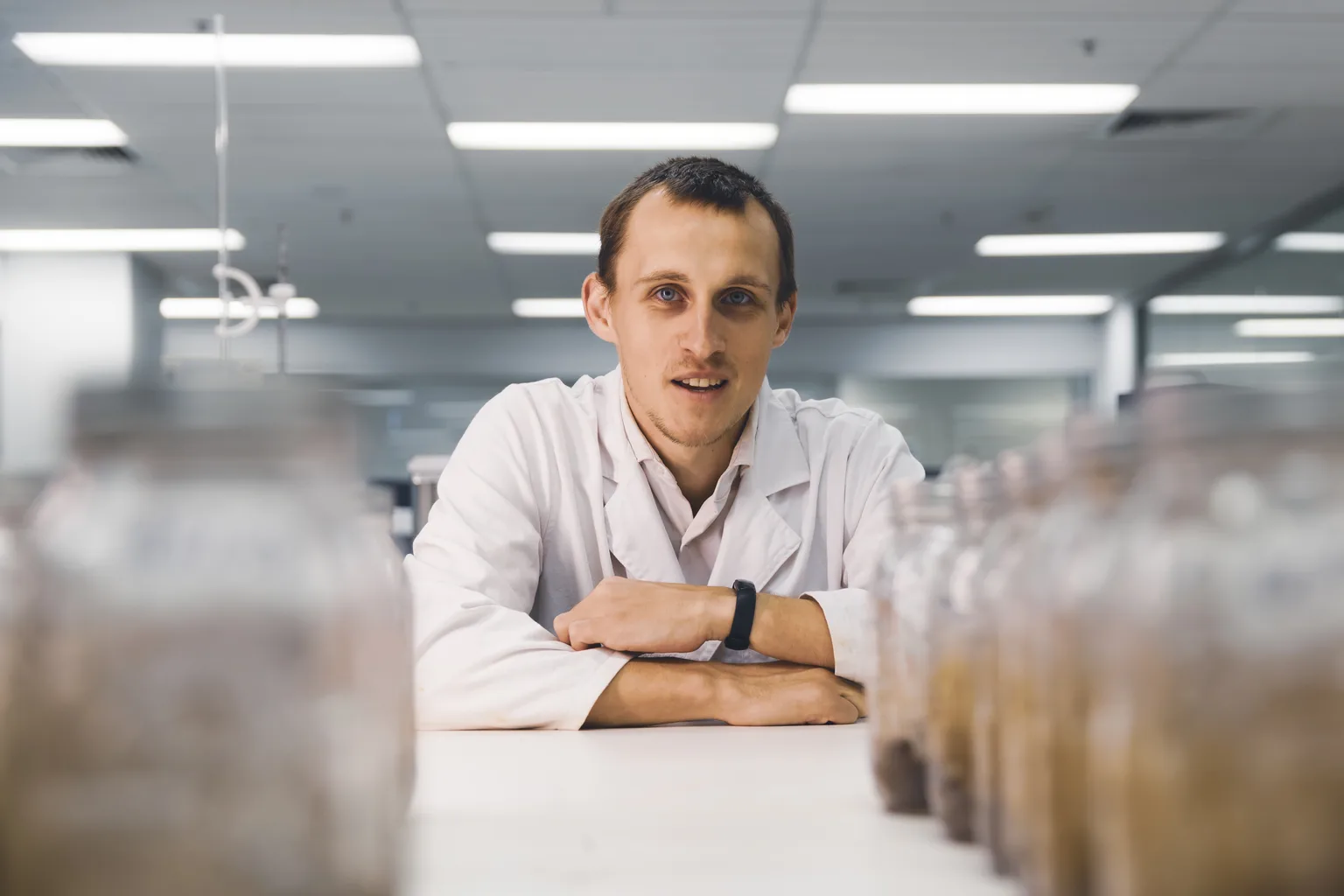
Daniel Irving, the University of Sydney PhD student who led what the university calls the first comprehensive classification and map of Martian soils, told Hooray News in an email interview on Nov. 3 that his team’s next step is finding which soils on Earth most closely resemble the soil classes it mapped on Mars.71
The work, published in the soil science journal CATENA, uses orbital data and models to sort almost 800 million locations, covering 92% of Mars, into 10 realms, 100 assemblages and 2,000 forms.12 The team calls these Martian soil classes areths, after Ares, the Greek name for Mars. Hooray News first covered the map on Nov. 2.8
Mission planners and soil scientists now have one shared framework for comparing Martian landscapes and picking places worth studying for plant growth. According to the University of Sydney’s announcement, the same thinking may also help explain low-organic-matter soils on Earth, such as those in the Atacama Desert, the Pilbara and polar regions.1
What comes next for the Mars soil map
“What we are doing next is contrasting the classes generated on Mars to identify which soils on Earth are most similar to those on Mars,” Irving told Hooray News.7
He said the team used rover and lander measurements to scale its input variables, so the match with ground measurements is currently relatively strong.7 The university’s release still describes the scheme as provisional: many inputs are inferred from orbital data and Earth soil relationships, so the classification will need revising as direct measurements improve.1
Irving said landers and rovers have already identified subsurface ice as shallow as 4 centimeters below the Martian surface. “What I am most looking forward to is when they figure out how to bring samples back from Mars,” he said.7
Asked which spot he would most want sampled, he pointed to the realm called Bareth. “As we showed, samples of the Realm ‘Bareth’ were completely distinct from any other soil on Mars, with a very high predicted clay content of 72%,” he said. He would like to know how accurate that prediction is, and how the clay interacts with the soil’s perchlorates, a toxicity issue the current map does not yet include.71
How a name like Nohibareth gets made
PPACS (the Provisional Polythetic Areth Classification System) is a naming system as well as a sorting one. “Because there is so much uncertainty, it is more meaningful to assign names that relate to the relative difference between soils, as opposed to their absolute properties,” Irving said.7
Every name follows a pattern: form, then the letter o, then assemblage, then the letter i, then realm, then areth. Each class gets its consonants based on how far it sits from every other class. So Nohibareth and Mohibareth, which differ by a single letter at the finest scale, are adjacent areths and extremely similar soils.7
The surprise: north and south look alike
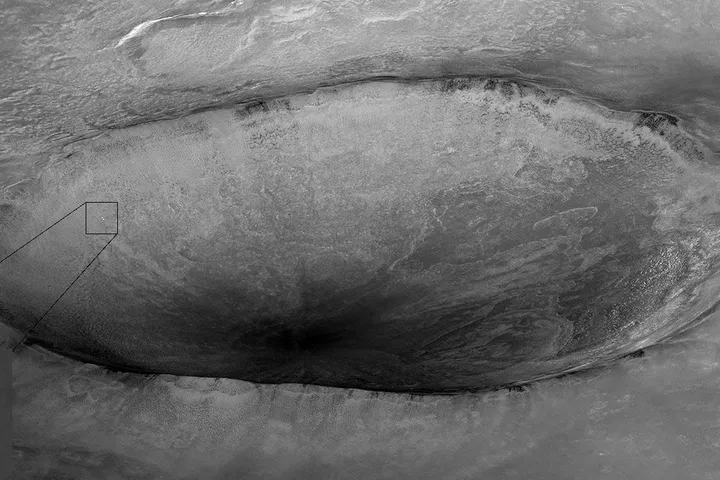
“I was quite surprised by how generally similar the Northern plains and Southern highlands are,” Irving said. The two regions differ in elevation by roughly the height of Mount Everest, and the north is believed to have once held an ancient ocean.7
He offered three possible reasons. Soil variety may be driven mostly by the mid-latitudes. The four properties the team used (pH, texture, mineralogy and profile thickness) may not capture the north-south difference well. And, he said, “Martian dust storms help homogenise the surface material.”7
What the map can’t tell us yet
As a proof of concept, the team scored all 2,000 classes on traits that matter for growing plants. A class called Nohibareth scored highest, at 0.93 on a zero-to-one scale, with a modeled pH of 6.8 and 72% clay. It covers just 0.14% of Mars, mostly in the mid-latitudes around Tharsis, central Arabia Terra and Elysium Planitia.1
The researchers stress that high scorers are candidates for closer study, not chosen greenhouse sites, and that crops could not be grown directly in Martian soil. Future habitats would still need controlled environments, water, nutrients and treatment of harmful substances. The map also leaves out nitrogen availability and depth profiles.1
Irving called this “only a first iteration” in his written answers, one that can be reapplied as new data arrive. “We are really interested in understanding what is going on below the surface, particularly whether there is any vertical layering or not,” he said.7 Meanwhile, the team plans to test Mars-like soil mixtures on Earth in controlled growing spaces, and future rover measurements could check whether the promising classes sit where the models put them.1
Did this make your day? Give it a cheer.
Sources
- Sydney student creates first map of Martian soils The University of Sydney, 2026-10-16
- Sydney student creates first map of Martian soils (EurekAlert, with journal and DOI) EurekAlert / University of Sydney, 2026-10-16
- First comprehensive Mars soil classification offers framework for exploration and future farming Phys.org, 2026-10
- Ready to Move to Mars? This Martian Soil Map Ranks the Best Spots for Future Greenhouses The Debrief, 2026-10
- First Mars soil map: Sydney ranks best class for plants srpske.rs, 2026-10-17
- Sydney student makes first map of Martian soils Spatial Source, 2026-10
- Email interview with Daniel Irving, PhD student and soil scientist, University of Sydney (Nov. 3, 2026) Hooray News interview, 2026-11-03
- Mars Soil Has a Best Candidate on Paper. On Paper Is Doing a Lot of Work Hooray News (our earlier story), 2026-11-02