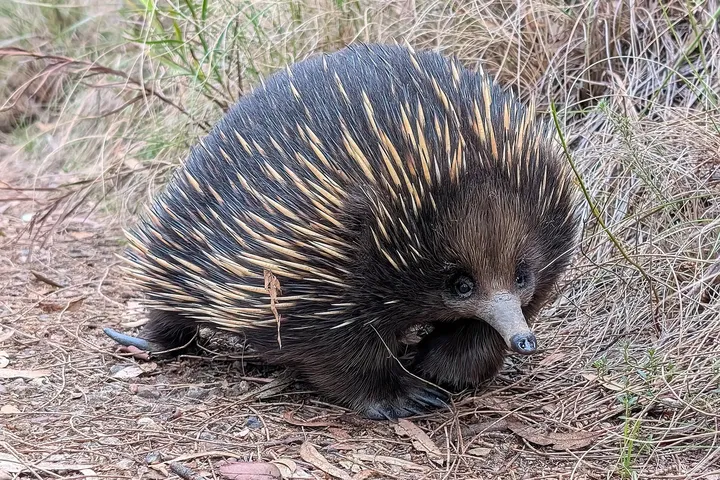
An Echidna in a Cat Trap Left a Ranger Unsure Whether to Cry or Scream
Trail cameras on Tasmania's Lungtalanana/Clarke Island have recorded echidnas at four sites, and an expert estimates a dozen or more may live there.

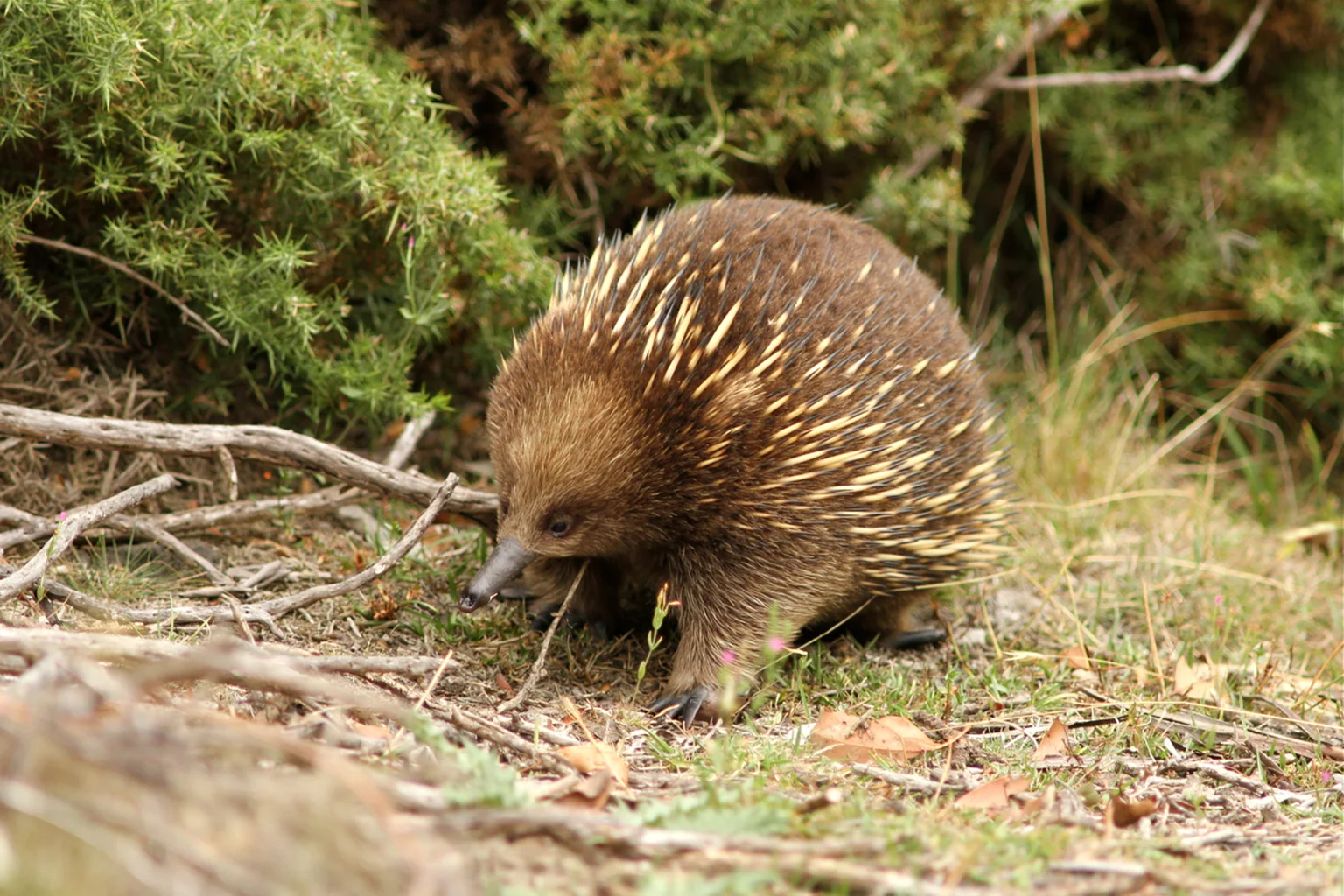
In September 2026, Pakana ranger Tasha Cooper found an echidna curled up inside a feral cat trap on Lungtalanana/Clarke Island, off Tasmania’s north-east coast. It was the first time the species had been seen in person on the island in decades. Trail cameras have now recorded echidnas at four separate locations, ABC News reported on Nov. 5.1
The trap was set for cats. In palawa kani, the language of Tasmanian Aboriginal people, the echidna is called trimanya.1
“The excitement was overwhelming. I didn’t know if I was going to cry or scream or what,” Cooper said in the ABC report.1
From one camera image to four sites
The island has reason to celebrate a single spiny mammal. A 2014 bushfire burnt 80% of Lungtalanana and destroyed 98% of its vegetation, according to the ABC, and there were fears it had wiped out the island’s echidnas.1 In 2023, rangers thought the island was mostly devoid of life.3
Then a trail camera recorded an echidna twice in 2023, on Aug. 1 and Nov. 5, from the same spot.2 Nobody found the images until 2024, because there were so many photos to review.1
WWF Australia, which supports the island’s Aboriginal-led restoration work, labelled the animal “Australia’s loneliest” echidna.1 At the time, ranger supervisor Kulai Sculthorpe told AAP the image showed animals had survived the fire, and rangers said they would work to find out whether other echidnas lived there.3
Camera surveillance was stepped up after that. One echidna image was recorded in 2025 and three more in 2026.1 The animals now being recorded could be fire survivors or their descendants.
One echidna or many?
Rangers don’t know whether the trail-camera images show one animal or several. They asked University of Tasmania echidna expert Stewart Nicol.1
Nicol said echidnas are secretive enough that estimating their numbers is hard without tracking them. Still, given the island’s size of about 8,230 hectares and four or five sightings, he said he would be surprised if there were fewer than a dozen.1
“There’d probably be more than 20 or 30 echidnas there, probably even more,” Nicol said in the ABC report.1
That is an expert’s estimate, not a count. If he is right, “loneliest” may have been less a case of being alone than of being hard to spot.
A bigger plan for the island
Lungtalanana, part of the Furneaux Group in Bass Strait, returned to Aboriginal ownership in 2005.1 In October, the Tasmanian Aboriginal Centre launched the Lungtalanana Restoration Project, which involves removing invasive species, tracking native wildlife and repairing habitat.1
The goal is to bring back animals that have disappeared from the island, such as Bass Strait wombats, Bennett’s wallabies and long-nosed potoroos. At least six species lost to predators, land clearing and fire could be re-established. The project will also create training and work opportunities for Palawa people.1
“It’s going to be a huge win for us, for the Palawa community,” Cooper said in the ABC report.1
First, though, the cats. Rangers say removing feral cats is the priority before major rehabilitation begins.1
“We want to make sure they’re gone before we start doing any major rehabilitation,” said Healthy Country ranger Tooarn Brown, speaking about feral cats.1
Did this make your day? Give it a cheer.
Sources
- Echidna sightings on Aboriginal-owned Lungatalanana/Clarke Island excite after extensive bushfires (headline: 'Australia's loneliest echidna' no longer solo after trail-cam discoveries) ABC News (Australia), by Sophie Jaggers, 2026-11-05
- Significant Survivor: Pakana Rangers' search for loneliest echidna in Australia WWF Australia
- Echidna digs in to help island wildlife back from blaze The Canberra Times (AAP)