That Echidna Barging Through Your Adelaide Yard May Be Running Late for a Date
A rescuer says suburban echidnas are usually headed somewhere specific, and the kindest move is often to wait up to an hour and let them carry on.

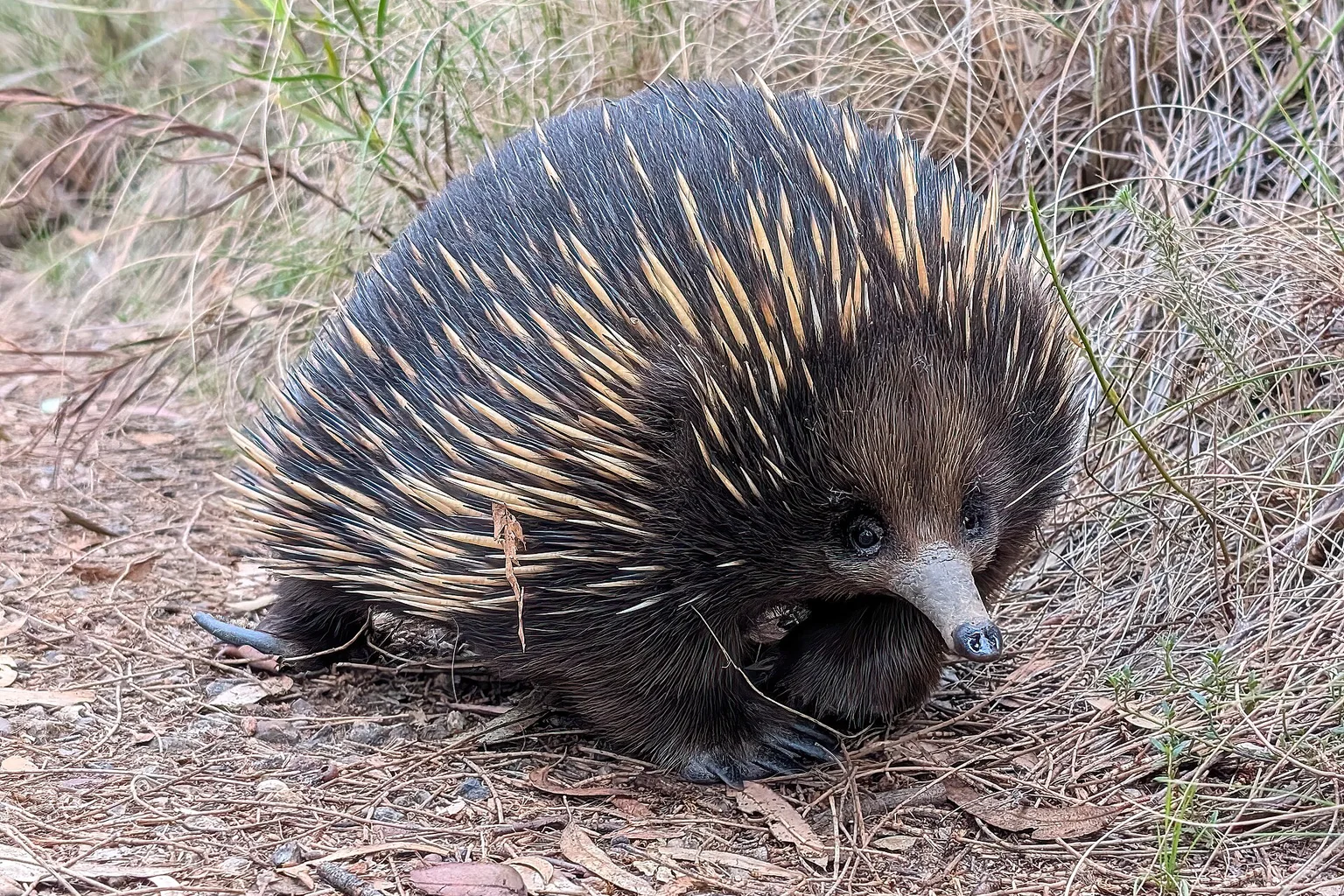
If an echidna turns up in your Adelaide backyard, the most helpful thing you can do may be nothing at all. That’s the message from Mish Simpson, co-founder of Southern Koala and Echidna Rescue. She told ABC Adelaide that people keep scooping up suburban echidnas and carrying them off to the bush, believing they’re doing them a favor.1
Echidnas are spiny, ant-eating mammals. According to Simpson, the ones wandering through the suburbs are generally “on a mission” and know exactly where they’re going.1 Moving one can interrupt that trip.
“I’m like, ‘This poor thing doesn’t want to be in the scrub. Stop taking it to the scrub. It’s trying to get somewhere,’” she told ABC Adelaide.1
A city-savvy animal
Adelaide’s echidnas are doing well. A spokesperson for South Australia’s Department for Environment and Water described the population as very stable and locally abundant wherever there’s habitat.1
They also get around the city with more skill than you might expect. Echidnas roam and use Adelaide’s stormwater network to reach water and food.1 The department spokesperson said they navigate well and can remember safe routes, which helps them steer clear of cars and people.1
Their defenses hold up, too. By curling into a ball, digging in and relying on their spines, they are relatively protected from cats, dogs and foxes, the spokesperson said.1 In 10 years of rescuing echidnas, Simpson has seen only one injury caused by dogs, a case where two dogs bit off an echidna’s beak. Most dogs, she said, give up after being pricked. Feral cats are a bigger danger than pet cats.1
Moved, and moved again
Part of the problem is that one good deed tends to invite another. Simpson said a well-meaning person who relocates an echidna is often followed by other people who move it again, so the animal can end up passed along like an unwanted parcel. Her advice for an echidna in the yard is to give it half an hour to an hour. Often, by then, it has left on its own.1
“I hate to think how many get moved on because they are species that some people are really scared of,” she said.1
The wildlife rescue group WIRES gives similar advice. It says healthy echidnas shouldn’t be relocated, because they can lose their scent trail or leave young behind unattended in a burrow. In spring, a male following a female’s scent trail is simply behaving normally.2
Simpson makes one exception: an echidna trying to cross a major arterial road or freeway.1 WIRES, for its part, advises that echidnas on roads should not be approached.2
A later season, from one rescuer’s view
Simpson has noticed echidnas becoming active later in the year than she used to see. “Their breeding season used to be in winter, but it’s September and October that’s becoming our busiest time,” she said.1 This is her observation from her own rescue work, not the result of a study, and the ABC report did not give a cause.
She described other things she found unusual: nursing mothers coming into care at the end of summer, and echidnas in care last winter that were very inactive and kept slipping into torpor, an energy-saving state where the body slows right down.1 “They’re all looking for their mates right now, which again, is really bizarre for it to be happening this late in the season,” she said.1
Calls to her group for advice climbed from 76 in 2024 to 212 in 2026, though Simpson herself wondered whether that reflects more people knowing about the group rather than more echidnas on the move.1 The number of echidnas her group actually takes into care has bounced around, from about 15 in one recent year to about 40 in another, with only four so far this year.1
What actually threatens them
The real dangers are not backyard visits. The department spokesperson named vehicle strikes and habitat loss, from native vegetation being cleared or degraded, as the greatest threats.1 Simpson said most of the injured echidnas she sees have been hit by cars, usually on dark, unlit, winding country roads outside the suburbs.1
Habitat matters because of what echidnas eat. Fallen logs, stumps, low understory plants and rocky areas all support ant colonies, a key food source.1
Did this make your day? Give it a cheer.
Sources
- Adelaide echidnas on the prowl as breeding season stretches late ABC News (891 ABC Adelaide), by Malcolm Sutton, 2026-10-24
- Echidna - WIRES WIRES (Wildlife Rescue)
- Adelaide rescuer reports later seasonal echidna activity ua.news, 2026-10-24