A 9-Year-Old Adopted Battery Hens Who Don’t Know What It’s Like to Be ‘Actually Loved’
Who Gives a Cluck buys laying hens from a caged egg farm before they're culled, checks their health and finds them adopters or a sanctuary.

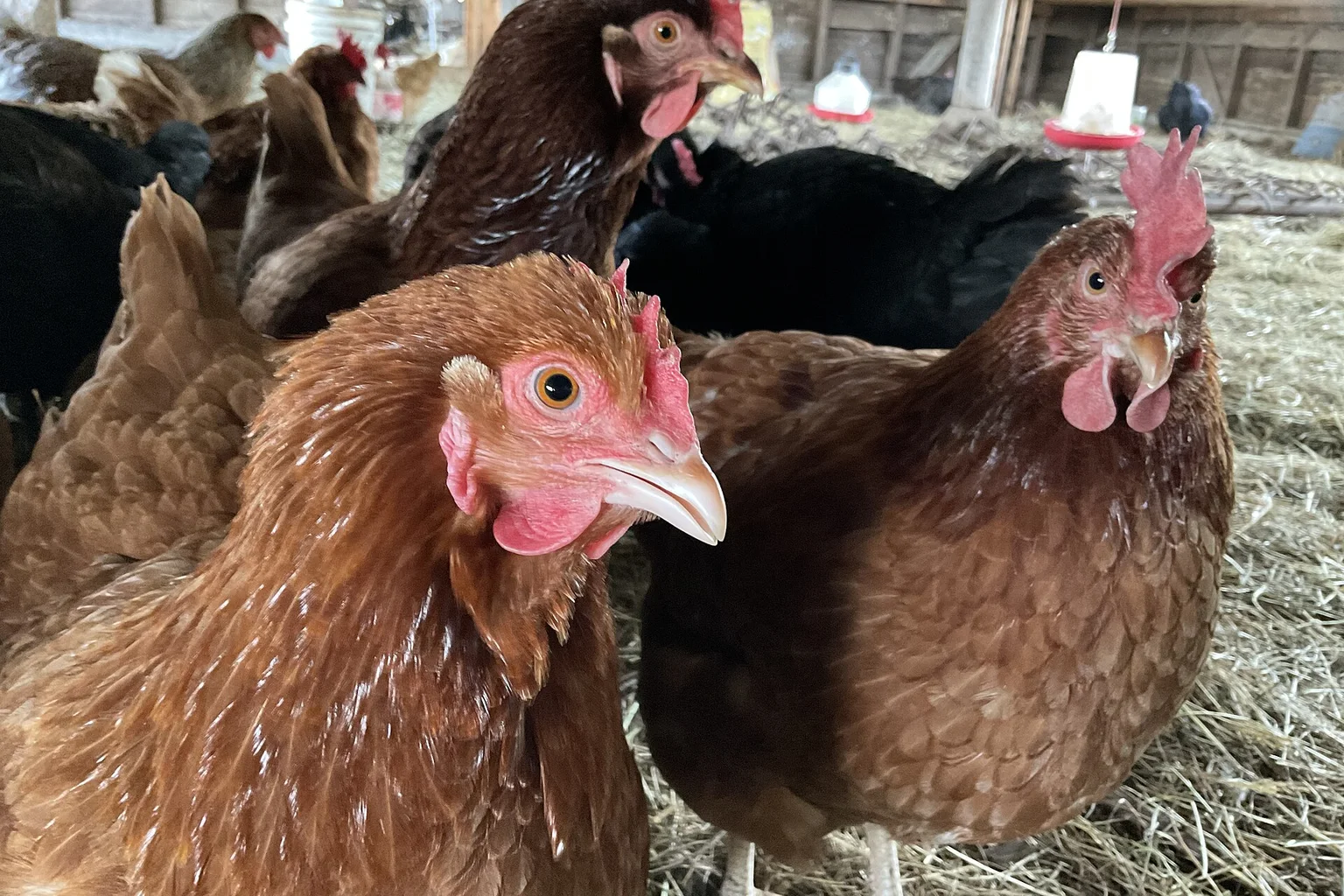
On a recent adoption weekend in Mullumbimby, in northern New South Wales, a purpose-built trailer pulled in carrying 247 hens. Every one of them had come from a commercial caged egg farm, and almost every one already had a new owner waiting.1
The hens were rescued by Who Gives a Cluck, a volunteer-run charity that takes battery hens off farms at around 18 months old, when they would otherwise be culled.4 Founder Julie O’Shea told ABC’s Landline that the charity has saved nearly 13,000 laying hens since 2017. Those totals are her own figures, and some of the hens live at the charity’s sanctuary rather than going to adopters.1
This year, O’Shea said, volunteers expect to rescue about 1,700 hens.1 That is a small fraction of Australia’s laying flock.
How the rescue works
O’Shea has had an arrangement with one farmer for about seven years. She pays him $2 (about $1.30 US) per hen, and the hens are matched with adopters before anyone drives out to collect them. The farm, on the Queensland side of the border, has not been named.1
“There’s trust because he knows we’re not going to go in there and secretly film,” O’Shea told Landline.1
It is an unusual partnership: an animal welfare charity and a caged egg farmer, held together by a promise about cameras.
Every hen gets a health check. In the batch Landline followed, 11 failed and were sent either to the charity’s hen hospital in Brisbane or to a local sanctuary.1
That sanctuary, the Mullumbimby hen “village,” houses about 100 chickens. Village hens are not adopted out, and there is a “Golden Girl” wing for those older than four and a half years, which in laying-hen terms is a distinguished age.1
Why battery hens
“I go for battery hens because I think it’s the worst situation, you know, locked in little cages,” O’Shea said.1
Dr Suzie Fowler of the RSPCA told Landline her organization has long pushed to phase out battery cages. She said hens have strong behavioral drives to forage, perch, nest, flap and dust bathe, and cages deny them all of these.1
Caged egg farming is still legal in Australia. O’Shea estimates caged eggs make up about 40 percent of the eggs Australians eat, counting eggs in processed foods. A national ban was set for 2036, and Victoria has announced a one-year delay to 2037 because of the H5N1 bird flu outbreak.1
How it began
The idea started small. In 2017, a local farmer offered his 18-month-old hens to anyone who wanted them, and O’Shea took him up on it. That became the start of the registered charity.3
The first rehoming came when a local farmer was about to cull a flock of 400. A notice on Facebook found homes for all 400 within 48 hours, a turnaround most people trying to sell a used couch online can only dream of.1
Today the charity runs on donations and adoption fees and holds eight adoption Saturdays a year, stretching from the Sunshine Coast to Grafton.1
For first-time adopter Denise Doyle, the appeal was simple.
“Very excited to see them touch grass for the first time and flap their wings and perch and all the things chickens should be able to do,” she told Landline.1
Joe Doyle, 9, gave his own reason for adopting: “Because they don’t know what it’s like to be actually loved.”1
Did this make your day? Give it a cheer.
Sources
- Volunteers connect ex-battery hens with new owners (headline: Charity helps thousands of caged hens find new homes) ABC News (Landline), by Mia Ginnivan, 2026-10-24
- Lucky cluckers? ABC listen (North Coast Breakfast)
- Ex-battery hens don't make the best layers. Here's why people adopt them anyway ABC News, 2023-05-01
- About - Who Gives a Cluck Who Gives a Cluck
- Saving 120 lives Happily Heifer After