A Photo Couldn’t Confirm This Rare Wallaby. Its Droppings Could
Cameras and scat DNA confirmed the endangered Nabarlek at two Kimberley sites, the first mainland Dambeemangaddee Country detections in over 50 years, AWC says.

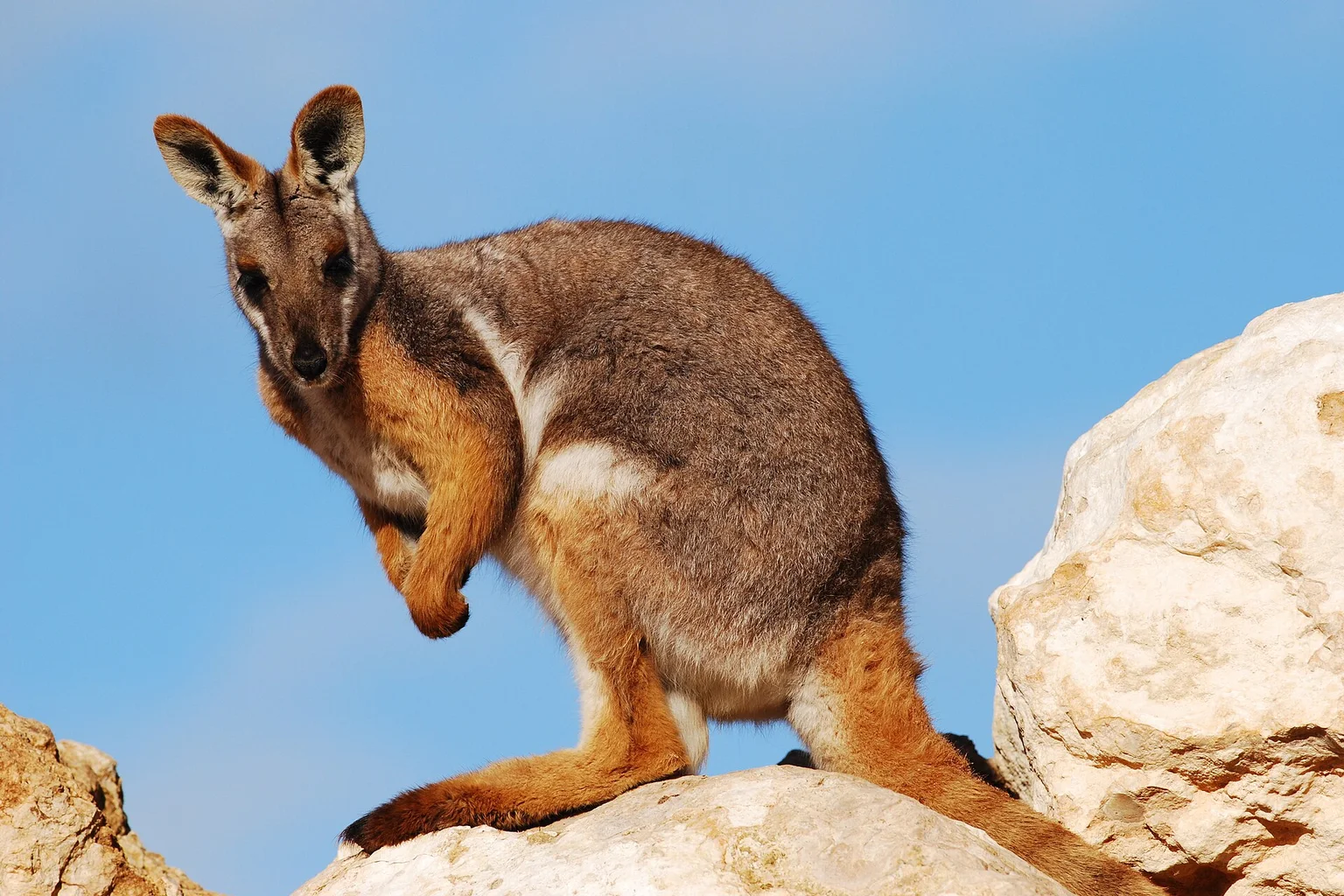
Australia’s second-smallest wallaby has turned up at two new sites in Western Australia’s Kimberley region. The Australian Wildlife Conservancy (AWC) and Dambimangari Aboriginal Corporation have confirmed the endangered Nabarlek at both locations.1
According to AWC, these are the first detections of the species on mainland Dambeemangaddee Country in over 50 years.1 The finds matter because they show this threatened wallaby still persisting on the mainland in places researchers didn’t know about. They also give conservationists and Traditional Owners new sites to protect and study. The species is still endangered, though, and two new sites don’t show that its numbers are recovering.
“This is very exciting and great news for the species,” Larissa Potter, AWC Senior Field Ecologist, said in the conservancy’s announcement. “It’s also reassuring as it indicates that this threatened wallaby is persisting on the Kimberley mainland in places we didn’t previously know about.”1
A wallaby on a military training area
One of the new sites is Yampi Sound Training Area, a Defence property on Dambeemangaddee Country. It covers 569,178 hectares, was bought by Defence in 1978 and has been managed by AWC since 2016.6 AWC does conservation and land management there under contract to Defence, in partnership with Dambimangari Aboriginal Corporation.4
Camera images and scats confirmed the Nabarlek there, which AWC says is the first record of the species on the training area. Yampi Sound is also one of 20 priority places in the federal government’s Threatened Species Action Plan.14 The second population turned up about 170 kilometers away, in the northeast of Dambeemangaddee Country.1
The sources describe the 50-year gap a little differently. AWC applies it to both sites, while Defence’s note says one of the two locations had gone undocumented for more than 50 years.14
The older Kimberley records come from five offshore islands and a handful of mainland sites. On Dambeemangaddee Country those include Wotjulum in 1954 and Kunmunya in 1972. Other sites on Wunambal Gaambera Country sit more than 230 kilometers from the new locations.1
Telling a Nabarlek from its look-alikes
The Nabarlek weighs about 1.2 kilograms and measures roughly 36 centimeters long, about the length of a loaf of bread. It lives in very remote, rocky country.13 Being small and remote is only part of the difficulty. It looks almost identical to the Monjon, which lives in the same areas, and it is sometimes genetically indistinguishable from the Short-eared Rock-wallaby.1
So a photo isn’t enough. The team works in three steps:1
- Motion-sensor camera images are used first to rule out the Short-eared Rock-wallaby.
- Field teams collect scats, which is to say wallaby droppings, for DNA analysis.
- Once the genetics confirm a Nabarlek, researchers go back to the photos and look for its distinctive markings.
That process has produced a verified image library to help tell the Nabarlek from its doubles.1 Defence says AWC and Dambimangari rangers made the identification using remote cameras and genetic analysis.4 The detections rest on AWC’s own camera and DNA work.
For Dambeemangaddee Traditional Owner Inga Pedersen, the news counters what she had heard. “We heard that the Nabarlek didn’t exist anymore (on the mainland), so it’s good to know that they’re there, it shows their Country is healthy,” she said in AWC’s release.1
Where the species stands, and what comes next
Elsewhere the picture is thinner. The Northern Territory has few recent records, and the species is thought to have disappeared from the Victoria River district.1 The IUCN Red List estimates there are 5,000 to 10,000 mature individuals, but that figure is uncertain.3
AWC and Dambimangari Aboriginal Corporation plan to use the two confirmed sites as a starting point to search for more populations and to investigate threats to the species.1
Did this make your day? Give it a cheer.
Sources
- Tiny wallaby detected on mainland Dambeemangaddee Country after 50 years Australian Wildlife Conservancy
- Tiny, elusive wallaby spotted on Australia trail cameras for the first time in 50 years Good Good Good
- Tiny wallaby spotted in the Kimberley for first time in over 50 years Perth is OK!
- Rare wallaby found on Defence land Australian Department of Defence, 2026-09-30
- Rare Wallaby Found On Defence Land Mirage News
- Yampi Sound Training Area Australian Wildlife Conservancy