Portia Jumping Spiders Fake Insect Vibrations. Their REM-Like Twitches Follow a Script
University of Bonn biologists who found REM-like sleep in jumping spiders told Hooray News what surprised them and what they want to test next.

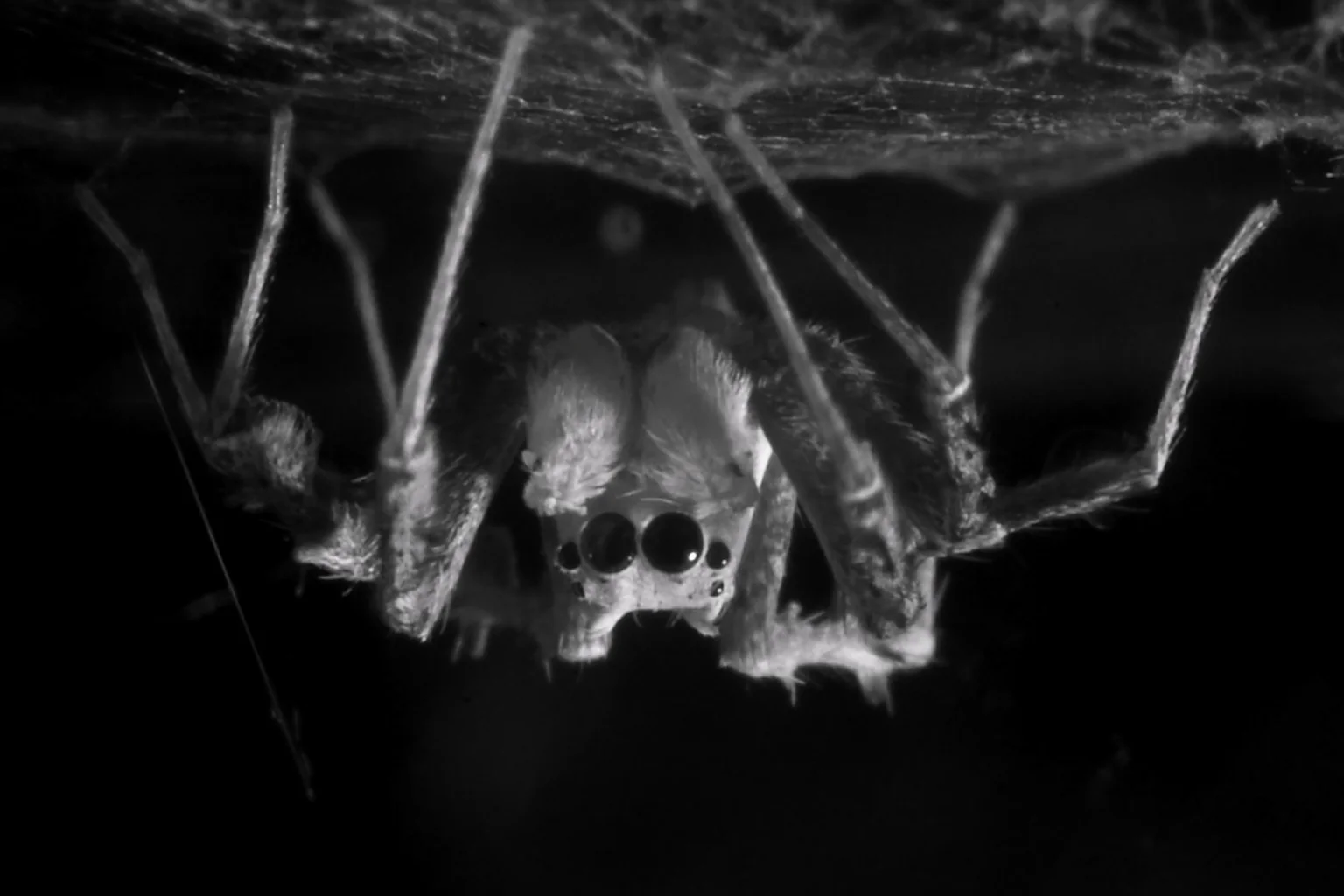
Daniela Rößler and Nadja Geiger, the University of Bonn biologists who led a study of REM-like sleep in the jumping spider Portia fimbriata, told Hooray News in a Nov. 4 email interview that they next want to disrupt only that REM-like stage. They also said its twitches were so regular that they learned to predict them.8
The study, published in PNAS on Oct. 26, reported that this Australian spider has regulated sleep with two distinct stages. One is a REM-like state with moving eye tubes and twitching muscles.1 Hooray News covered the findings on Nov. 3.9
Why it matters: the researchers say the work points to very old roots for sleep with separate stages. They told ScienceAlert, “We do think our findings support the idea that distinct sleep stages, including REM-like or active sleep, may have very deep evolutionary roots.”2
What the jumping spider sleep study found
The team kept spiders in 12-centimeter plastic dishes and filmed them for several days and nights with infrared cameras. To check that the spiders were truly asleep, they played a sound and timed the reactions.1 Spiders in the REM-like stage took more than four seconds to respond, compared with about three seconds for resting spiders.4
Then came the bad night. The scientists released 25 live fruit flies into each terrarium. The next night, the spiders had more REM-like episodes, though each episode was no longer than usual.3 ScienceBlog reports that 11 of the 13 spiders in that test spent more time in the REM-like state.3 The authors call this REM rebound and said that, “To our knowledge, this is the first demonstration of REM rebound in an invertebrate, which makes the finding particularly exciting.”2
The limits matter here. “REM-like” was judged from behavior alone. No brain activity was recorded, so the study cannot show that spiders dream. The work was done in a lab, on one species.1
What surprised the researchers most
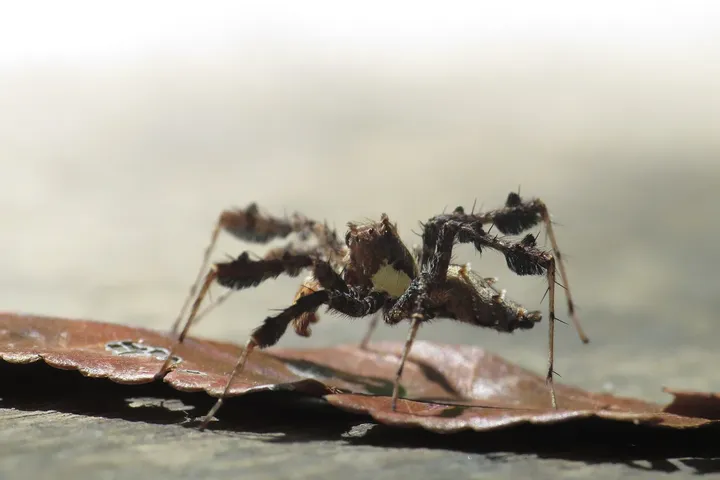
Portia fimbriata grows to about the size of a one-euro coin. Portia spiders hunt other spiders, sometimes by faking the vibrations of an insect caught in a web.8 For a genus that makes its living by deception, its sleep was strikingly predictable.
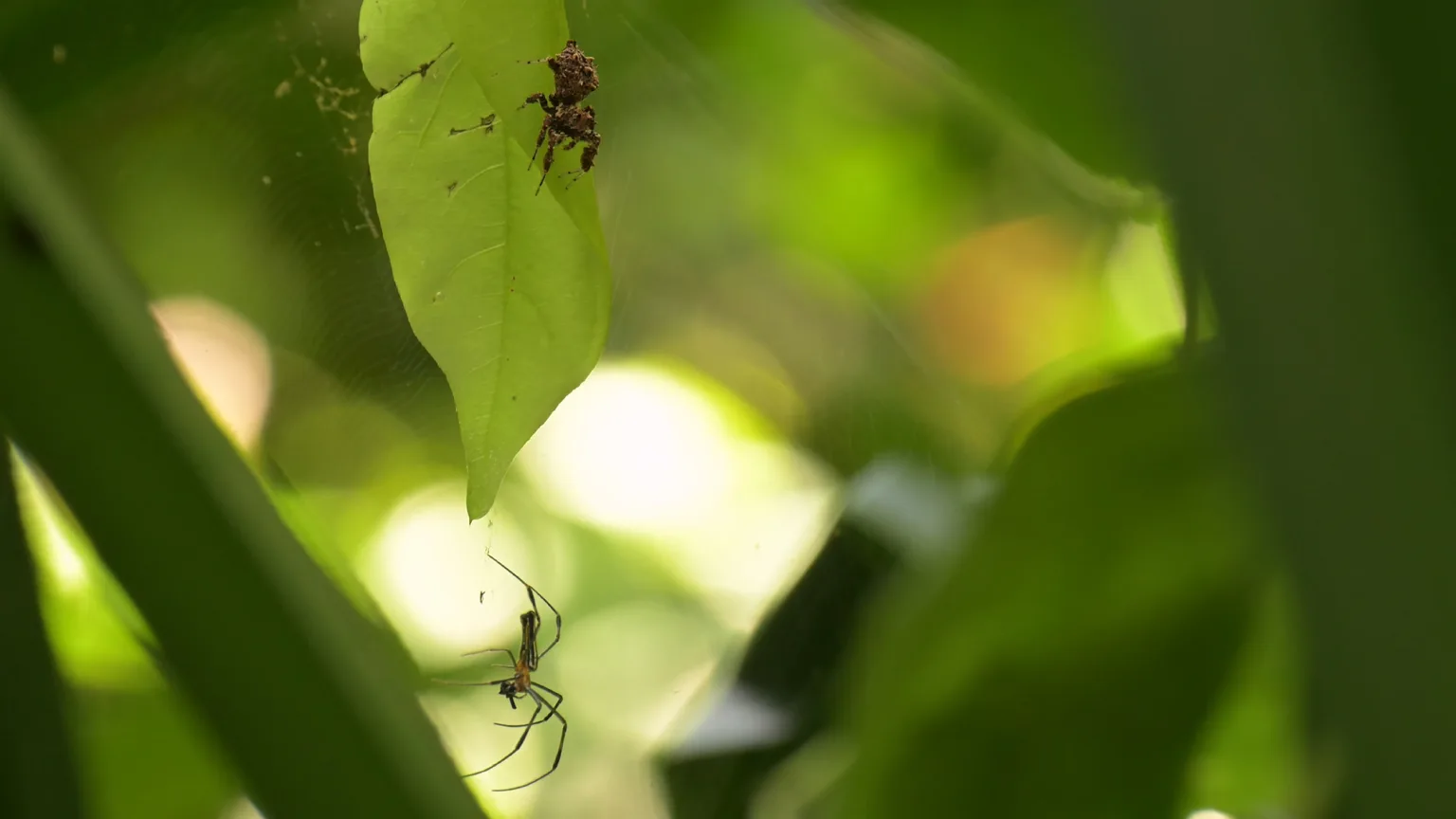
Rößler and Geiger told Hooray News that each REM-like bout followed a fine-tuned sequence. “Eventually, we could even predict which body part would twitch next,” they wrote. “I suppose we had expected the behavior to be more flexible in its expression, but that was not what we observed.”8
Next: disrupting only REM-like sleep
In the first experiment, the fruit flies disrupted the whole night. The researchers’ next step is more targeted. “Rather than disrupting the entire sleep phase, we would like to selectively disrupt REM-like sleep to investigate whether this results in a similar rebound effect,” they wrote. They also want to learn how disrupting REM-like sleep affects the spiders’ cognitive performance.8
The university says the team is also studying how REM-like sleep evolved across spiders, comparing sleep in the wild and in the lab, and testing how climate change and artificial light at night affect it.1
Why looking inside a spider’s brain is so hard
The obvious next question is what the brain is doing during those twitches. Measuring it directly means recording the brain’s electrical signals. “Although electrophysiological recordings are technically possible, they are extremely difficult to perform, even in awake spiders, and the animals would not survive the procedure,” the researchers told Hooray News.8
They added that the spider brain is far less understood than the brains of insects such as the fruit fly Drosophila, which makes any recording hard to read. Instead, they hope to try a staining method that shows which brain regions were active during REM-like sleep. They also hope more optogenetic tools, which switch nerve cells on or off with light, become available for less-studied animals like spiders.8
The pair said they were especially happy about the public interest in basic research that does not necessarily have immediate benefits for humans. “We hope our research will inspire people to become more curious about the natural world and help make spiders, an often misunderstood group of animals, seem more relatable and perhaps even fascinating,” they wrote.8 More about their work is on Rößler’s site and Geiger’s site.
Did this make your day? Give it a cheer.
Sources
- How deeply do spiders sleep? University of Bonn (research ticker / press release), 2026-10-27
- Spiders Can Rack Up REM-Like Sleep Debt (And May Even Dream), Just Like Humans ScienceAlert via Yahoo, 2026-10-26
- Australian jumping spiders twitch through REM-like sleep and, after a disturbed night, get about 80% more of it ScienceBlog.com
- Spiders Sleep, But Do They Dream? Defector
- Jumping spiders show REM-like sleep, but do they dream? The Brighter Side of News
- Highly intelligent spiders may dream like us New Atlas
- Two distinct sleep stages emerge in jumping spider, including a REM-like state Phys.org (University of Bonn release), 2026-10
- Email interview with Daniela Rößler and Nadja Geiger, the biologists who led the study, the University of Bonn (Nov. 4, 2026) Hooray News interview, 2026-11-04
- Jumping Spiders Sleep Upside Down, Twitch, and Make Up for Bad Nights Hooray News (our earlier story), 2026-11-03