Bangka Slow Loris, Listed as Possibly Extinct, Keeps Turning Up in Local Gardens
Rescuers on Indonesia's Bangka Island saved more than 90 of these venomous primates in a decade, but tin mining and power lines still keep them near extinction.

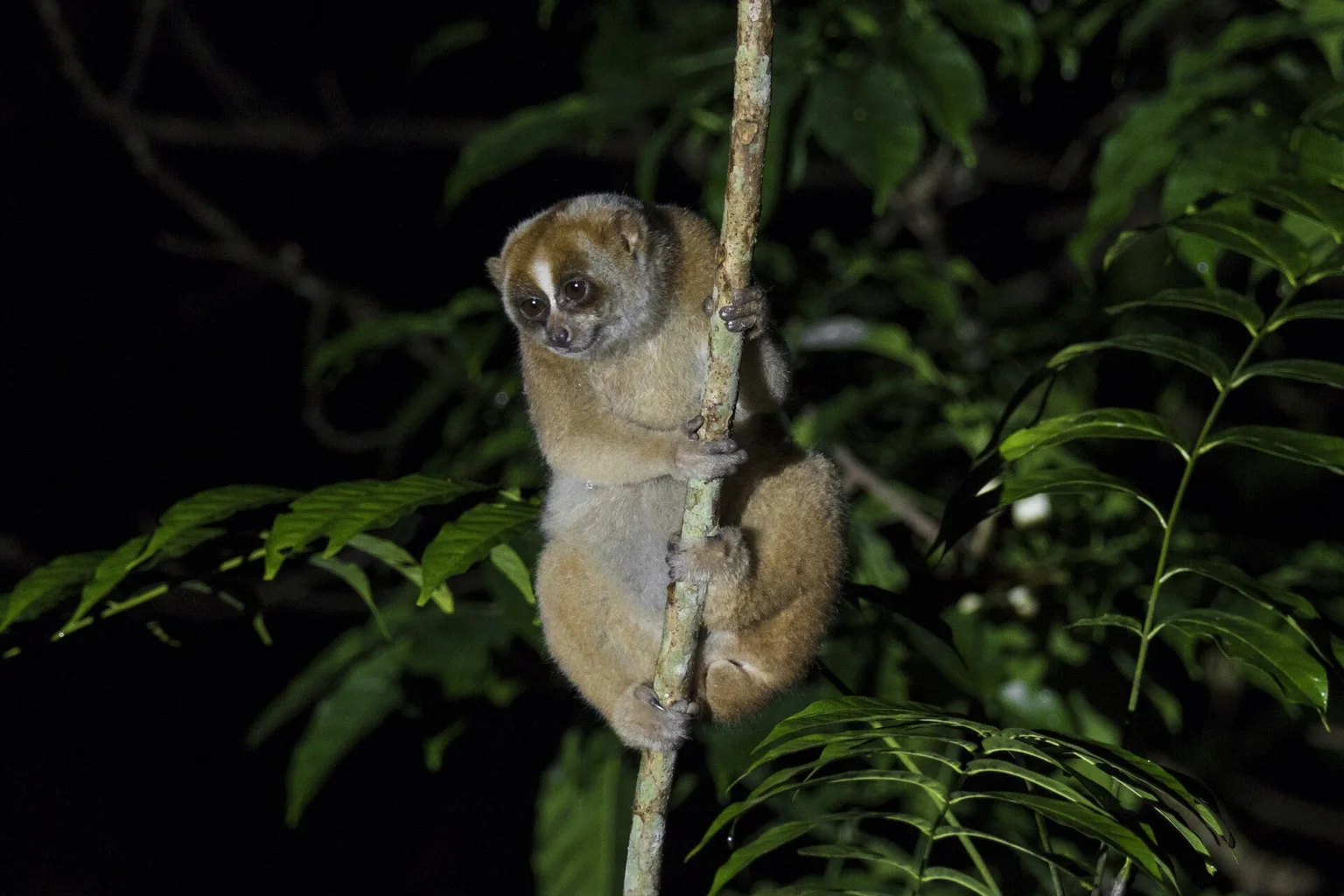
A study in the journal Spixiana, announced Oct. 20 by the conservation group Re:wild, reports that the Bangka slow loris is still alive on Bangka Island, Indonesia. The evidence is more than 90 lorises rescued between 2015 and 2025 by the local Alobi Wildlife Rescue Center. This venomous primate is officially listed as possibly extinct.1
The species had not been documented in the scientific literature since the 1930s, and the IUCN, which keeps the global Red List of threatened species, classifies it as Critically Endangered (possibly extinct).12 On Bangka, though, it was not exactly hiding. Alobi had been taking lorises in from gardens and roads for a decade, and local people knew the animals well.1
So the loris was never lost on Bangka. It was lost in the paperwork. “A species can disappear from the scientific record without disappearing from the lives of the people who share its home,” Benji Barca, exploration program manager at Re:wild, said in the group’s announcement.1
Putting the species back on the record matters because conservation decisions follow that record. The good news comes with a heavy caveat. The species remains Critically Endangered. “We are glad to contribute to the scientific record to show that the Bangka slow loris is not lost, but the species is still very close to extinction,” Langka Sani, Alobi’s director, said in the announcement.1
How a rescue log became a study
The project started when co-author Timon Glaw learned at Taman Safari Prigen, an Indonesian park, that the species was listed as possibly extinct. He was then put in touch with Alobi, which had documented encounters the scientific record lacked. Alobi wrote the study together with the Haus des Meeres Aqua Terra Zoo in Vienna and the Taman Safari Prigen Conservation Breeding Ark.1
The rescues came from all four regencies of Bangka and from the city of Pangkal Pinang. Of the more than 90 lorises taken in, 86 recovered and were released at seven sites. Most of those sites are larger forest fragments with some legal or practical protection.1 That spread suggests the lorises survive across much of the island, but the conclusion rests on where animals were rescued, not on a population survey.1
“What surprised me the most was that such a distinctive and fascinating primate could remain almost completely overlooked by science for nearly a century,” Glaw told Mongabay.2
A primate with venom
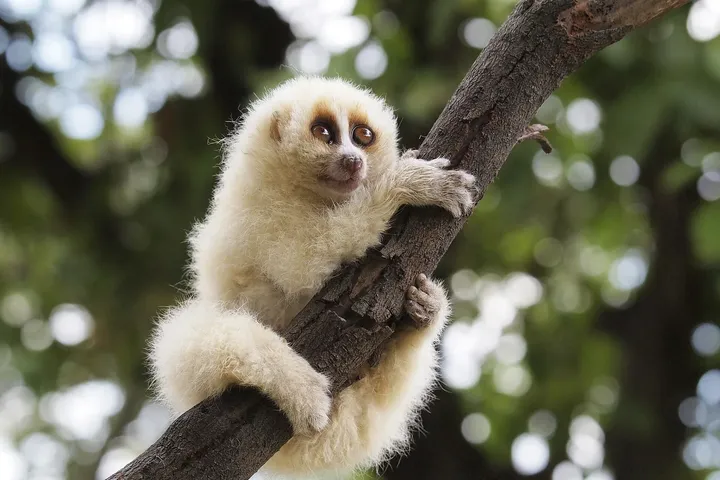
It is distinctive. Slow lorises are the only known venomous primates. They make their venom by mixing secretions from a gland on the inner upper arm with their saliva.1
The Bangka slow loris was first described in 1906. It was recognized as its own species only in 2013.1
The threats are still there
According to the authors, loris forest habitat on Bangka shrank by 62% between 2000 and 2012.2 Sani blames illegal tin mining and large-scale clearing for oil palm plantations.1
Bangka is home to more than 1 million people. The study names settlements, roads and power lines as significant threats, and the pet trade targets slow lorises across their range in Asia.1
The rescue records show what that looks like up close. In 2021 alone, Alobi rescued 43 lorises. Seven had electrical burns from power lines, others were hurt by vehicles, dogs or fences, and at least three died.2
What comes next
The authors recommend that the IUCN formally reassess the species and remove the “possibly extinct” tag. That reassessment has not happened yet. They also call for habitat protection, monitored releases with tracking afterward, and a conservation breeding program in captivity. Population surveys and genetic studies are among the next steps.12
“Bringing the Bangka slow loris back onto the scientific radar is only the first step,” Glaw said in Re:wild’s announcement. “The next challenge is to make sure it does not actually become extinct.”1
He told Mongabay the payoff could reach well beyond one primate: “Protecting its remaining natural habitats, together with Bangka’s threatened freshwater ecosystems, could help safeguard many other unique species that receive far less attention.”2
Did this make your day? Give it a cheer.
Sources
- Venomous primate lost to science for nearly a century turns up in gardens and on roads, where local rescuers have found it for a decade Re:wild, 2026-10-20
- Venomous Indonesian primate feared extinct still clings on – but threats persist Mongabay, 2026-11-02
- Venomous primate thought lost to science for nearly a century turns up in gardens and on roads across Indonesia Asia Research News
- Bangka Slow Loris Rediscovered on Bangka Island Despite Being Near Extinction Indonesia Expat