Homo Erectus Was Supposed to Be a Grassland Type. The Teeth Disagree.
Eight teeth from two caves in Guangxi, China, suggest Homo erectus lasted in tropical forest until about 184,000 years ago, in a habitat it was thought to avoid.

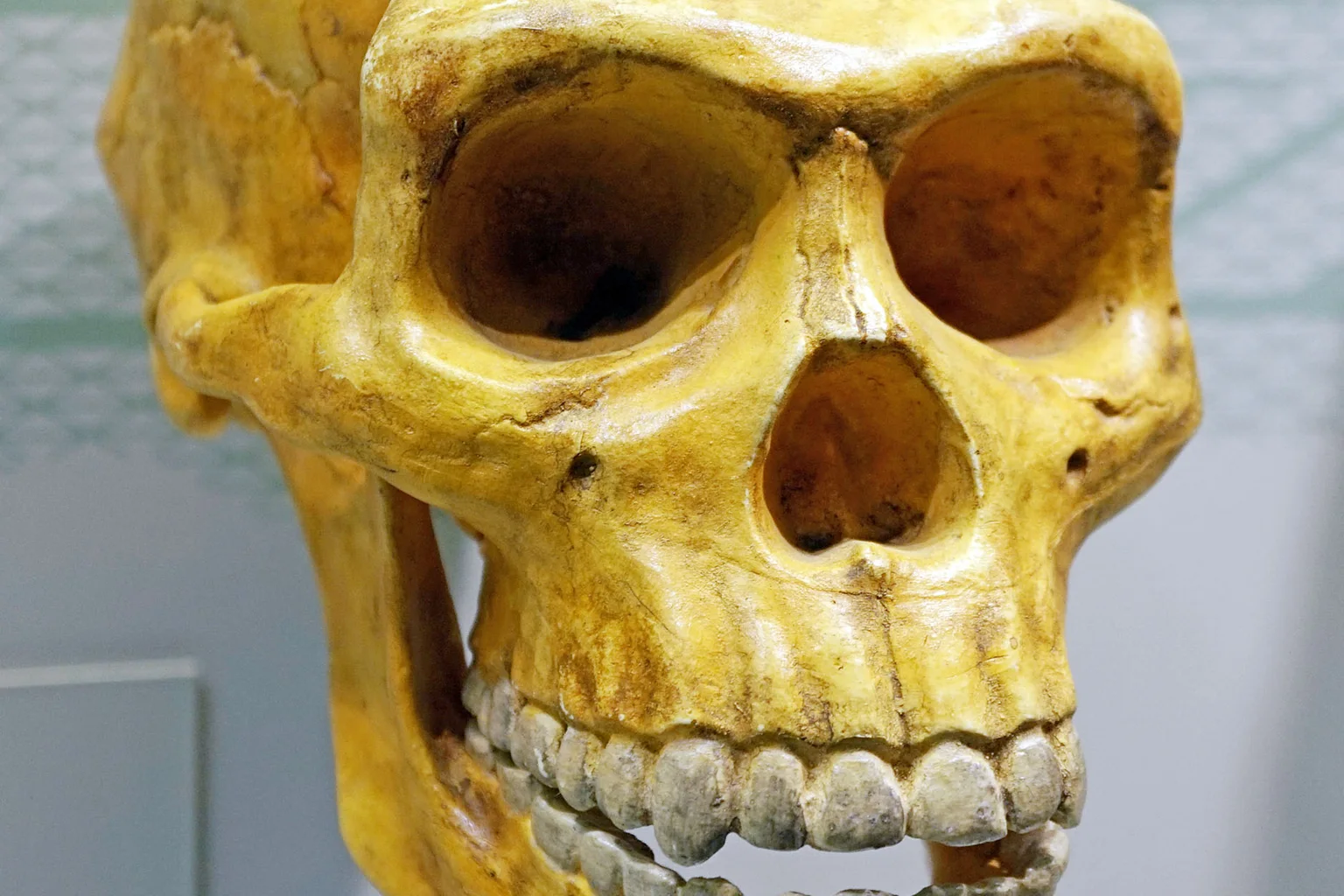
Eight Homo erectus teeth from the Baxian and Naxian caves in Guangxi province, southern China, show the early human species lived in tropical rainforest between about 324,000 and 184,000 years ago. That is later than previously established for the region. The finding comes from a pair of studies published Nov. 18 in Nature.16
Homo erectus has long been pictured as a creature of open country. Scientists based that picture on Javan sites such as Trinil, Sangiran and Ngandong, where the species lived among patches of open woodland and grassland. There were few direct chemical measurements of its habitat anywhere in Asia.1
That matters for how the story of the species ends. Researchers had suggested that spreading rainforest may have helped push the last Homo erectus populations to extinction, and that only our own species, Homo sapiens, could make a living in such places.5 The new teeth complicate that idea. The authors describe their results as challenging assumptions about where the species preferred to live.1
What the teeth say about the forest
The team studied nine hominin teeth from the two sister caves. Hominin is the scientific term for humans and our close extinct relatives. Eight teeth were identified as Homo erectus from both their shape and their molecular makeup.1 The ninth is still under study and may have belonged to a Denisovan, a different extinct human group.3
Isotopes, slightly different forms of the same chemical element, record clues about what an animal ate and where it lived. All the Homo erectus teeth gave isotope signals consistent with dense or open-canopy rainforest, and so did the teeth of other animals from the caves.3 The picture is not uniform jungle, though. Three Homo erectus teeth from Naxian sat at the boundary between dense forest and more open woodland, still a contrast with the more open settings at Sangiran and Trinil.5
The caves also produced more than 18,000 mammal fossils.7 Eight teeth are a tiny share of that pile, but they turned out to carry the headline.
“This is a fascinating discovery because it confirms the presence of Homo erectus in a location we were not expecting and at a time we hadn’t considered,” Kira Westaway of Macquarie University said, as quoted by Archaeology Magazine.2
Dating, proteins and a possible long walk
To build the timeline, the team modeled 43 radiometric ages drawn from five dating techniques. Radiometric dating measures the steady decay of radioactive elements to estimate age. Their range of 324,000 to 184,000 years ago is substantially more recent than the roughly 400,000 years previously established for unmistakable Homo erectus fossils in the region.1
Ancient proteins came out of five of the teeth. Four carried a small change in ameloblastin, a protein involved in building tooth enamel. That change had only been seen before in Chinese Homo erectus fossils about 400,000 years old, which suggests a population never sampled at the molecular level before.56
Then there is strontium, an element whose isotope mix varies with local geology. In four teeth, the strontium signal shifted within a single tooth. The authors read this as movement between geological regions, possibly as far as about 250 kilometers (about 155 miles) toward northern Vietnam.5
“Some of the chemical signatures in the fossil teeth point well beyond the immediate cave region, potentially towards northern Vietnam and mainland Southeast Asia,” Renaud Joannes-Boyau of Southern Cross University said, as quoted by Sci.News.5
If that reading holds, some of these individuals got around. For a species once thought to belong on the grassland, a trek through tropical forest is a noticeable change of scenery.

Did this make your day? Give it a cheer.
Sources
- Rainforest adaptation in late Homo erectus from southern China Nature, 2026-11-18
- Homo Erectus Survived in Southern China's Tropical Rainforests Archaeology Magazine, 2026-11-19
- Homo Erectus May Have Survived in China 200,000 Years Longer Than We Thought National Geographic, 2026-11-18
- Rainforest adaptation in late Homo erectus from southern China - PubMed PubMed / NCBI, 2026-11-18
- Homo erectus Thrived in Chinese Rainforest Far Later than Thought Sci.News, 2026-11-19
- Homo erectus Was Still Living in China's Rainforests 184,000 Years Ago, Fossil Teeth Show Ancient Origins, 2026-11-19
- Major Fossil Discovery in China Reveals New Secrets About Mysterious Hominin Ancestors ScienceAlert, 2026-11-19