
Gannets Follow Boats for Snacks. Turns Out That Makes Them Decent Microphone Stands
Oxford-led researchers put audio recorders on gannets and shearwaters and found many boats they heard had no tracking signal, a gap that matters for seabird bycatch.

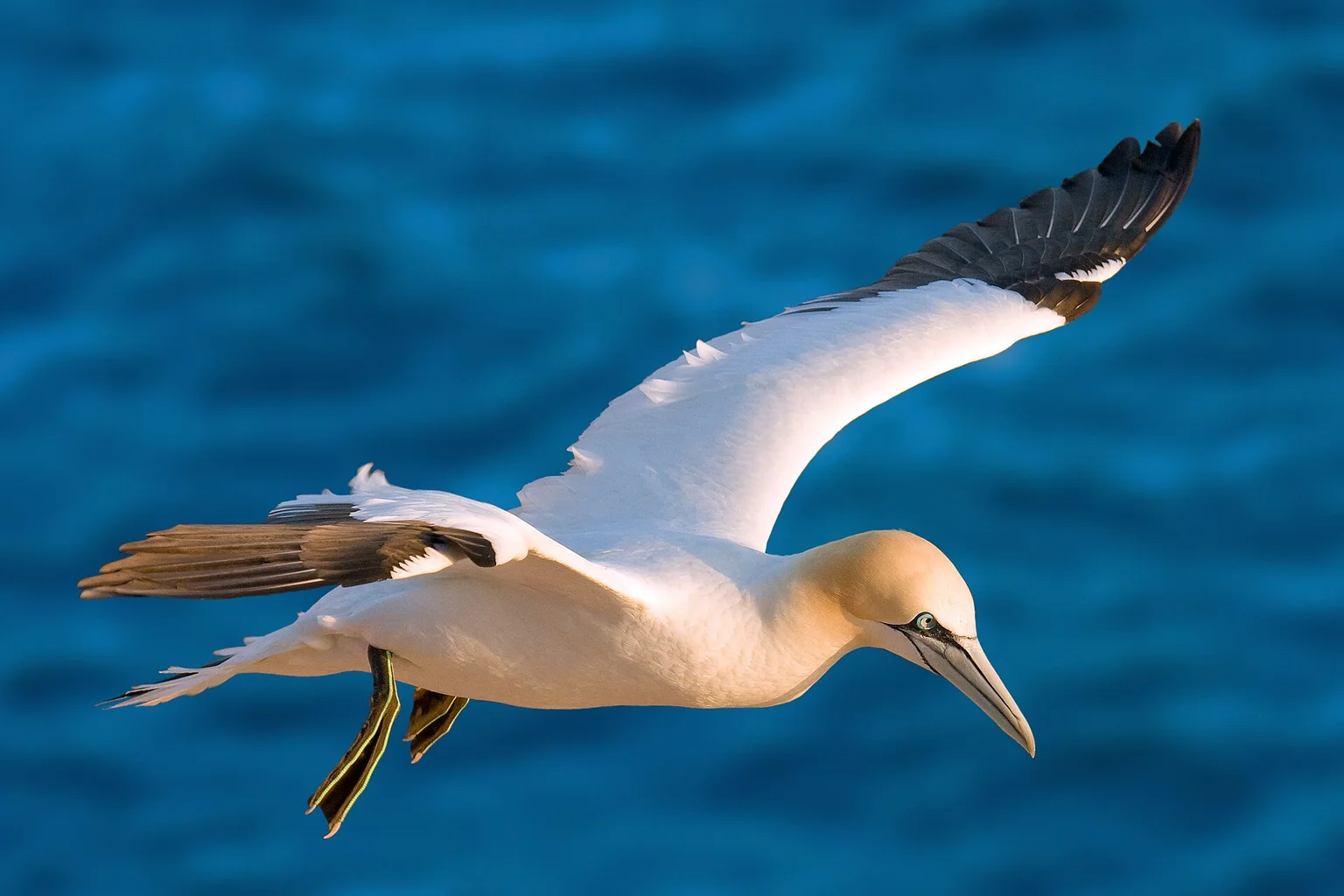
Seabirds fitted with tiny audio recorders and GPS trackers picked up the engine noise of many vessels that did not appear in public tracking data. The University of Oxford-led team published the study in Science Advances on Nov. 25. At least a third of the vessel sounds northern gannets recorded could not be matched to any tracking signal.1
That gap matters for seabirds. The researchers say audio from birds could help fill holes in vessel monitoring and sharpen estimates of bycatch risk. Bycatch means birds accidentally caught in fishing gear.13 It does not yet tell anyone who was on those boats or what they were doing, and the team says so plainly.
How the birds listened
The study followed three species, each living in a different ocean habitat: the northern gannet, the Balearic shearwater and the Westland petrel.3 Together they covered fishing grounds in the North Atlantic, the Mediterranean Sea and the South Pacific.2
The recorders were not there for birdsong. They captured the low-frequency hum of boat engines. The researchers built a computer method to find those hums in hours of recordings. Then they checked each detection against positions from AIS, the Automatic Identification System that many vessels use to share their location, and, where available, against another tracking system called VMS.12
Gannets were well placed for the job. “While fisheries bycatch is a global threat to seabirds, some species, like gannets actually benefit from fishing vessels as a source of food,” co-author Prof. Stephen Votier of Heriot-Watt University said in Oxford’s announcement.1 A bird that follows boats for a meal makes a fairly reliable microphone stand.
The numbers
For gannets, at least a third of the audio detections were of a vessel that could not be matched to a public tracking signal. For Balearic shearwaters, it was more than one in ten.1 The Science Advances summary puts the gannet figure at a minimum of 32%.3
The team then estimated how far each bird was from the nearest tracked vessel. With that method, they estimated that about 57% of vessel sounds recorded by gannets, and 20% recorded by Balearic shearwaters, may have come from untracked vessels.1
“We know that seabirds regularly interact with fishing vessels at sea, but what surprised us was just how many of these interactions were missing from conventional tracking records,” lead author Dr Jonathan Rutter of Oxford’s Department of Biology said in the university’s announcement.1
What the study does not show
The study cannot say why any particular vessel was untracked. Not every vessel is required to transmit its location, and others drop off tracking because of technical problems or because someone switched the system off.1 The authors write that poor satellite reception hides some boats, while others deliberately disable their AIS transponders, often to conceal illegal, unreported or unregulated fishing.4
Rutter has been careful about that last point. “We want to emphasize that illegal fishing is a possibility, but that is not actually what we’re showing,” he told 404 Media, as quoted by SoFX.4
Oxford says the goal is not to identify or monitor individual fishing vessels in real time. It is to build a clearer picture of how seabirds interact with fishing activity.1
Why it could help seabirds
Bycatch is a global threat to seabirds, and the critically endangered Balearic shearwater is at particular risk.1 Risk assessments for bycatch and collisions with boats can be skewed when small-scale fisheries, poor AIS reception or switched-off transponders leave vessels off the map. The authors say audio detection could help correct that bias.3
A fuller picture could help identify the areas, fisheries and ports where measures to reduce bycatch are most needed.1
For now, the method only detects that a vessel is present. Future work could try to tell the engine sound of a small fishing boat from that of a larger trawler.1
Did this make your day? Give it a cheer.
Sources
- The birds are listening: seabirds reveal hidden fishing activity at sea University of Oxford, 2026-11-24
- Seabirds With Audio Recorders Are Hunting Down Unseen Ships—and Finding More Than Expected Gizmodo, 2026-11-25
- Seabird-Mounted Audio Recorders Expose Hidden Fishing and Shipping Vessels ECO Magazine, 2026-11-25
- Seabirds Fitted With Microphones Detect Untracked Fishing Vessels Across Three Oceans SoFX, 2026-11-27
- When researchers fitted seabirds with tiny recording devices, they overheard something worrying Discover Wildlife (BBC Wildlife), 2026-11-25