
Hazel Dormice May Be Recovering, and Warm Summers Are the Suspect
A PTES report built on volunteer data finds hazel dormice rose almost 10% from 2020 to 2025, though numbers remain nearly 60% below 2000 levels.

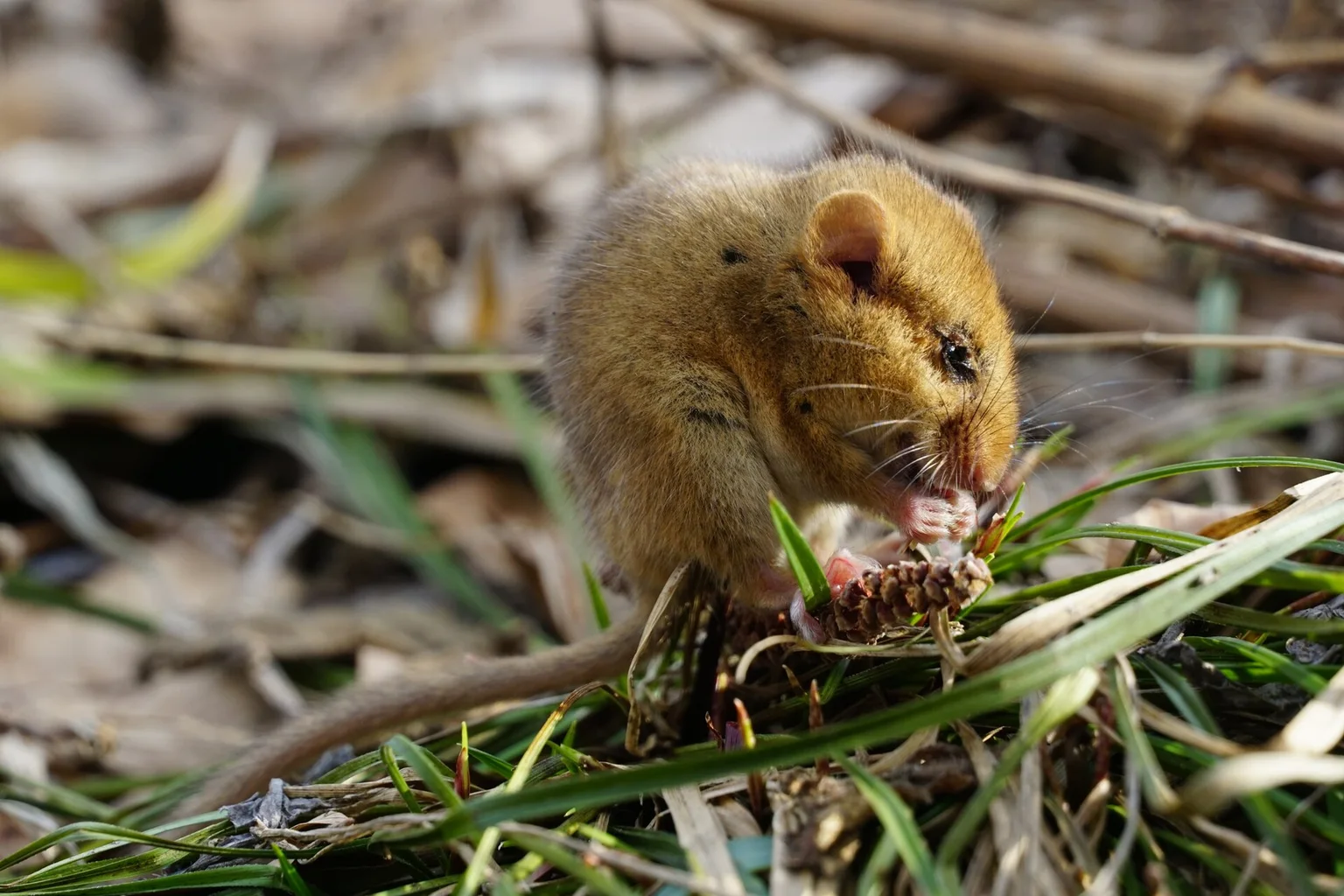
Hazel dormice in England and Wales may be starting to recover, according to a report from the People’s Trust for Endangered Species (PTES) covered by BBC News and PA on Nov. 9. Volunteer data suggest numbers rose by almost 10% between 2020 and 2025. Researchers stress there is considerable uncertainty around that estimate, and the population is still almost 60% below its 2000 level.12
That second number matters. Since the start of the century, dormouse numbers have fallen by 59.4%, an average decline of 3.5% a year, according to the National Dormouse Monitoring Programme, which PTES leads.2 A small rise after two decades of losses is welcome. It is not a comeback yet.
The figures come from volunteers who check on dormice at hundreds of sites across England and Wales.2
A tiny animal with a very long nap
The hazel dormouse is the only dormouse species in the UK. It hibernates from around October to May, and that is just the scheduled part.1
In cold, wet weather, or when food runs short, dormice can also slip into torpor even in spring and summer. Torpor is a short spell of deep sleep that saves energy but leaves less time for eating and raising young.1
That is why researchers are watching the weather. The 2020 to 2025 upturn lined up with warmer, drier-than-average springs and summers. PA reported that central England had warmer, drier springs and summers in that stretch than in the previous five years, and spring 2025 was exceptionally hot and dry.12
Scientists believe warmer summers may cut down how often dormice need to drop into torpor, leaving more energy for feeding and breeding. So the hopeful theory is that dormice did better because they slept a bit less. That link is a plausible explanation that matches the timing, not a proven cause.1
Dr Charlotte Armitage, an ecologist who worked on the survey, said warmer summer conditions are likely to give dormice more energy to reproduce and raise extra litters. She also pointed to significant uncertainties, including how the animals will cope with warmer, wetter winters.1
“This is good news, but we can’t be complacent,” Armitage told BBC News.1
Where the dormice are, and where they aren’t
PA reports an estimated 750,000 hazel dormice live in the UK. The species is listed as vulnerable to extinction in Britain.3
Its range has shrunk to mostly southern England and parts of Wales. Dormice have disappeared from around 20 English counties, and they have been reintroduced to six of them.13
Ian White, dormouse and training officer at PTES and a co-author of the report, kept the celebration measured.
“Our findings offer grounds for cautious optimism for dormice, and although the recent upturn is welcome good news, we mustn’t lose sight of the bigger picture: populations remain almost 60% lower than they were in 2000,” White said in PA’s report.2
What would help next
Good weather can’t be scheduled. Habitat can be planned. PTES says the most important work for long-term recovery is creating more wooded, species-rich habitat and reconnecting woodlands, scrub and hedgerows so dormice can move between them.23
For now, the volunteers will keep counting, and the next few years of data will show whether this small rise becomes a trend.

Did this make your day? Give it a cheer.
Sources
- A glimmer of good news for Britain's sleepy dormouse (BBC article syndicated on Yahoo News) BBC News via Yahoo News, 2026-11-09
- Dormice numbers down 59% since 2000 but recent upturn prompts 'cautious' hope LBC (PA Media report), 2026-11-09
- Struggling native British animal given boost from hot and dry weather AOL UK (PA Media report), 2026-11-09