A Cheetah Cub Cam Alum Is Back on the Cub Cam, This Time as Management
Zura's litter was on the Cheetah Cub Cam in 2021. Now she has five cubs in Virginia, and anyone can watch a vulnerable species' newest family.

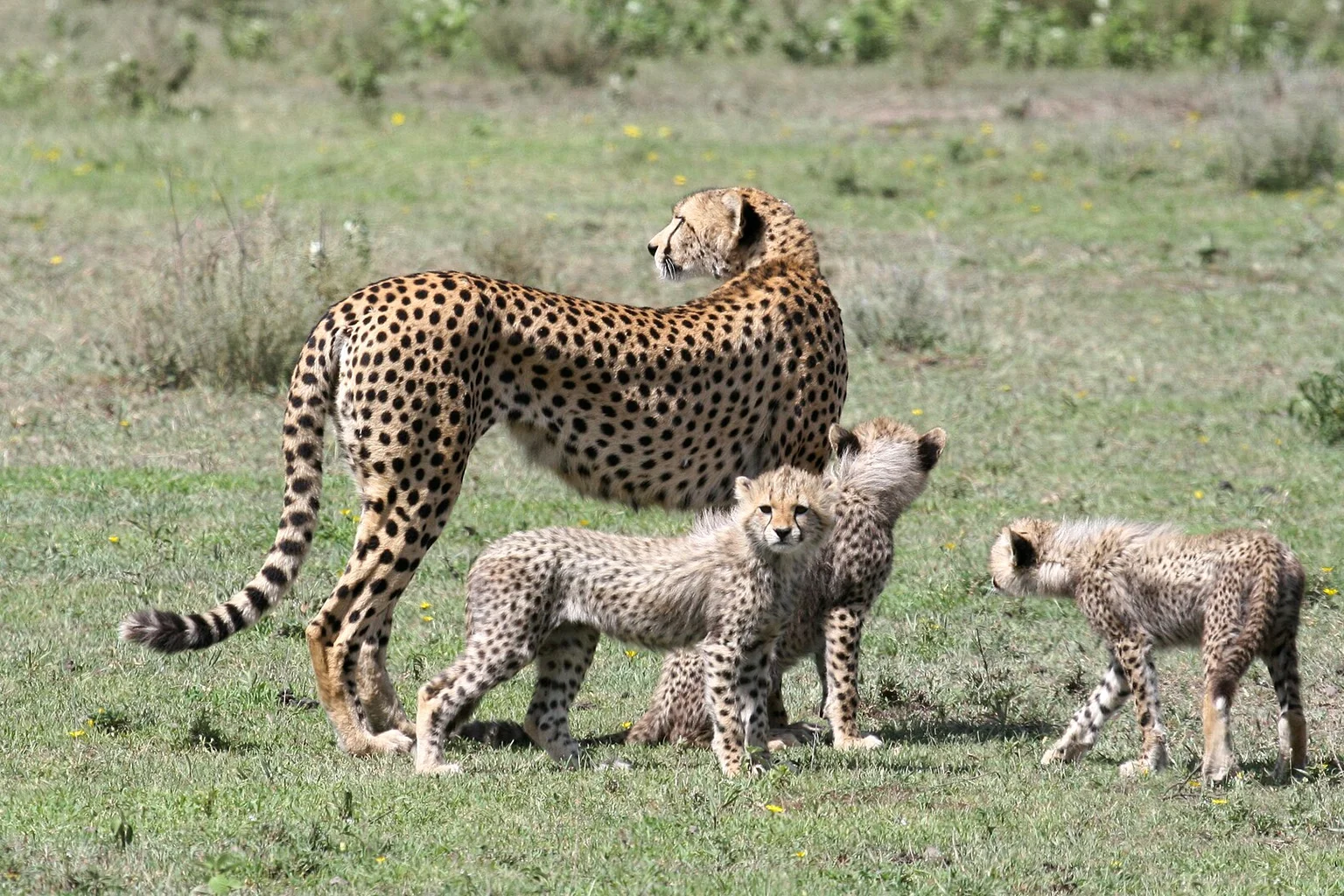
In 2021, a cheetah named Zura was one of five cubs whose litter was featured on a Smithsonian webcam. Now she has a litter of five herself, and the camera is rolling again.12
On Monday, Oct. 5, the 5-year-old first-time mother gave birth to five healthy cubs at the Smithsonian’s National Zoo and Conservation Biology Institute (NZCBI) campus in Front Royal, Virginia. The public can watch the family on the zoo’s live Cheetah Cub Cam.1
Every healthy litter counts. Fewer than 7,000 cheetahs remain in the wild, and the International Union for Conservation of Nature, which tracks the health of species worldwide, lists them as vulnerable to extinction.1
“Cheetahs are notoriously difficult to breed, and our team pours countless hours into each and every surviving cub,” Adrienne Crosier, NZCBI’s curator of carnivores, said in the Smithsonian’s announcement.
The public gets the keepers’ view
The webcam is the same feed animal care staff use to keep an eye on the family remotely, and keepers watch it around the clock.2 Anyone with an internet connection gets the same view as the professionals.
So far, keepers report that Zura is attentive and all five cubs are active and nursing frequently. Staff plan to stay hands-off for several weeks so the family can bond.15
The den may sometimes look empty, because Zura may move her cubs out of the den and out of the camera’s view.1 When the family is in frame, Good News Network described the sounds coming through the feed as soft chirps, tiny purrs and meows.3
The cubs’ father is Flash, a 9-year-old male with seven cubs from earlier litters. His part in this one is finished. Male cheetahs play no role in raising young.1
Four generations in one place
The new litter means four generations of the same cheetah family now live at the Front Royal campus: great-grandmother Sanurra, grandmother Rosalie, Zura and her five cubs.15
“Having four generations in our care is proof-positive of our coordinated efforts to preserve this imperiled species,” Crosier said in the announcement.
Crosier also leads the Cheetah Species Survival Plan, North America’s coordinated cheetah breeding program. NZCBI belongs to the Cheetah Breeding Center Coalition, a group of 10 U.S. breeding centers working toward a sustainable North American cheetah population under human care.1
These particular cubs may be especially useful to that effort. Flash is considered genetically valuable, so his offspring will likely matter to the program’s future breeding plans.1
Where the cubs go next
Cubs born at the Front Royal campus grow up differently from animals at the zoo in Washington, D.C. They have limited human contact early in life.2
Where the five will eventually live is still undecided. Whether they move to the D.C. zoo or stay in Front Royal will be settled after their second birthdays.4
Did this make your day? Give it a cheer.
Sources
- Litter of Five Cheetah Cubs Are Born at Smithsonian Conservation Campus; Cheetah Cub Cam Returns Smithsonian Institution (Newsdesk), 2026-10-09
- Cheetah Cub Cam Smithsonian's National Zoo and Conservation Biology Institute
- LIVE Webcam Brings You Inside Cheetah Den With 5 Tiny Cubs Tended By Mom (WATCH and HEAR) Good News Network, 2026-10-25
- Baby Animal Alert: Five Cheetah Cubs Were Born at the Smithsonian Washingtonian, 2026-10-09
- Smithsonian welcomes five cheetah cubs as live camera returns WJLA 7News, 2026-10-12
- Five Cheetah Cubs Born at Smithsonian Campus in Front Royal The Winchester Gazette, 2026-10-11