Fences, Poison Bait and a Perth Zoo Nursery Pulled Numbats Back From About 300
From about 300 animals in the 1970s to an estimated 2,000 to 3,000 today, the termite-eating marsupial shows predator control works, as long as it keeps going.

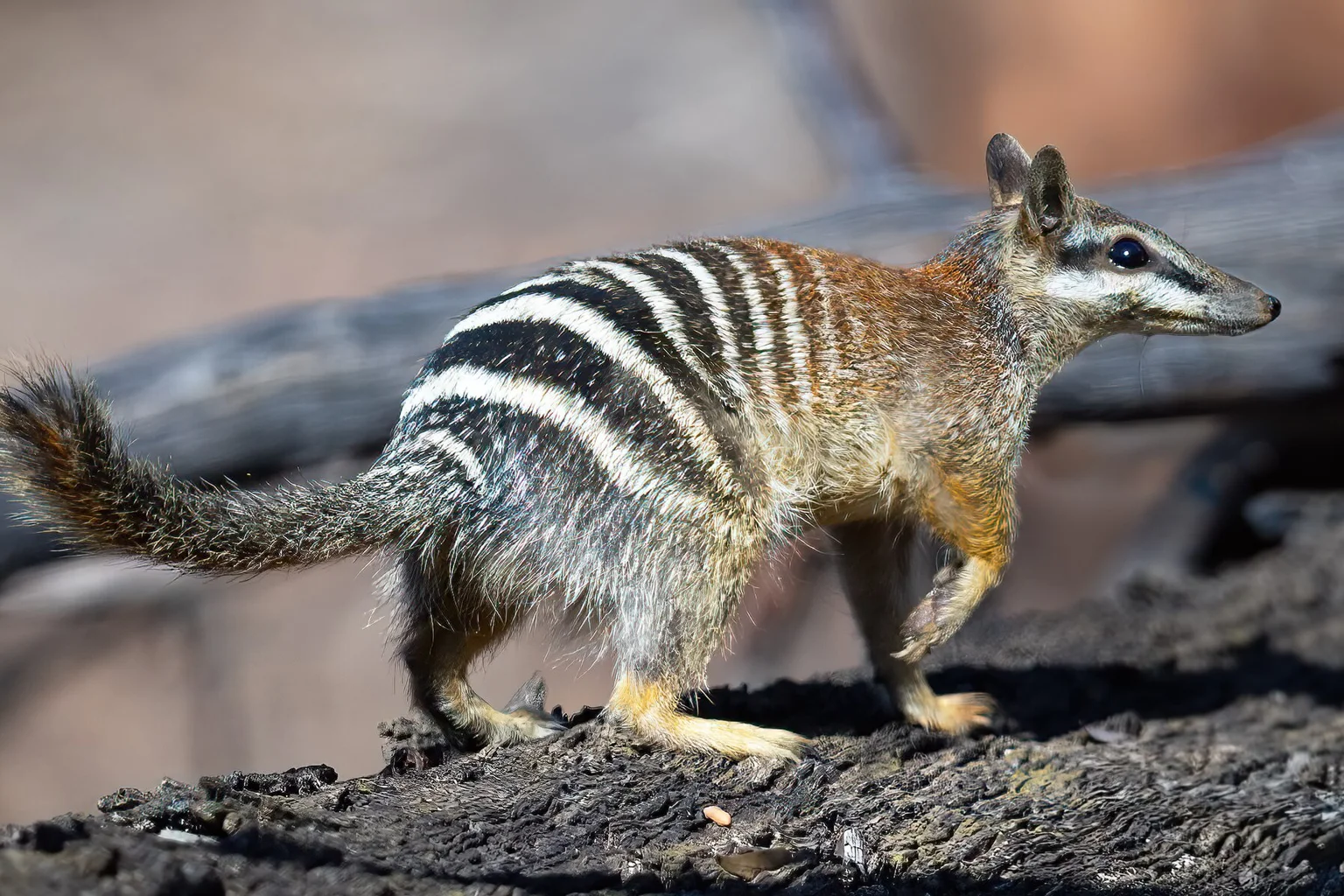
The numbat, a small termite-eating marsupial and the faunal emblem of Western Australia, has moved from Endangered to Near Threatened on the IUCN Red List, the global scorecard of species at risk. The change came in the Red List update published July 9, 2026.13
That is a long climb back. Numbats were once widespread across southern Australia, until introduced cats and red foxes spread through their habitat. By the late 1970s, only around 300 animals were left. IUCN now puts the population at an estimated 2,000 to 3,000.12
The numbat is also the last surviving member of its entire family, Myrmecobiidae, according to Prof John Woinarski, who co-chairs an IUCN expert group on marsupials. Losing it would mean losing a whole branch of the mammal family tree, not just a twig. Woinarski also noted that numbats dig for termites in a way that helps rain soak into the soil, which helps protect woodlands.1
“Today’s assessments show that long-term, strategic and collaborative conservation effort works,” Woinarski said in the IUCN announcement.1
How the numbats came back
For an animal that eats termites, the hard part was never finding dinner. It was avoiding becoming one.
The recovery started with research in the 1980s by Dr Tony Friend, followed by a formal Recovery Plan in 1994. Since then, the Western Australian Government and the Australian Wildlife Conservancy (AWC) have cut the impact of feral cats and foxes through baiting and predator-proof fencing. Captive breeding at Perth Zoo and translocations, which means moving animals to establish new groups, have produced at least five more self-sustaining populations, according to IUCN.1
Friend, now with Western Australia’s Department of Biodiversity, Conservation and Attractions, said the downlisting is what conservationists had worked toward for more than 40 years, Mongabay reported. He said baiting and removing foxes and cats led to spectacular increases in the two original Western Australian populations, one of which may now number up to 2,000.2
AWC, which is part of the recovery effort, reintroduced numbats to Scotia Wildlife Sanctuary in far western New South Wales in 1999. It also manages fenced, feral-predator-free populations at Yookamurra in South Australia and, since 2016, at Mt Gibson in the Western Australian Wheatbelt. In October 2025, four young numbats were found at Mallee Cliffs National Park.34
Australian Geographic counts the numbers a little differently. It says AWC alone has set up four secure fenced populations and gives a population range of 1,000 to 3,000.4
Better, but not safe
Near Threatened is a step up, not a finish line. Numbats still occupy just 0.04% of their original range. Feral cats and foxes remain a major threat, and IUCN says ongoing management is essential to the species’ survival and recovery.15
“But this is not the end of the story,” said Dr Jennifer Anson, a senior ecologist at AWC and a member of the Numbat Recovery Team, in the conservancy’s announcement.3
Anson said the new listing recognizes recovery in the places where concerted conservation has happened. She also said the numbat’s progress would reverse quickly without continued management.3
The change also applies only to the IUCN Red List. Under Australia’s national environment law, the EPBC Act, the numbat is still listed as Endangered.3
The numbat was the bright spot in an update that also confirmed five other Australian marsupials as Extinct.1
Did this make your day? Give it a cheer.
Sources
- From desert frog to deep-sea molluscs, remarkable species at risk – IUCN Red List IUCN, 2026-07-09
- Once endangered, Australia’s numbat is making a hopeful recovery Mongabay, 2026-07-10
- Numbat steps back from the brink, but not in the clear yet Australian Wildlife Conservancy, 2026-07-09
- Wild Wins Vol. 6 Australian Geographic, 2026-07
- Numbats are bouncing back! Project Numbat, 2026-07-12