Papua New Guinea's Tree Kangaroos Got a Forest Run by the People Who Own It
In Papua New Guinea's YUS region, more than 15,000 landowners created a community-managed conservation area, and a coffee cooperative pays local families.

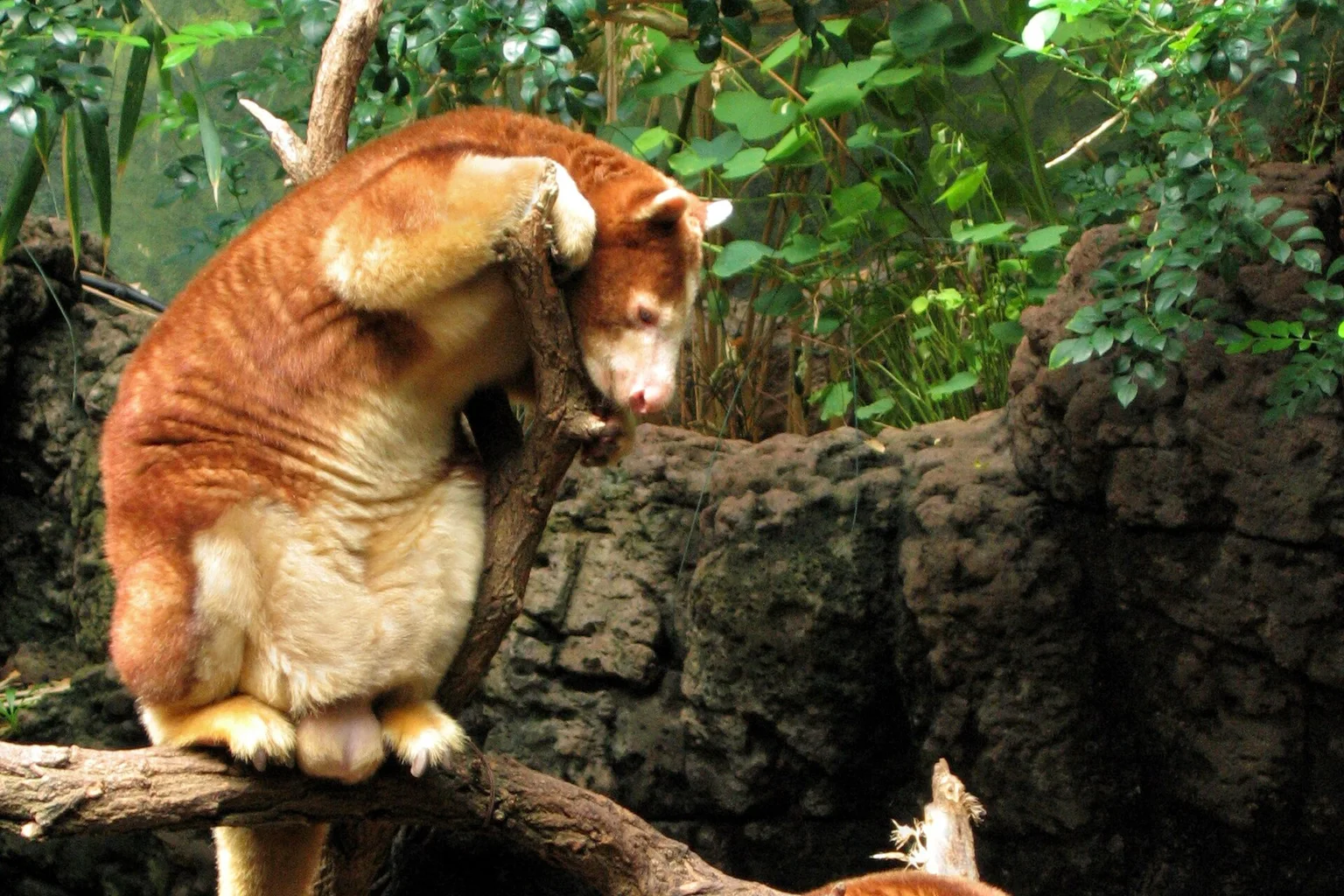
In 1996, an American biologist named Lisa Dabek arrived in Papua New Guinea to help an animal most people have never heard of: Matschie’s tree kangaroo. It is exactly what it sounds like, a kangaroo that lives in trees, in the cloud forests of the Huon Peninsula.1
Three decades later, the program she founded has helped create the YUS Conservation Area, a forest managed by the communities who own the land. It was gazetted (formally listed in the government’s official notice) in 2009 and is described as the country’s first nationally recognized community-managed conservation area.13
The story is told in a feature in Paradise, Air Niugini’s in-flight magazine, republished by Business Advantage PNG. The feature draws largely on interviews with Dabek, so many of its figures come from the program itself.1
Why landowners mattered
In Papua New Guinea, about 95% of land is customary-owned, which IUCN says made the YUS approach significant.4
The YUS area is named for the Yopno, Uruwa and Som rivers. The feature counts more than 15,000 Indigenous landowners, speaking seven languages, and 50 villages.1 They worked with Woodland Park Zoo’s Tree Kangaroo Conservation Program (TKCP), along with the PNG government, Conservation International and other supporters.3
How big is it? Sources disagree. The magazine feature says the area protects more than 130,000 hectares of forest against deforestation and overhunting.1 Woodland Park Zoo and IUCN put it at about 180,000 acres, UNDP at 187,000 acres, and Wikipedia at 760 square kilometers.3456
How the kangaroos are doing
When Dabek arrived, fresh from a PhD on the reproductive biology and behavior of these animals, only about 2,500 were thought to remain in the wild, the feature says. It adds that healthy populations are believed to be thriving in YUS today, though it gives no survey numbers.1
Protecting one animal can protect many more. “Matschie’s tree kangaroos are an umbrella species, which means that protecting them also safeguards a myriad of other species that share their habitat,” Dabek said in the feature. She names the emperor bird of paradise, the eastern long-beaked echidna, the dwarf cassowary and the New Guinea pademelon among the neighbors.1
“They are the flagship for cloud forest conservation and very important culturally to many communities in PNG,” she said.1
Coffee with a conservation habit
TKCP runs projects in health, education, research, governance, reforestation and livelihoods.1 One of them, YUS Conservation Coffee, links local farmers with international roasters who pay a premium for speciality-grade beans. The cooperative produces 20,000 to 30,000 kilograms of coffee a year.1
The program says the coffee has generated more than PGK1.25 million (about $300,000) for coffee-growing families, a figure that comes from TKCP itself.17 In 2012, Woodland Park Zoo and Caffe Vita began selling YUS coffee in Seattle, the first commercially available coffee from the region in the United States.5
Still hard, and growing
The work isn’t easy. YUS is remote, which makes moving staff and coffee difficult, and the program depends on funding, partly through a Woodland Park Zoo endowment. For the first time, it is looking for corporate sponsors.1
TKCP is now a fully locally run organization in Papua New Guinea, with nearly 50 national staff in Lae and YUS. It is pursuing community-led protection of more forest across the 16,000-square-kilometer Huon Peninsula.1
“The world can learn that, with support, local indigenous communities can lead conservation efforts and achieve great things,” Dabek said.1 Her other goal is simpler: “My goal is for everyone in the world to know what a tree kangaroo is and why they need to be conserved.”1
Did this make your day? Give it a cheer.
Sources
- Life support: how a conservation program is helping save tree kangaroos Business Advantage PNG (first published in Paradise, Air Niugini in-flight magazine), 2026-10-08
- Local action to protect biodiversity: the tree kangaroo in Papua New Guinea Global Environment Facility (GEF)
- Celebrating 20 years with Tree Kangaroo Conservation Program UNDP PNG (Medium)
- Tree Kangaroo Friendly Coffee – a triple win story IUCN
- Drink up! Conservation coffee is here Woodland Park Zoo Blog, 2012-02-01
- YUS Conservation Area Wikipedia
- Lisa Dabek - Woodland Park Zoo (LinkedIn) LinkedIn (reposting TKCP posts)
- About Tree Kangaroos - Tree Kangaroo Conservation Program Tree Kangaroo Conservation Program