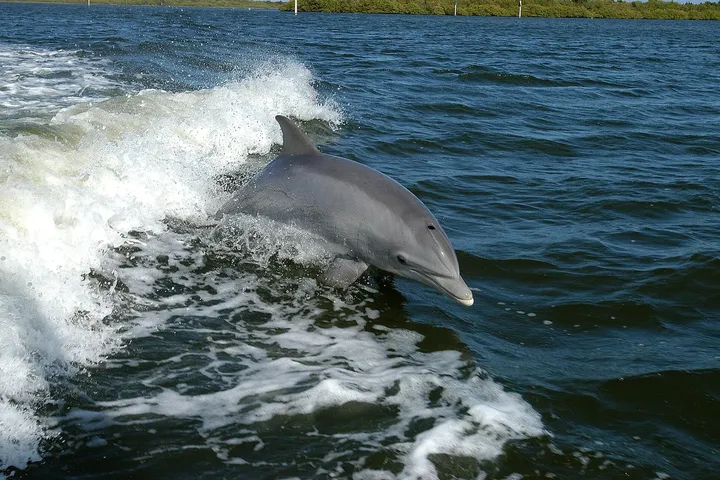
The Smallest Azores Island Goes Dark Each Autumn So Young Seabirds Don’t Land on the Road
Each autumn, tiny Corvo switches off its public lights so young Cory's shearwaters can reach the ocean instead of landing among cats, dogs and cars.

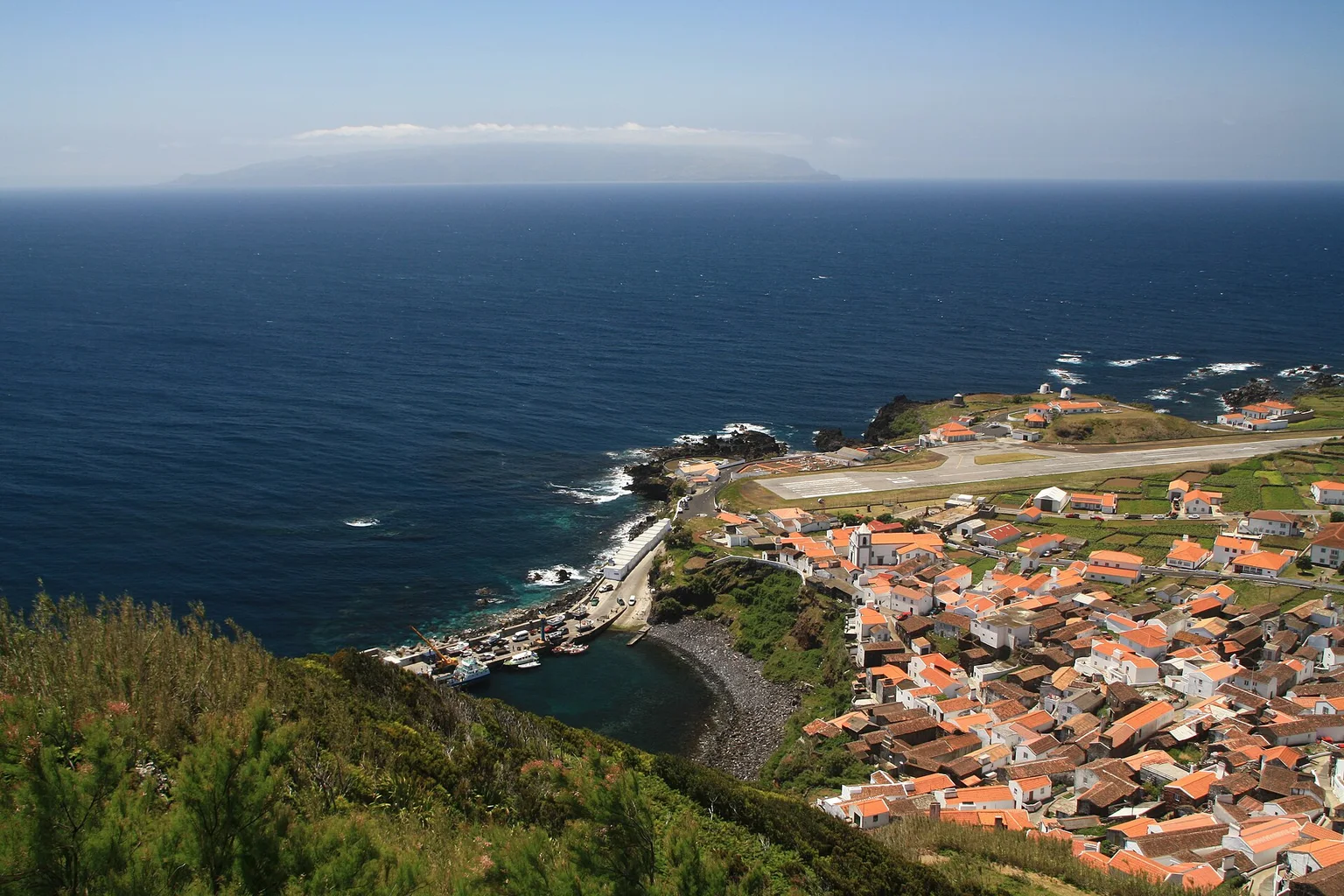
Once a year, the smallest and most northerly island in the Azores turns off its streetlights. Corvo, home to roughly 450 people, goes dark in autumn so that young seabirds can make it from their nests to the ocean.1
The birds are Cory’s shearwaters, seabirds known in Portuguese as cagarros. The Azores matter a great deal to them. A 2011 study found that the islands’ population makes up 65% of the species’ world population.5
Why a streetlight is a problem for a seabird
Young shearwaters leave the nest in October and November. According to the Portuguese bird society SPEA, the lights of towns draw them in. They become disoriented and come down on the ground, where they can be caught by dogs and cats, hurt in collisions, dehydrated or run over.2
Across the Azores as a whole, the 2011 study estimated that light-related deaths in towns affected about 6% of fledglings, with big differences from island to island. With rescue campaigns, the study said, that rate might fall below 0.5%. Those figures cover the Azores in general, not Corvo in particular.5
How the blackout works
SPEA organizes the blackouts with Corvo’s municipality, and they run alongside SOS Cagarro, the Azores-wide campaign to rescue grounded shearwaters.23 The schedule has shifted from year to year. For 2024, which SPEA described as the sixth year in a row, it announced a general blackout of public lighting from 9 p.m. on October 27 to 31, then from midnight on November 1 to 9.2
In 2022 the arrangement was a little different: lights went off from 9 p.m. to 4 a.m. until October 30, then from 1 a.m. each night until November 10, during what SPEA described as a critical period for the birds.3
Corvo has also changed the lights themselves. Its streetlights were swapped for warm LED lamps that point down at the ground and can be dimmed by up to 75% when the birds are most at risk.4
A long habit, with a fuzzy start date
Accounts differ on how long this has been going on. A Guardian photo essay published October 25 says the practice began in 1991, when residents noticed large numbers of young shearwaters dying.1 SPEA’s 2022 announcement described earlier steps that included a one-night blackout the year before and council switch-offs since 2017.3 An article from the Instituto de Astrofísica de Canarias says lights have been switched off for over 30 years.4
What the sources agree on is that the yearly autumn blackout has run since at least 2019.12
A village that doubles as a lab
Corvo’s darkness has also become something to measure. SPEA set up a network of light meters, called photometers, around Corvo village as a Light Pollution Laboratory, part of a European project called EELabs.4 In 2022 it planned to fit four young shearwaters with GPS tracking devices.2
Ringing data gave a sense of the scale of the problem. Of the young birds fitted with metal leg rings, 25% were later picked up during SOS Cagarro after the village lights threw them off course.2
The blackouts have reached gallery walls, too. Photographer Andrea D. Zanenga documented them for SPEA, and the work was shown at the 17th Festival della Fotografia Etica in Lodi, Italy.6
Did this make your day? Give it a cheer.
Sources
- Lights out: the island that goes dark to save young seabirds Free Independent News (scraped copy of the Guardian), 2026-10-25
- Açores apagam as luzes para salvar cagarros SPEA (Sociedade Portuguesa para o Estudo das Aves), 2024-10
- Azores island turns off lights to protect endangered seabirds Portugal Resident, 2022-10
- The first light pollution laboratory in the Azores Instituto de Astrofísica de Canarias (IAC)
- The impact of introduced predators, light-induced mortality of fledglings and poaching on the dynamics of the Cory's shearwater population from the Azores Biological Conservation (Elsevier), 2011
- What Are Our Days Made Of? The 17th Edition of the Festival della Fotografia Etica in Lodi Tells Us Juliet Art Magazine, 2026-10