A Student's Trail Camera Caught a Rare Canada Lynx in New Mexico
An NMSU Ph.D. student's motion-activated cameras in Carson National Forest photographed a threatened Canada lynx, a cat New Mexico hasn't documented in years.

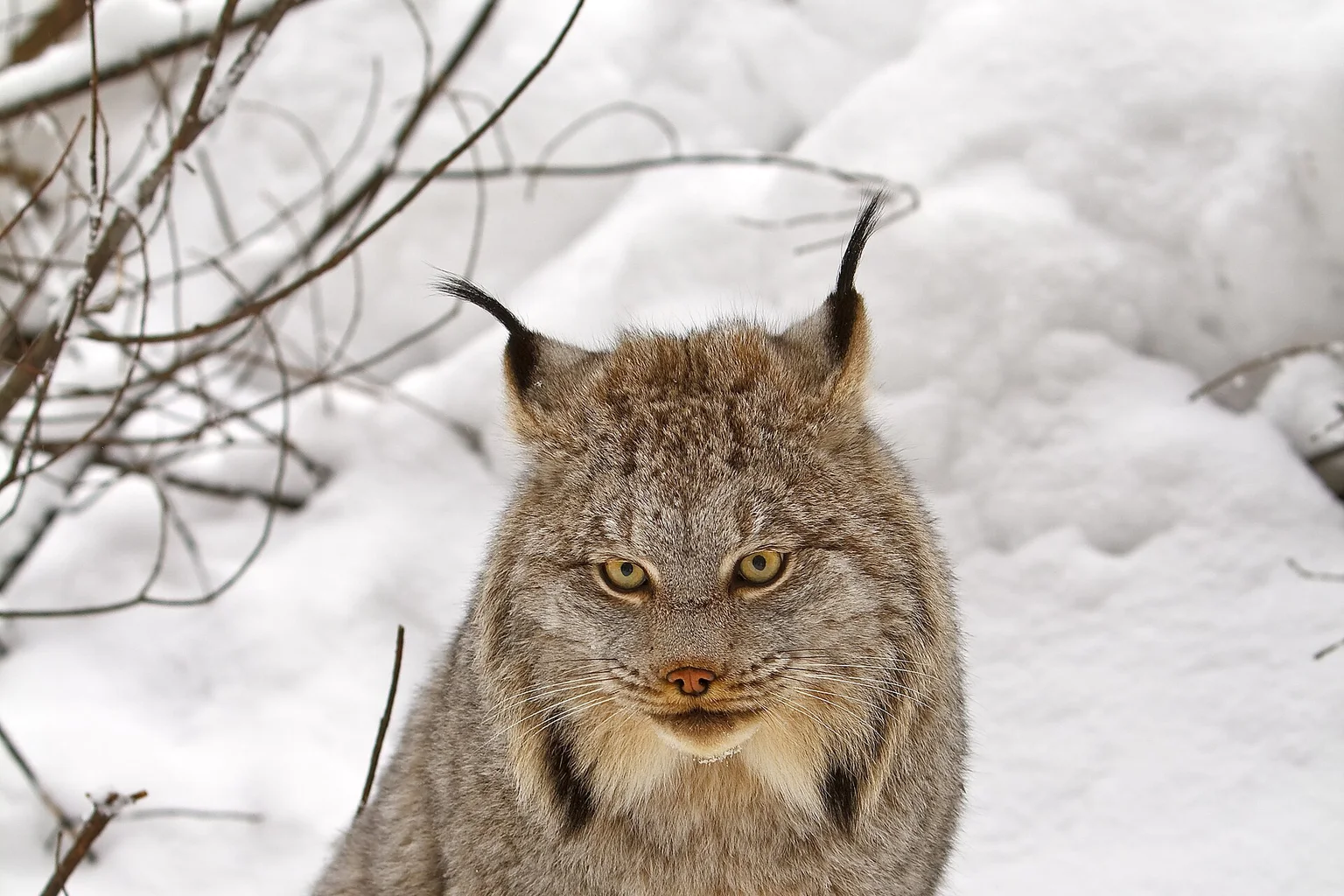
New Mexico State University Ph.D. student William Grooms photographed a Canada lynx, a federally threatened wild cat, with a motion-activated camera in Carson National Forest in northern New Mexico in June. NMSU announced the find on Oct. 24. The university said experts confirmed the animal’s identity and that the species was last documented in the state about 25 years ago.12
That interval comes from NMSU. Wildlands Network, which co-funds the research, put it differently in a LinkedIn post, calling this the first lynx documented in New Mexico in about 15 years.5
It is also one cat. The university describes the photos as proof of at least one lynx.2
A lynx in the summer photo pile
Grooms spent the summer running motion-sensing cameras at 120 sites across Carson National Forest for the first field season of a two-year study on how forest structure shapes wildlife in the Southern Rocky Mountains.23 The project is a partnership between NMSU and Wildlands Network. It follows 10 species and the kinds of forest each one prefers, and it builds on work Wildlands Network started in 2022.2
The lynx turned up months later, when Grooms was reviewing his first batch of images.2
Lynx closely resemble bobcats. They weigh up to 20 pounds, with long legs and wide, fur-lined paws built for deep snow, and they hunt snowshoe hares.2 Grooms sent the photos to experts to be sure.
“We sent the photos to experts to confirm that it was indeed a lynx, and we’re confident it’s a lynx – no question about it,” Grooms said in NMSU’s release.2
Why one cat could matter for forest management
Lynx were reintroduced in the San Juan Mountains between 1999 and 2006. Even so, their numbers remain low in the lower 48 states, and they are still listed as threatened under the Endangered Species Act, according to Jennifer Frey, an NMSU professor of mammalogy and Grooms’s adviser.2
Frey said in the release that the proof of at least one lynx “may create additional considerations for how state and federal governments manage this species and its habitat.”2
Habitat is where it gets tricky. Lynx and snowshoe hares both depend on deep snow and spruce-fir forest. The hares take cover under downed logs and thick understory, which are the kinds of conditions often targeted for hazardous-fuel removal.2
The study aims to give forest managers practical, science-based guidance on how fuel-reduction work and timber harvesting affect wildlife in dense conifer forests of the Southern Rocky Mountains.2 Frey said in NMSU’s announcement that the work “is dealing with how we manage forests to make sure that Canada lynx and other species are going to have a future here in New Mexico and the Southern Rocky Mountains.”1
“It’s very rare for people to see them, and to know that they’re here, I think, provides something like an inner joy for people,” Frey said in the release.2
A second round of camera work is planned for next summer before the project wraps up.2
Did this make your day? Give it a cheer.
Sources
- NMSU Ph.D. student finds proof of rare wild cat in northern New Mexico New Mexico State University via EurekAlert, 2026-10-24
- NMSU Ph.D. student finds proof of rare wild cat in northern New Mexico Organ Mountain News (republished NMSU release, CC BY-NC-ND), 2026-10-24
- Student finds proof of rare wild cat in northern New Mexico Phys.org, 2026-11-08
- NMSU student finds proof of rare lynx in Northern NM KTSM (El Paso), based on the university news release, 2026-11-03
- Wildlands Network post on the Canada lynx camera photo Wildlands Network (LinkedIn)
- NMSU researcher finds rare wild cat on camera, first documented in NM in over 25 years KFOX14/CBS4, 2026-10-24