Bangka Slow Loris Wasn’t Found on an Expedition. It Kept Arriving at a Rescue Center
A new paper uses records from Indonesia's Alobi Wildlife Rescue Center to show the Bangka slow loris is still alive, with more than 90 rescued since 2015.

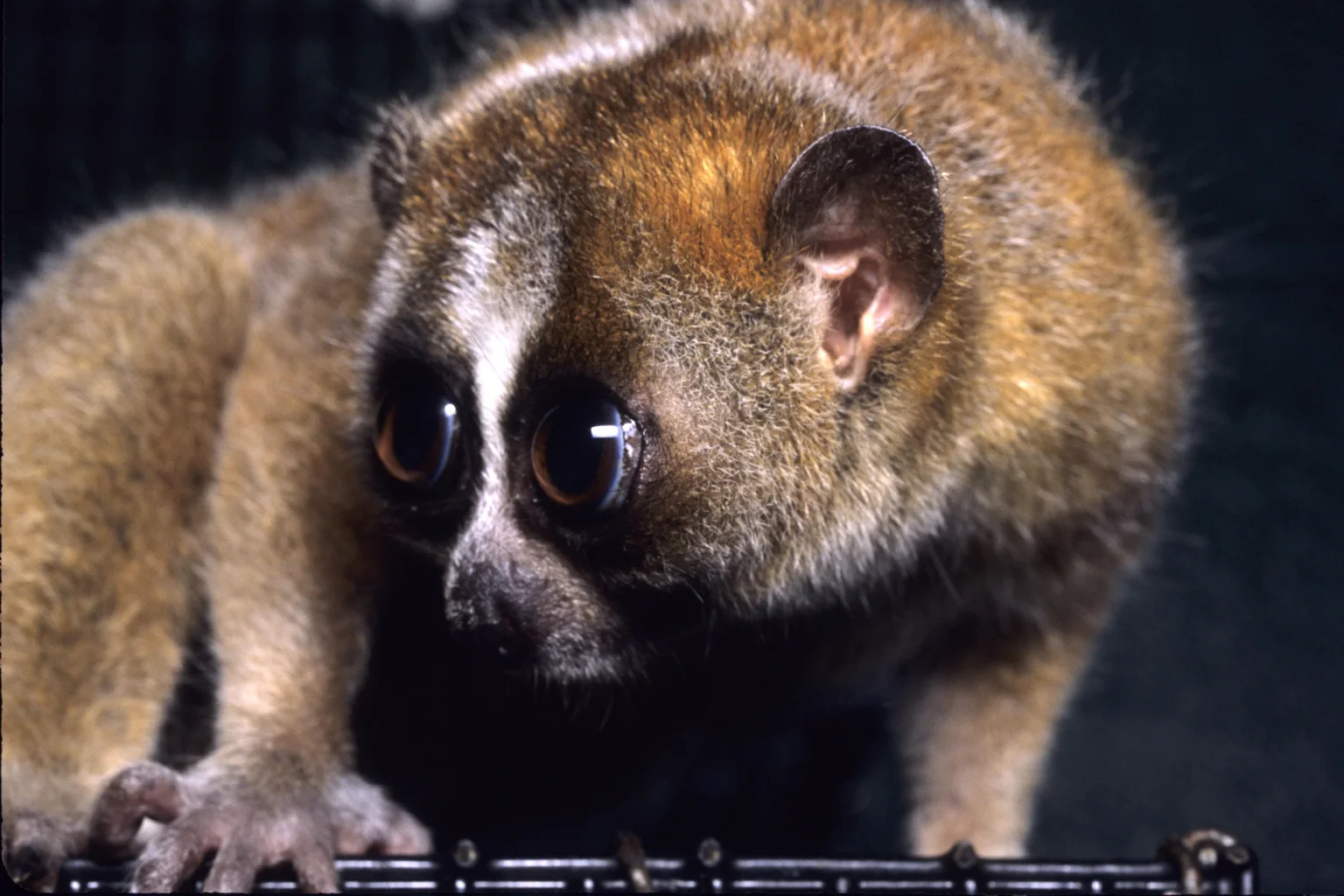
A paper published in October in the journal Spixiana shows that the Bangka slow loris, a small venomous primate the IUCN lists as possibly extinct, is still alive on Bangka Island, Indonesia. The evidence comes from the Alobi Wildlife Rescue Center, which has rescued more than 90 of the animals since 2015 and released 86.1
Nobody found this loris on a jungle expedition. It had been arriving at a rescue center for years. The authors made a brief search of their own at Bukit Mangkol in 2023 and saw none. The rescue center’s records held more than 90.1
That matters because the IUCN Red List, the global tally of threatened species, classes the Bangka slow loris (Nycticebus bancanus) as Critically Endangered (Possibly Extinct), with 1937 as the last year it was seen. The species had never been declared extinct. The paper notes that the source for the 1937 date is not cited and that the real last record may be even older. The authors are asking the IUCN to reconsider the “Possibly Extinct” tag.1
“The Bangka slow loris is still alive,” study author Timon Glaw of the Haus des Meeres Aqua Terra Zoo in Vienna told Reuters, which reported the finding on Oct. 20.2
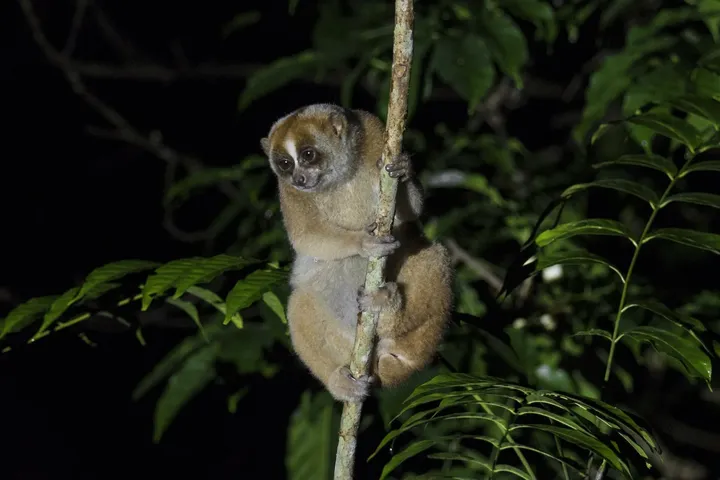
The animal is nocturnal, with reddish-brown fur, distinctive facial markings and large eyes. Slow lorises are the only known venomous primates.24
How a rescue log became evidence
The authors’ first hint came from a 2022 field guide to Indonesian primates by Supriatna. It named Gunung Maras National Park as a habitat and cited an unpublished 2021 bachelor’s thesis about lorises kept at Alobi.1
Detailed rescue notes exist for 43 animals, all taken in since 2021. Sixteen were found in houses or gardens, which is a lot of garden visits for an animal on the possibly extinct list. Seven had burns consistent with electric shock, and six were picked up from roads. Five came from the wildlife trade or captivity, three from plantations, one was tangled in a fence and one had been attacked by a dog. Four had no information. At least three of the animals died.1
Lorises were rescued in all four regencies of Bangka and in the city of Pangkal Pinang, which suggests the species may still live across much of the island. The catch is that a rescue spot is not always where an animal was caught, since some had first been kept as pets. The paper also offers no population count.14
“By presenting the data collected by the Alobi Wildlife Rescue Center on N. bancanus since 2015, we demonstrate that the Bangka Slow Loris still exists and is probably more widely distributed across Bangka Island than previously documented.”
That is how the five authors, Langka Sani, Endi Riadi, Andre Septian, Jochen Menner and Timon Glaw, put it in the paper.1
What still needs checking
Alobi staff identified the rescued animals by fur color and the circumstances of each rescue. The paper says the species’ standing as its own species rests only on body features so far and still needs confirmation from DNA. It also says it is unclear whether lorises on nearby Belitung and on Borneo belong to the same species.1
One clue points the right way. A skull at Alobi has two upper incisors, consistent with the Bangka slow loris and Bornean-type lorises, which makes it unlikely the animals were brought in from Sumatra or Java.1
The species was first described in 1906 from Kelabat Bay on Bangka and was raised from a subspecies to a full species in 2013.14
Alive, but close to the edge
The threats are serious. Tin mining, palm oil plantations and settlements are clearing its habitat, and the paper cites a 2017 study finding that the species’ forest habitat shrank 62% between 2000 and 2012. The authors also count roads and power lines as a significant danger.1
“We are glad to contribute to the scientific record to show that the Bangka slow loris is not lost, but the species is still very close to extinction,” Sani, of the Alobi Wildlife Rescue Center, said, as quoted by Earth.com.4
The authors recommend protecting the animals where they live, starting a breeding program in captivity, confirming the species with DNA and running targeted surveys on Bangka, Belitung and Borneo.1
“Every species is the result of millions of years of evolution and part of a complex ecological network, and losing the Bangka slow loris would mean losing something truly irreplaceable,” Glaw told Reuters.2
Did this make your day? Give it a cheer.
Sources
- Neglected but still alive: Further evidence for the continued existence of the Bangka Slow Loris (Nycticebus bancanus) on Bangka Island, Indonesia Spixiana (Verlag Dr. Friedrich Pfeil), 2026-10-01
- Feared extinct, Bangka slow loris primate rediscovered in Indonesia Reuters (Will Dunham), via Yahoo News, 2026-10-20
- Feared extinct, Bangka slow loris primate rediscovered in Indonesia The Jakarta Post (Reuters reprint), 2026-10-21
- Wildlife experts rescued over 90 venomous primates that were supposed to be extinct for nearly a century Earth.com, 2026-11-05
- Venomous Primate Believed Extinct for 100 Years Was Hiding in Plain Sight All Along Good News Network (Andy Corbley), 2026-11-06