Antarctic Blue Whales Are Climbing Back, Though 1.9% of Old Numbers Is No Victory Lap
A University of Washington-led study estimates Antarctic blue whales are growing 4.5% a year, though they remain under 2% of their pre-whaling numbers.

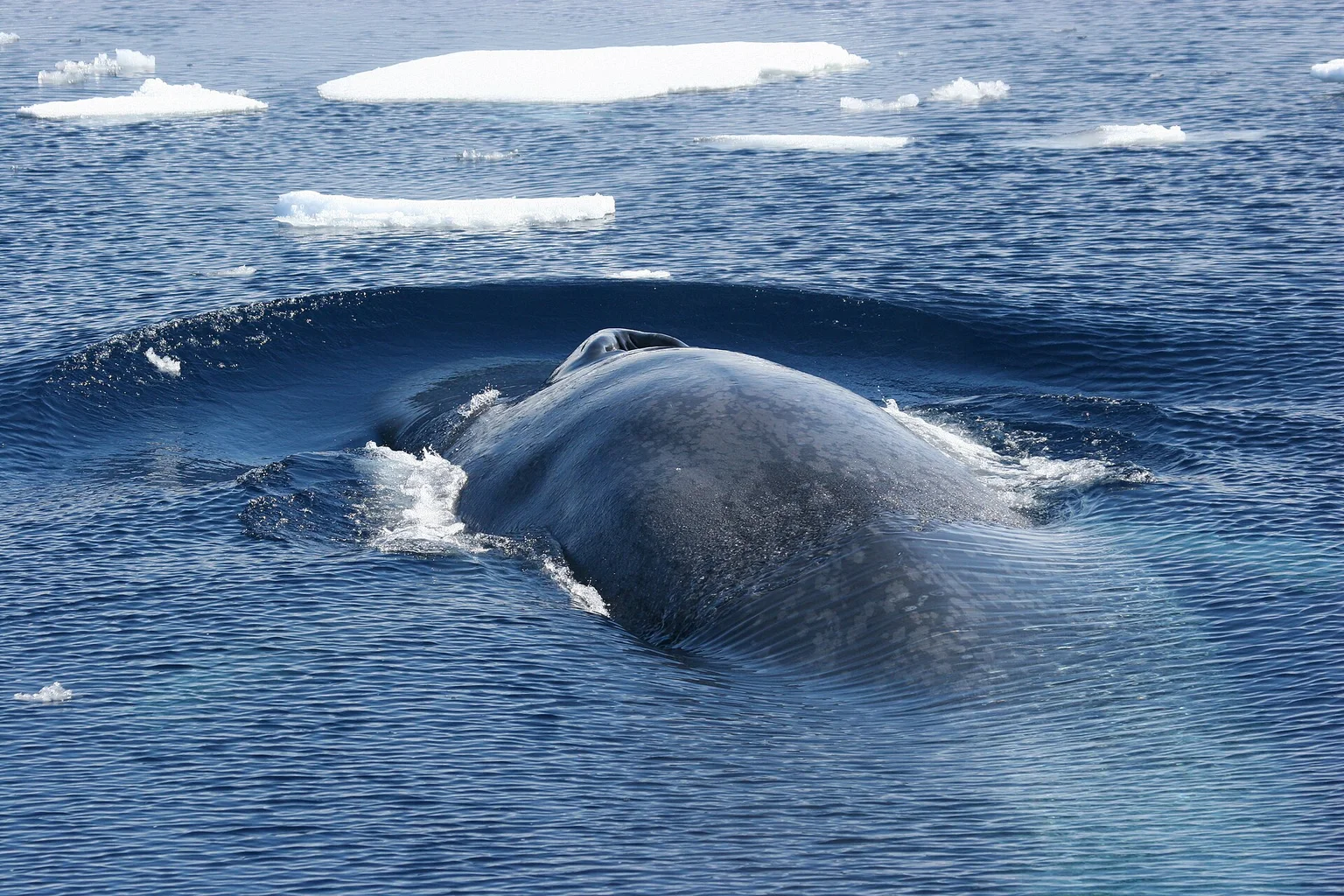
About 4,018 Antarctic blue whales now live in the Southern Ocean, according to a University of Washington-led study published Nov. 5 in the journal Endangered Species Research. The population had fallen to roughly 418 in the 1970s, after whaling ended. The researchers estimate it is now growing about 4.5% a year.1
That is hopeful news for a species that whaling nearly wiped out, but the hope is modest. The researchers estimate the population is still only about 1.9% of its size before whaling. Antarctic blue whales remain listed as Critically Endangered.13
The new figure looks like the old one with a zero slipped into the middle. In this case, that zero stands for a lot of whales.
Counting whales with catch logs, ship surveys and photos
Blue whales spread out across a very large ocean, so the team did not try to count them one by one. They built a population model, a mathematical estimate that combines different kinds of evidence. Their model draws on historical whaling catch records, line-transect surveys (counts made by observers traveling along planned routes) and, in recent years, photo identifications of individual whales.1
The last estimate covering the whole Southern Ocean relied on International Whaling Commission surveys carried out in three rounds between 1978 and 2004. Few line-transect surveys have been completed since then.1
The estimate comes from a single modeling study. Lead author Zoe Rand, a postdoctoral scholar at UW’s School of Marine and Environmental Affairs, said in the university’s announcement that the growth rate fits what scientists know about the animals: “I think this is relatively realistic for the kind of population growth we would expect from them.”1 Her 2026 doctoral dissertation at UW describes the same kind of model. It found the whales had dropped to just 0.2% of pre-whaling levels by the end of whaling and that the population is now increasing.2
Hunted harder than any other whale
The study’s figures show the population at about 205,905 in the early 1900s before whaling cut it by 99.8%.1
“No whale was hunted quite to the extent that Antarctic blue whales were hunted,” Rand said in the university’s announcement.1
The International Whaling Commission banned killing blue whales in the 1960s, but illegal Soviet whaling went on for about another 10 years, according to the release.1
Recovery is slow because the whales reproduce slowly. A female gives birth to one calf at a time, and only every two to three years.1
Their comeback matters beyond the whales themselves. Researchers describe Antarctic blue whales as “ecosystem engineers.” When one dies, its carcass sinks to the sea floor in what is called a whalefall. That supports communities of animals that feed on it, helps recycle nutrients, and is thought to lock away carbon.1
Still a long way from where they started
Scientists do not yet know how the whales will respond to environmental change.13 Rand was careful about how far the rebound might go. “I think it’s probably an open question whether they will make it back to pre-whaling levels,” she said in the announcement.1
She hopes future tools, such as passive acoustic monitoring (recording the whales’ sounds underwater), will make tracking them easier. For now, a recording can tell scientists that blue whales are singing nearby, but researchers cannot yet work out total numbers from whale song.1
The study was funded by NOAA. Its co-authors include Trevor Branch of UW, Paula Olson and Douglas Kinzey of NOAA, Michael Double and Brian Miller of the Australian Marine Mammal Centre, Koji Matsuoka of the Institute of Cetacean Research, and Ken Findlay of the University of Pretoria.1
The authors are calling for more surveys. “We really need more monitoring and continued monitoring to figure out what is going to happen to this species in the future,” Rand said.1
Did this make your day? Give it a cheer.
Sources
- As Antarctic blue whales advance along the road to recovery, continued oversight is key UW News (University of Washington), 2026-11-05
- Modeling population status and demographic rates of baleen whales using historical whaling data (Ph.D. dissertation) University of Washington ResearchWorks, 2026
- Blue whale International Whaling Commission