AI Helps a Logician List 663 Theorems and Hunches in Gödel's 1940s Notebooks
A Helsinki logician gave Claude his transcriptions of Kurt Gödel's 1,009 pages of shorthand notes and got a 650-page guide back in days, now being checked.

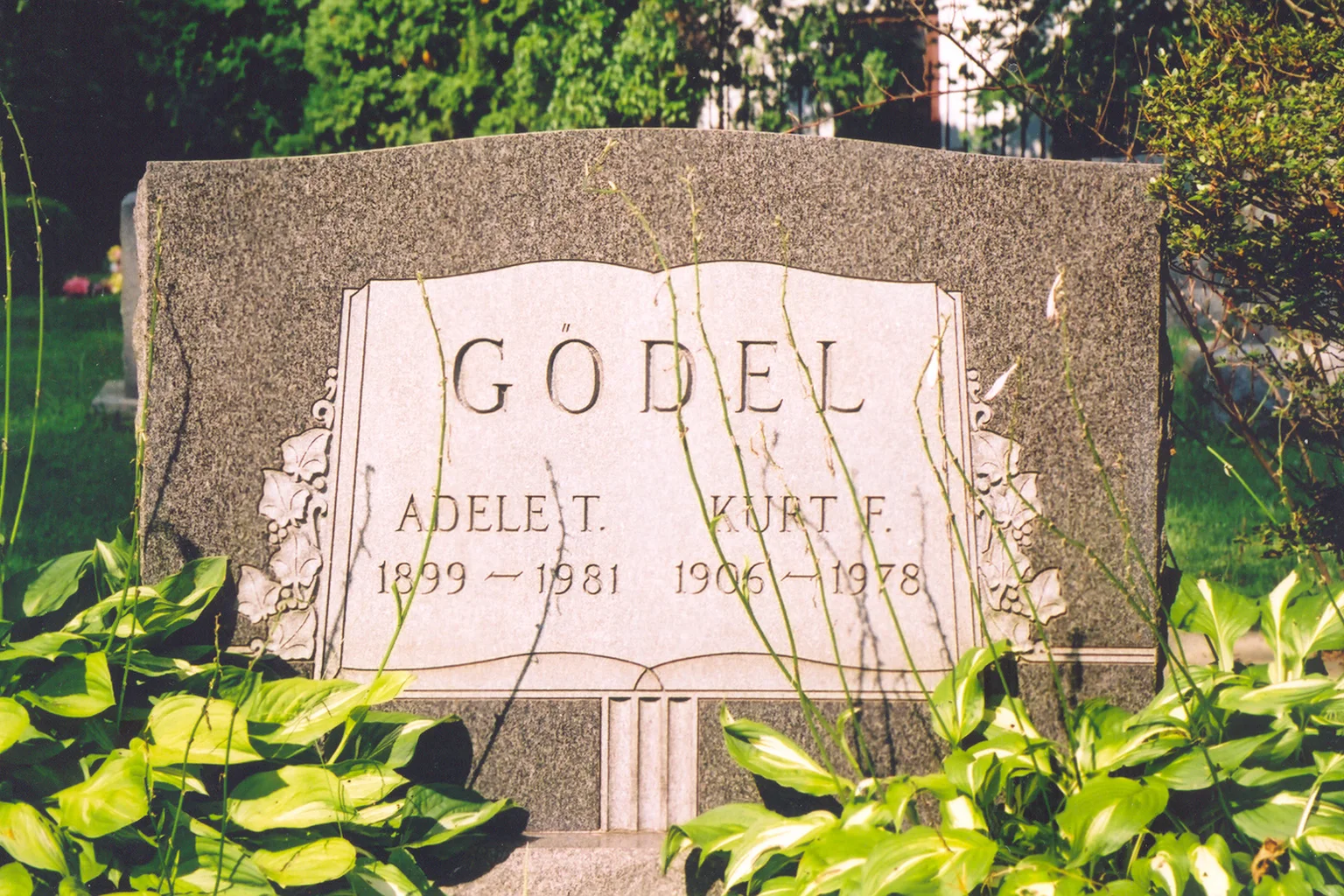
Finnish logician Jan von Plato used Anthropic’s AI model Claude to analyze his transcriptions of Kurt Gödel’s notebooks from the early 1940s, the Guardian reported on Nov. 13. Within a couple of days, according to von Plato, Claude produced a roughly 650-page explanation of the 1,009 pages and listed 663 theorems for which Gödel had a proof, a sketched proof or an idea for one.12
The speed is the story. Before AI, the work moved at about one page per week.2 These findings come from von Plato’s own account as relayed by the Guardian and summarized by other outlets. They have not been peer reviewed, and no paper has been published yet.
Since 2017, von Plato has led a University of Helsinki project on 16 notebooks Gödel called his workbooks. The project is backed by a €2.5 million (about $2.9 million) European Research Council grant.1
Much of the notebooks is written in Gabelsberger, a German shorthand that was already obsolete while Gödel was alive.2 Von Plato says he is one of only six people in the world who can read it. That is a small enough group to share a dinner table.1
How the AI was used
Claude did not read the shorthand. Von Plato gave it his own transcriptions of the workbooks, six of his books on Gödel and other scholarly writing about him.1 He brought Claude in during September after computer scientists suggested it at an August conference in France on AI and theorem proving.2
“In a couple of days, I got to see a 650-page explanation of the workbooks,” von Plato said, as quoted in Archyde’s summary of the Guardian report. His reaction: “I was flabbergasted.”2 He also says the output had to be checked page by page.1
What the 663 theorems are, and are not
The 663 are not 663 finished proofs. The list mixes complete proofs, sketches and ideas Gödel had for a proof.1
According to secondary summaries of the reporting, the theorems were run through Coq, a program that checks mathematical proofs step by step. About 400 held as stated, about 200 needed repair and about 50 were false.3
Von Plato says the mistakes are no surprise, because Gödel sometimes marked his own notes “falsch!” (wrong) or “schlecht!” (bad).3 Some of the errors had already been flagged by the author, about 80 years ahead of the software.
The proof Gödel said he had
The first job von Plato gave Claude was a historical puzzle. In 1966, Gödel claimed that in the 1940s he had proved the independence of the axiom of choice.1
Do the notebooks hold that proof? By von Plato’s account, the answer came back “almost.” One definition was wrong, though Gödel had written the correct one two years earlier.2 Whether Gödel really had the proof remains contested.
Von Plato also says the workbooks contain dozens of anticipations of results that mathematicians did not reach until the 1970s and 1980s.3
Who gets the credit
Joel David Hamkins, a logician at the University of Notre Dame, had not seen the reconstruction. He said that if it stands up, it is remarkable and historically interesting.1 But he added that “how much is Claude and how much is Gödel is a job for the historians.”2
If von Plato’s reading holds, those historians will have plenty to do. He says the notebooks also contain 14 themes in logic that no one has pursued.3

Did this make your day? Give it a cheer.
Sources
- Claude helped decode Kurt Gödel's shorthand notebooks, turning up 663 theorems and a near-proof he claimed in 1966 MLQ.ai, 2026-11-13
- AI Helps Unlock Hundreds of Theorems in Gödel's Notebooks Archyde, 2026-11-13
- Gödel's notebooks — Claude finds 663 theorems in 1,009 shorthand pages AI/TLDR, 2026-11-13