A Hebei Rock Outlasted Earth’s Bad Record-Keeping for 3.95 Billion Years
Zircon crystals date a gneiss from eastern Hebei to 3.95 billion years, and its chemistry suggests ocean crust was buried over 50 km deep on the young Earth.

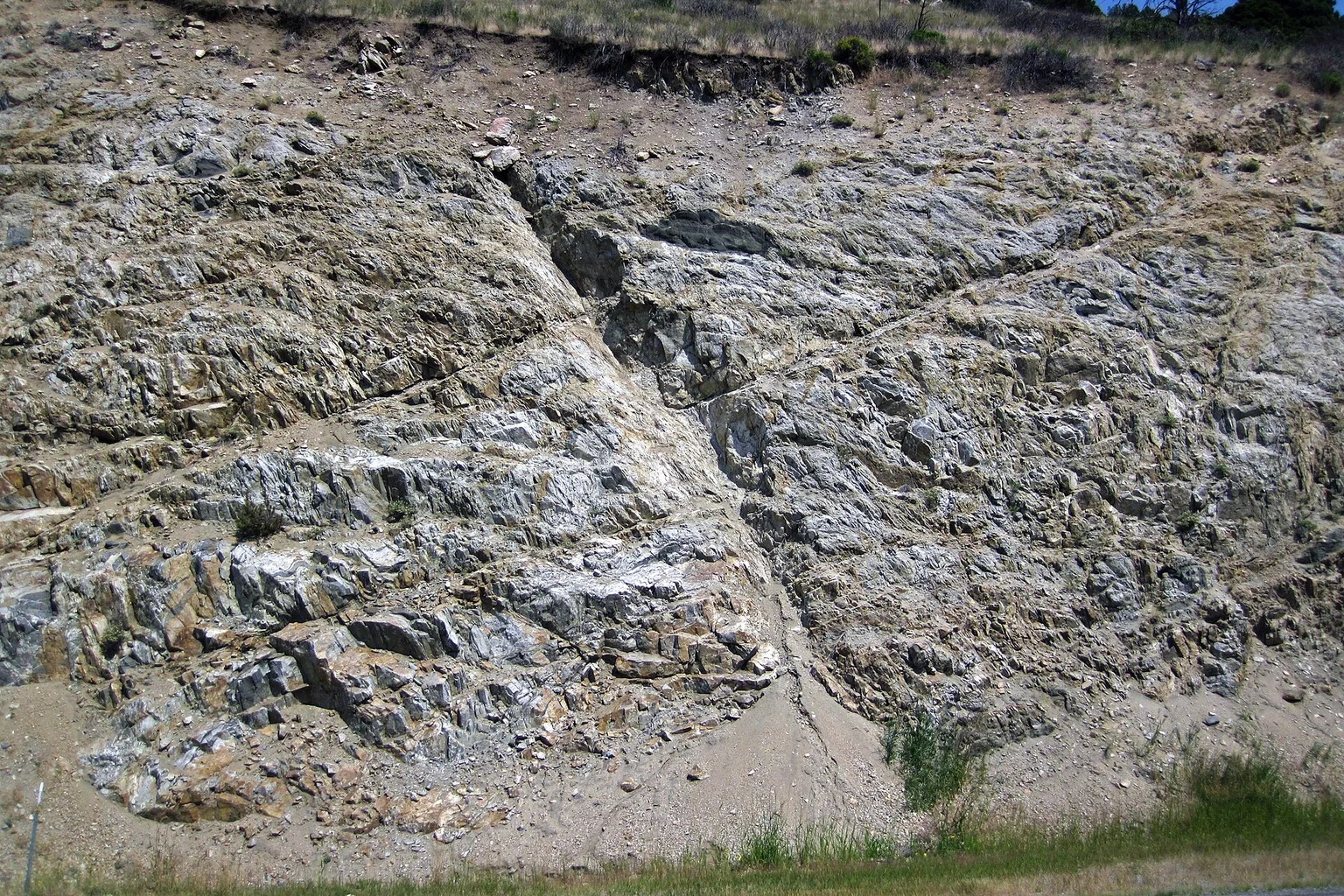
Geologists led by Hangqiang Xie and Chunyan Dong of the Chinese Academy of Geological Sciences reported on Nov. 11 that a rock from eastern Hebei Province, China, is about 3.95 billion years old. The age comes from the team’s dating of zircon crystals. Its chemistry, they argue, records ocean crust being buried and melted deep inside the early Earth.1
The Earth is about 4.5 billion years old, and rocks from its earliest days are extremely rare.2 The planet has not been careful with its paperwork. So any rock that survived from that stretch is a precious document about how the first continents and oceans took shape.
The findings appeared in a paper in the journal Nature titled “Hadean mantle depletion and 3.95-Gyr subduction implied by North China rocks.” The Hadean is the name for Earth’s earliest eon.1
Among the oldest, but not the oldest
The rock is a granite-like variety called trondhjemitic gneiss. Gneiss is a banded rock that has been reworked by heat and pressure. Zircons that grew from the original magma in one sample, labeled J2303, cluster near 3.95 billion years.13
That makes it among the oldest rocks known on Earth, though not the oldest. The Acasta rocks are roughly 4.0 billion years old.3 Finishing behind them in a contest measured in billions of years is not much of a demotion.
It does appear to set a new mark for China. Before this, the oldest known rocks in the country were the roughly 3.8-billion-year-old Baijiafen gneiss near Anshan. Eastern Hebei was already known for loose zircon grains about 3.85 billion years old, which had eroded out of their original rocks.5
The 3.95-billion-year age rests on one team’s zircon dating in one paper. Other researchers have not yet weighed in.
What the crystals say about the deep past
Zircons are tough little crystals that hold on to chemical clues long after the rock around them has been squeezed and heated. In these zircons, oxygen isotopes (slightly different forms of the same element) point to a source made of basalt, the dark rock of ocean floors, that had been altered at low temperature near the surface. Hafnium isotopes indicate that the basalt came from mantle that had already lost some of its material to forming crust.3
The team’s modeling suggests the magma formed when 8% to 16% of that basaltic crust melted at temperatures of 740 to 820 °C and at very high pressure. Nature’s research briefing describes it this way: by 3.95 billion years ago, altered ocean crust had been buried more than 50 km deep and partly melted.34
The hafnium data also hint at something older still. According to the briefing, the mantle that fed this crust had been left behind when crust separated from the early mantle as early as 4.3 billion years ago.42
A possible early case of subduction
Getting surface crust that deep, that fast, and keeping it fairly cool along the way takes a special mechanism. The authors propose it was most likely a short-lived subduction event, in which a slab of crust is carried down into the mantle.13 That explanation is the team’s proposal, not a settled conclusion.
The Hebei gneiss also differs from the Acasta rocks in a useful way. Acasta is thought to have formed at low pressure, while the Hebei rock carries chemical signs of a high-pressure origin.3 That gives geologists two very old rocks that seem to have formed in different ways.
For a planet that erased most of its own early record, that is a rare second opinion.
Did this make your day? Give it a cheer.
Sources
- Hadean mantle depletion and 3.95-Gyr subduction implied by North China rocks Nature, 2026-11-11
- Some of the oldest rocks ever discovered shed light on Earth's early history Phys.org, 2026-11-15
- China's oldest rocks reveal 3.95 Ga subduction and Hadean mantle depletion (preprint) Research Square
- Earth's early history told by 3.9-billion-year-old rocks from northern China Nature (research briefing), 2026-11-11
- The Oldest Rocks from China University of Hong Kong Museum of Earth Sciences