
Canada’s Pygmy Hippo Population Just Went From 2 to 3
Maple, born at the Toronto Zoo to an endangered species with only a few thousand left in the wild, is now out meeting visitors and doing hippo things.

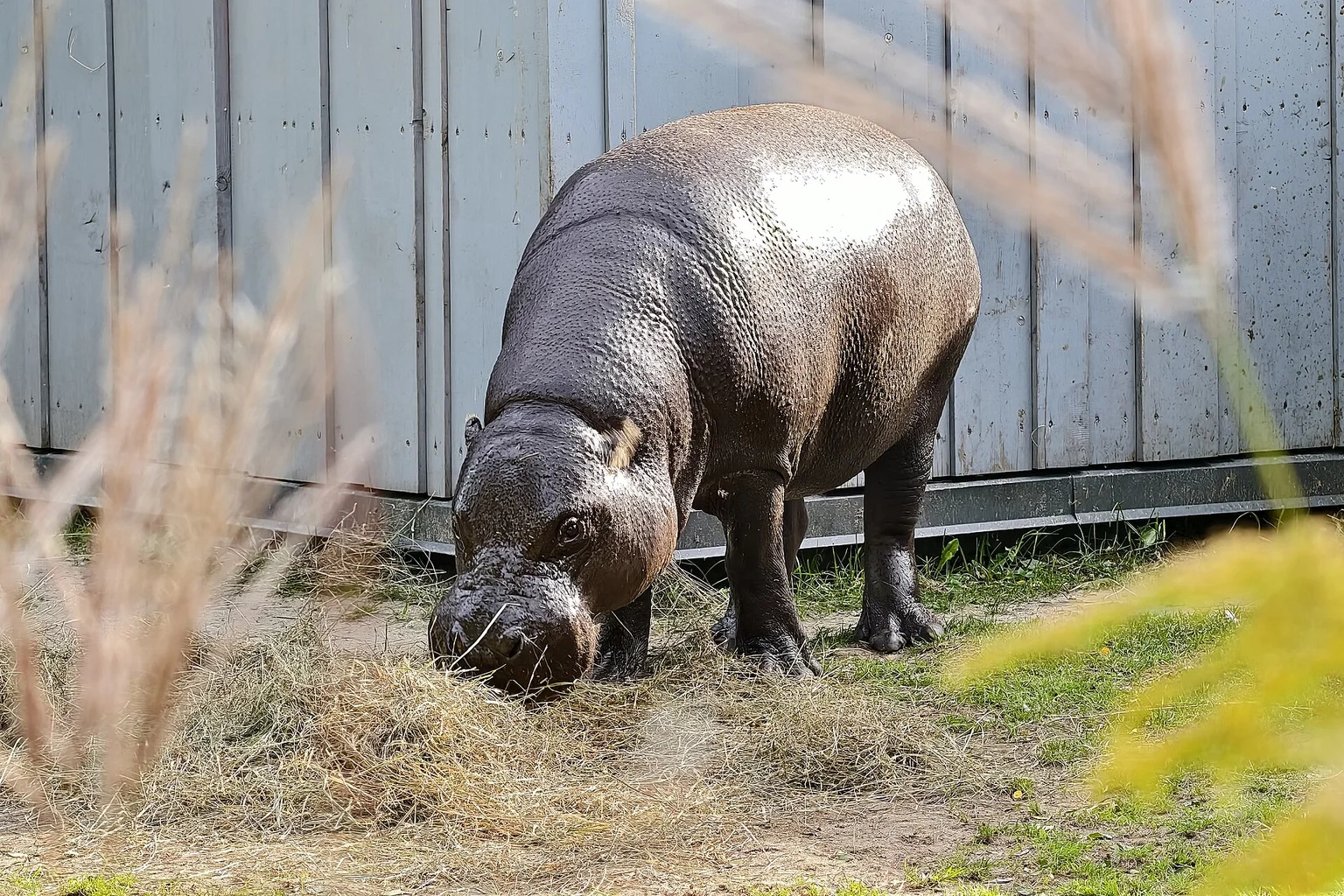
A female pygmy hippo calf was born on Sunday, Aug. 2, 2026, at the Toronto Zoo, the zoo announced three days later.12 Her parents are 20-year-old Kindia and 31-year-old Harvey, and she has since been named Maple.14
That makes her Canada’s only pygmy hippo calf. The only other pygmy hippos in the country are her mother and father, so the national population is, in effect, one household.45
Each birth matters because pygmy hippos are listed as Endangered on the IUCN Red List.1 The zoo puts the wild population at roughly 2,000 to 3,000. That is a rough estimate: the IUCN’s 2015 assessment puts it at about 2,000 to 2,500 and declining, and the higher figure dates to the early 1990s.17
A long Sunday
The zoo’s announcement is the only detailed account of the birth. It says staff noticed signs of labour in Kindia around 8:15 a.m. Tiny feet appeared around 12:15 p.m., and the calf arrived after about an hour and a half of active labour.1
She began attempting to stand within about 15 minutes. Within a few hours she was confidently getting around, and she was seen nursing about four and a half hours after birth and on through the night, while staff watched on camera.1
Mother and calf spent their first weeks behind the scenes in an area called Little Hippo Hollow, which is closed to guests, with staff monitoring them around the clock.12
The zoo was hopeful but careful in its announcement, noting that calf survival can be challenging for the species.1 This is Kindia’s third calf. She raised a daughter, Penelope, in 2018.1
A planned match
Maple was not a happy accident. Kindia and Harvey were introduced for eight days in January, which is all it took.1
The pairing was part of the Association of Zoos and Aquariums’ Pygmy Hippo Species Survival Plan, a cooperative program that matches animals in human care based on their genetics, health and the long-term sustainability of the population.1
“Welcoming a pygmy hippo calf is far more than a celebration of new life,” Toronto Zoo CEO Dolf DeJong said in the zoo’s announcement.1
Pygmy hippos live in the forests and swamps of West Africa, where they are threatened by logging, mining, farming, settlement and hunting.12 The zoo says it supports pygmy hippo research in Ivory Coast with partners including the research group IBREAM and several European zoos, through its Endangered Species Reserve Fund and a program called Bending the Curve.1
Maple goes public
The name came on Aug. 21. At about three weeks old, Maple weighed 10.8 kilograms and was living entirely on milk.4
She made her public debut in September, at about six weeks old. Zoo members got the first look on a Monday, and everyone else could visit from the next day.5
By then the reviews were steady rather than dramatic, which is exactly what keepers hope for with a newborn of an endangered species.
“She’s doing exactly what we’d expect from a pygmy hippo calf,” Grant Furniss, the zoo’s director of wildlife operations, told TorontoToday.5

Did this make your day? Give it a cheer.
Sources
- Toronto Zoo | Pygmy Hippo Calf Born At Your Toronto Zoo! Toronto Zoo, 2026-08-05
- Move over, Moo Deng: Pygmy hippo calf born at Toronto Zoo CBC News, 2026-08-05
- Toronto Zoo welcomes baby pygmy hippo: Why its birth matters NOW Toronto, 2026-08-05
- Toronto Zoo officially names pygmy hippo calf 'Maple' CBC News, 2026-08-21
- Meet Maple: Toronto Zoo's pygmy hippo makes her public debut TorontoToday via Niagara-on-the-Lake Local, 2026-09-14
- Pygmy hippo Fauna & Flora
- Pygmy Hippopotamus IUCN SSC Hippos Specialist Group