Humpbacks Have Interrupted Orca Attacks on Seals, Dolphins and, Once, a Sunfish
A 2016 review of 115 humpback-orca encounters found the big whales often break up killer whale attacks on seals, sea lions, gray whales and other species.

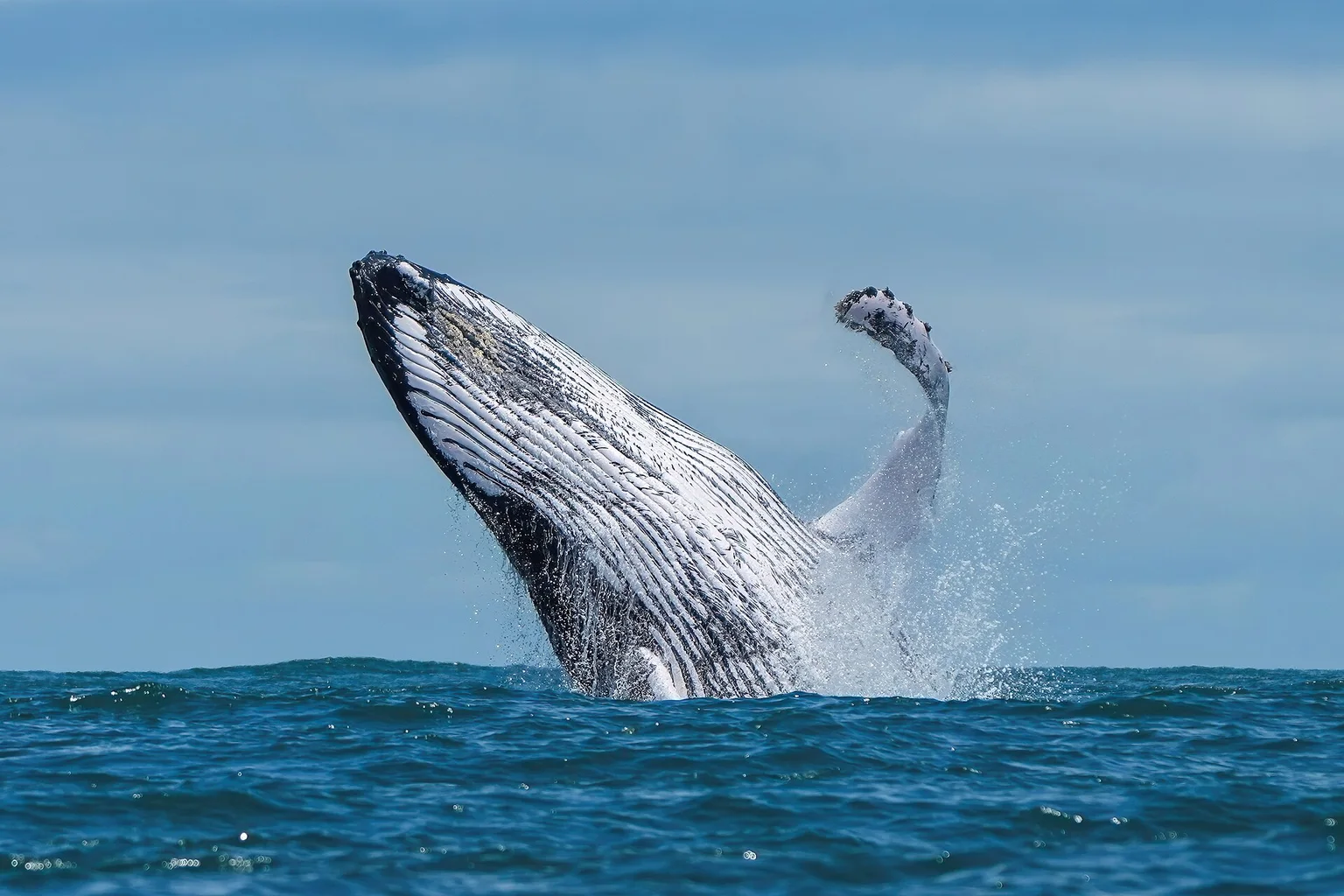
Humpback whales have a habit of showing up when killer whales attack, and most of the time the animal under attack is not a humpback. That was the finding of a 2016 paper that reviewed 115 recorded encounters between the two species, published in the journal Marine Mammal Science.1
The study, led by NOAA marine ecologist Robert Pitman, is not new. It came out online in mid-2016 and in print in January 2017. It is still a strange one. The authors describe humpbacks as the only cetacean (the group that includes whales, dolphins and porpoises) known to deliberately approach and drive off killer whales that are attacking other mammals.4
What the whales were doing
The 115 accounts were not collected in a planned survey. The team gathered them from historical observations in published and unpublished sources, from places including Antarctica, Alaska, California and British Columbia.1
Humpbacks started most of the interactions, 57% in the paper’s tally. Almost all of the killer whales involved (95%) were the mammal-eating kind.1
Those orcas do hunt humpbacks. When they approached the big whales, they attacked 85% of the time, and they went only after calves.1 So a humpback charging an orca hunt might seem like a parent protecting its young.
Usually, though, it wasn’t. Of 72 encounters reviewed in which orcas were attacking mammals, 61 involved prey other than humpbacks.6 Science magazine reported that in nearly 90% of attacks where the prey could be identified, the animals being defended belonged to other species.3 The list of beneficiaries includes seals, sea lions, gray whales, dolphins and, on one occasion, a sunfish.2
Some humpbacks kept at it for a long time. In one case they passed up nearby food for hours to keep orcas away from a gray whale.6 Skipping dinner for hours to ruin someone else’s is a level of commitment most people save for family holidays.
The seal on the belly
Pitman first saw this behavior on a 2009 trip to the Antarctic Peninsula. When orcas knocked seals off ice floes, humpbacks charged in, slapping the water and bellowing until the orcas left.57
In the best-known encounter, an adult humpback rescued a seal that orcas had knocked off an ice floe. It raised the seal out of the water on its belly and held it in place with its flippers, out of the orcas’ reach.246
Kindness, or something more practical
The paper’s authors wrote that interspecific altruism (one species helping another at some cost to itself), even if unintentional, could not be ruled out.4 Pitman himself leans toward a less sentimental explanation.
“I don’t think that humpback whales have moral codes,” Pitman told Discover Wildlife. “My guess is that they are just focused on preventing killer whales from having their way during attacks, regardless of what the prey species may be.”2
His reasoning is that the habit serves the humpbacks’ own interests. “And adult humpbacks are not at risk of predation from killer whales, so the cost of them intervening is rather small,” he told the magazine.2 Because the net result pays off, the behavior sticks around, and seals and sea lions benefit as a side effect. Pitman suspects it is a kind of inadvertent altruism.3
Not everyone finds that a complete answer. Trevor Branch, a University of Washington scientist who was not involved in the study, told Science that protecting other species is a puzzle, because the seals never return the favor.3
Did this make your day? Give it a cheer.
Sources
- Humpback whales interfering when mammal-eating killer whales attack other species: Mobbing behavior and interspecific altruism? NOAA Institutional Repository (Marine Mammal Science, Pitman et al.), 2016-07-01
- Humpbacks protect other species from orca attacks - Discover Wildlife Discover Wildlife (BBC Wildlife Magazine), 2016-11-16
- Why did a humpback whale just save this seal's life? Science (AAAS), 2016-08-01
- Humpback whales: Are they altruistic mammals? The Christian Science Monitor, 2016-08-08
- Humpback whales rescue seals and other animals from killer whales Mongabay, 2016-08
- The Altruism of the Humpback The Tyee, 2016-08-19
- Humpback whales saving other species from orcas found to be common and maybe altruistic Phys.org, 2016-08