
At Least 756 Pairs of Sandwich Terns Nest Where Bird Flu Emptied the Colony
Bird flu emptied the Pagham Harbour colony in West Sussex, England. In 2026, at least 756 sandwich tern pairs nested there and raised 570 fledglings.

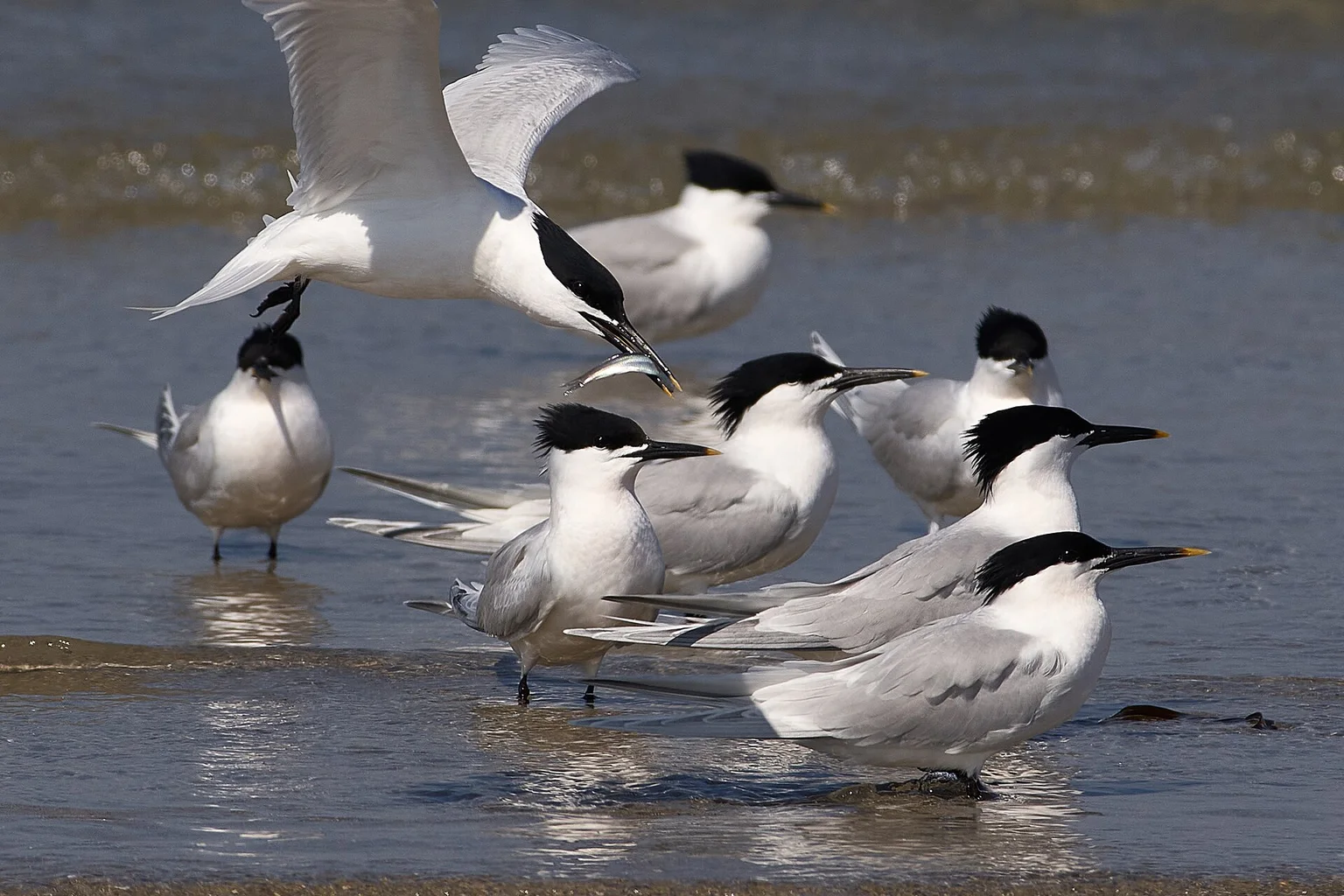
At least 756 breeding pairs of sandwich terns, a type of seabird, nested at RSPB Pagham Harbour in West Sussex, England, in 2026 and raised 570 fledglings. The Guardian reported the result on Oct. 19. Bird flu had driven the birds out in 2022, and no pairs nested there in 2023.25
Zero is a hard number to build on. BirdGuides describes the 2026 total as a record for the site and calls it one of the largest sandwich tern colonies in England, and the Guardian report calls it one of the largest ever recorded in the Solent region.35
The 756 counts breeding pairs, not individual birds. The 570 fledglings are young birds old enough to leave the nest.2
What bird flu did in 2022
The colony was hit by highly pathogenic avian influenza, often shortened to HPAI, a severe form of bird flu. At Pagham, the terns abandoned their island completely.24
They were not the only casualties. Wez Smith, a senior project manager at the RSPB, said that sandwich terns, black-headed gulls and Mediterranean gulls were “hit severely by HPAI/bird flu, leading to the abandonment of their breeding colony at Pagham harbor,” in remarks reported by Good News Network.1
How the colony came back
The RSPB credits “hundreds of hours of conservation action” for the return. Pagham now has three islands that support breeding sandwich terns, and the newest one was created in 2021.3
The island work includes vegetation management, maintenance of exclusion fencing, biosecurity checks and round-the-clock monitoring.3
It is part of the Solent Seascape Project, a partnership that restores habitats and wildlife along England’s south coast. Its methods include predator-proof fencing, rat monitoring, vegetation removal and volunteer patrols, which reduce disturbance to nesting birds from visitors and dogs.135
West Sussex County Council, Arun District Council and Chichester District Council support the recovery work at Pagham.3
Smith summed it up in remarks reported by Good News Network:
“It’s taken several years of dedicated conservation action, but the situation began to ‘tern’ around last year, and the site is now thriving with record-breaking populations using it.”
Other birds along the coast
Little terns, ringed plovers, black-headed gulls and oystercatchers have also increased in number thanks to the same conservation work, according to Good News Network. That report did not give figures for those species.1
Elsewhere on the coast, at RSPB Medmerry, floating rafts give common terns and black-headed gulls nesting space that predators cannot reach. Rafts have also boosted the number of breeding common terns at West Hayling in Hampshire.5
Did this make your day? Give it a cheer.
Sources
- Miracle Recovery Sees Seabirds Reclaim Former Colony After Avian Flu Wiped Them Out Good News Network, 2026-11-05
- Solent seabirds enjoy record breeding year after bird flu recovery Oceanographic Magazine, 2026-10-19
- Pagham Harbour Sandwich Tern colony hits new high BirdGuides, 2026-08-25
- Record 'tern' around: Seabird numbers soar in Solent after RSPB recovery work The Portugal News (PA), 2026-10-24
- Seabird numbers bounce back in Solent region after 2022 avian flu wipeout (Guardian, via AOL) The Guardian (copy on AOL UK), 2026-10-19