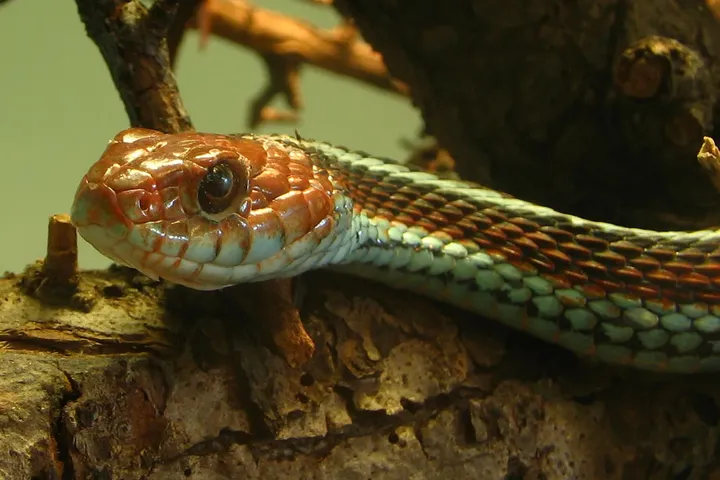
Garter Snakes Can Eat Toxic Newts. Drought, Cars and Poachers Are Harder.
The San Francisco Zoo's first head-started garter snakes are back in San Mateo County, a boost for a species with only a couple thousand left in the wild.

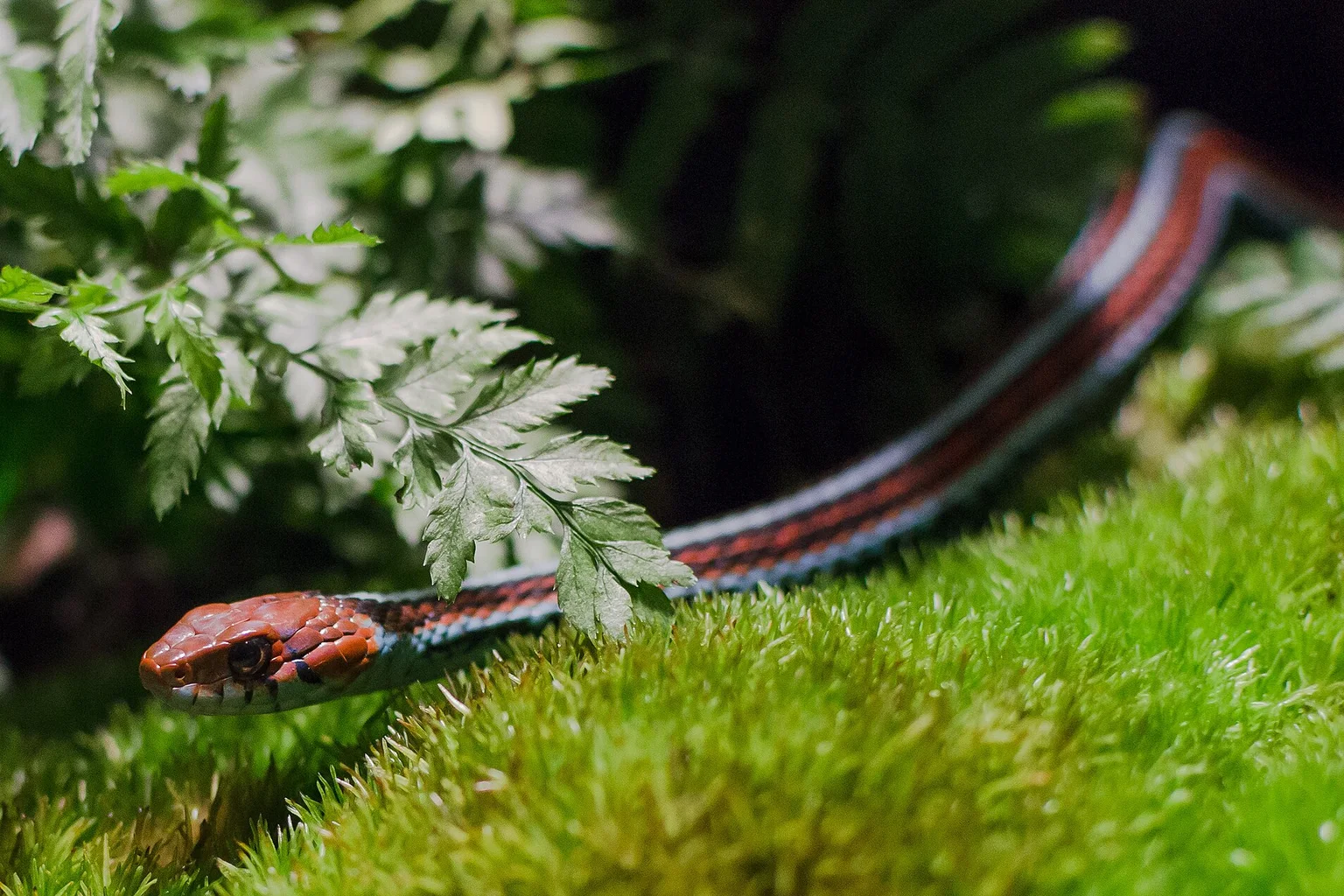
On Nov. 10, 2026, the San Francisco Zoo & Gardens and partner agencies announced that 62 young San Francisco garter snakes, born and raised at the zoo, were released this fall at undisclosed sites in San Mateo County, California. It is described as the first release from a joint head-starting program for the endangered snake.1
Announcing that you have just let 62 snakes loose is not usually a crowd-pleaser. The Washington Post felt it necessary to assure readers in its headline that this was good news.6 It is, though with an important caveat: these are juveniles just released, and nobody knows yet how many will survive.
The San Francisco garter snake lives only in San Mateo County and a small part of Santa Cruz County. It was on the first federal endangered species list in 1967.1 The zoo estimates only a couple thousand remain, and SFist, citing KQED, reports scientists put the number at fewer than 2,000, scattered in isolated populations on the Peninsula.14
Among its distinctions, the snake can eat the toxic California newt.4 Its troubles come from elsewhere: drought, disease, low genetic diversity, shrinking prey, invasive species, cars and illegal poaching.1
How head-starting works
Head-starting means raising young animals in safety through their riskiest early stage, then releasing them once they have a better shot. In 2025, U.S. Geological Survey biologists collected pregnant females from a healthy population in a Midpen preserve and brought them to the zoo. Garter snakes give live birth, and once they had, the mothers were returned to the wild. The zoo kept the babysitting.13
“By providing these young snakes with a safe environment during their most vulnerable stage of life, we’re giving them a stronger start in the wild,” Dr. Rochelle Stiles, the zoo’s director of field conservation, said in the zoo’s announcement.1
Every snake was genetically tested before release. About one-third went back to the area their mothers came from. The other two-thirds went to other populations that need more snakes and more genetic variety.1
The partners include Midpen, the zoo, USGS, the National Park Service at Golden Gate National Recreation Area, the U.S. Fish and Wildlife Service, the California Department of Fish and Wildlife, the Golden Gate National Parks Conservancy and the San Francisco Recreation and Park Department.1
Why the addresses are secret
The release sites are kept quiet on purpose, to guard against illegal collection, vehicle deaths and disease.1
Getting the snake off the endangered list would take at least 10 viable, self-sustaining breeding populations, each with at least 200 snakes.1 One release does not get there, and the people involved say so.
“It represents a significant step toward the recovery of the San Francisco garter snake and underscores the continued importance of partnerships and the Endangered Species Act,” Justin Sloan, acting deputy field supervisor at the U.S. Fish and Wildlife Service’s Sacramento office, said in the announcement.1
“Releasing these snakes is a significant moment, but it is one step of many in a much larger recovery effort,” National Park Service wildlife biologist Rachel Townsend said in the same release.1
What comes next
The next class is already growing. More than 130 more baby garter snakes were born at the zoo in 2026 and are being raised for releases planned for 2027. Monitoring after release will assess the effect on wild populations.13
The approach has some math behind it. A 2023 modeling study in PLOS One found that releasing head-started juveniles gave reintroduced populations of this snake the best odds of lasting. The same study found releases would need to continue for at least 15 years to keep the risk of a population nearly disappearing low.5
Did this make your day? Give it a cheer.
Sources
- A New Generation of SF Garter Snakes Returns to the Wild San Francisco Zoo & Gardens, 2026-11-10
- One of California's Most Colorful Snakes Is Getting a New Shot at Survival KQED, 2026-11-13
- Endangered, colorful garter snakes released into the wild for the first time Popular Science, 2026-11-13
- New SF Zoo Conservation Program Focuses on Raising, Releasing Garter Snakes SFist, 2026-11-15
- Comparing reintroduction strategies for the endangered San Francisco gartersnake using demographic models PLOS One (via PMC), 2023-10-05
- 62 snakes were just released into the wild. This is good news, we promise. The Washington Post, 2026-11-17