An Archaeologist Went for a Bike Ride in Wales and Came Home With a Roman Fort
Digs confirmed a Roman fort about 3 km from the peak where a medieval Welsh tale camps Emperor Magnus Maximus, though the finds don't prove he was there.

Most bike rides end with sore legs. Mark Merrony’s ended with a Roman fort. In 2024, the University of Oxford archaeologist was cycling in north Pembrokeshire, Wales, when he noticed a hexagonal Roman roofing slate poking out of the ground.24
Two years of survey work and a trial dig later, Merrony says the suspected fort is real. He also thinks it may hold the key to an old Welsh legend about a Roman emperor who camped in these hills.1 That legend link is his interpretation, not settled fact. The finds do not prove the emperor ever set foot there.3
What the dig found
Merrony ran a geophysical survey, which maps what lies underground without digging, followed by trial excavations. The big step came in early September 2026, with the excavation of five trenches.2
They turned up clay-and-stone floor bases, traces of a Roman road, a kiln, flooring that fits a granary, pottery shards and a spindle whorl, a small weight used for spinning thread. Together these support the idea of a timber auxiliary fort, the kind built for non-citizen support troops.2 Other finds include an iron stylus for writing, a game piece and fragments of ceramic tile.2
The survey also showed a rectangular central building and a larger one to its south. “This arrangement is consistent with the placement of a headquarters building orientated east and thereby ‘facing the enemy’, and a commander’s house,” Merrony said, according to a copy of the Guardian’s report.5 The dig also found extensive compacted clay floors and preserved wagon ruts.5
Merrony’s brother found two coins from the late fourth century.5
Early estimates put the fort at up to about three hectares, roomy enough for around 500 soldiers.4 Its exact location was kept secret in 2024 to protect it from looters.4
Where the legend comes in
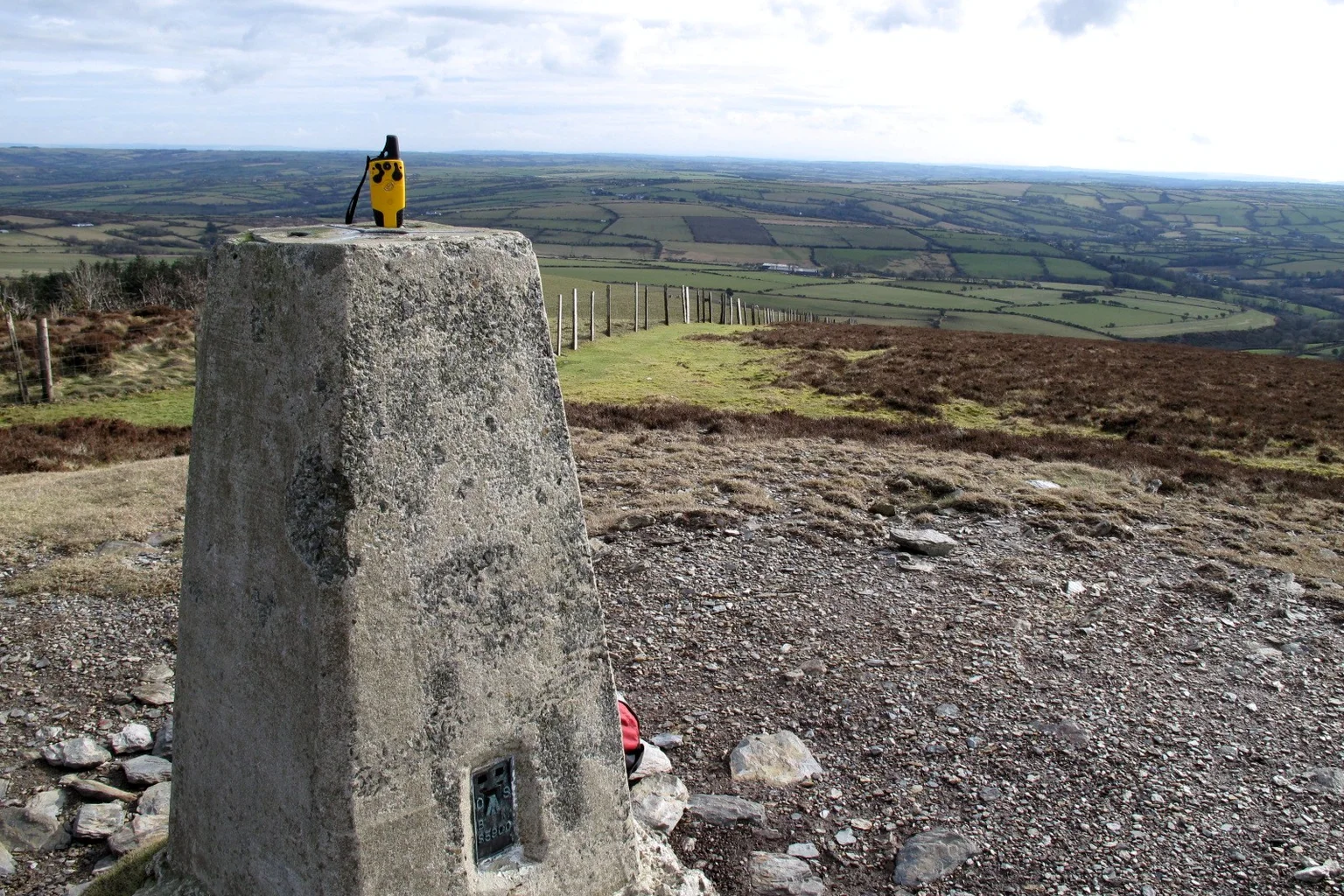
The Mabinogion, a collection of medieval Welsh tales, includes “The Dream of Macsen Wledig.” It places the emperor on Frenni Fawr, the easternmost peak of the Preseli Hills. The new fort sits a little over 3 km southwest of that peak.12
Macsen Wledig is the Welsh name for Magnus Maximus, a Spaniard whose troops proclaimed him Western Roman emperor in 383 CE. Theodosius I defeated and executed him in 388.2
Until now, no Roman camp or fort was known on or near Frenni Fawr, and Merrony notes there are no visible Roman remains on the peak itself.13 His reasoning is simple: “If Magnus Maximus was there, there must have been an army there.”2
He does not claim Maximus built the fort. He argues it was founded between 74 and 78 CE under the Roman governor Sextus Julius Frontinus, and that Maximus could have used or known about it centuries later.2 Writing in The Conversation, he called the discovery “an extraordinary fusion between myth and reality,” adding that it “demonstrates that folklore is often underpinned by fact.”2
The Pembrokeshire Herald is more cautious. It stresses that the finds do not prove Maximus visited, that the coins were left during his campaigns, or that this is the fort the tale describes.3 The findings have not yet been peer-reviewed, and so far nearly all the reporting traces back to Merrony’s own account.
Why it matters beyond the legend
Before this find, only one Roman fort was known in Pembrokeshire, at Wiston. Merrony says the new site suggests west Wales had more forts than previously thought, and he believes it sits on a previously unidentified major Roman road linking Pembrokeshire with Ceredigion.14
The dig was paid for by Oxford University and crowdfunding, and more excavations are planned.5
Did this make your day? Give it a cheer.
Sources
- I discovered a Roman fort in Wales – it may hold the key to the ancient Welsh legend of Macsen Wledig The Conversation (by Mark Merrony), 2026-10-15
- Legend Has It That This Roman Emperor Established a Camp in Wales. A Newly Discovered Fort May Offer Proof That It Really Existed Smithsonian Magazine (Meilan Solly), 2026-10-16
- Roman coins revive ancient legend of emperor's Pembrokeshire camp The Pembrokeshire Herald, 2026-10-12
- New Roman fort discovery hints at full integration of Wales into Roman Britain The Pembrokeshire Herald (Tom Sinclair), 2024-08-02
- Roman fort found in Wales could prove myth of emperor's camp is real (copy of Guardian report) bundle.app (reproducing The Guardian), 2026-10-12