Retired Parakeet Laid a Second Clutch With Her First 4 Chicks Barely a Month Old
In Christchurch, two elderly orange-fronted parakeets at Orana retired from breeding now have four chicks, a boost for a species twice declared extinct.

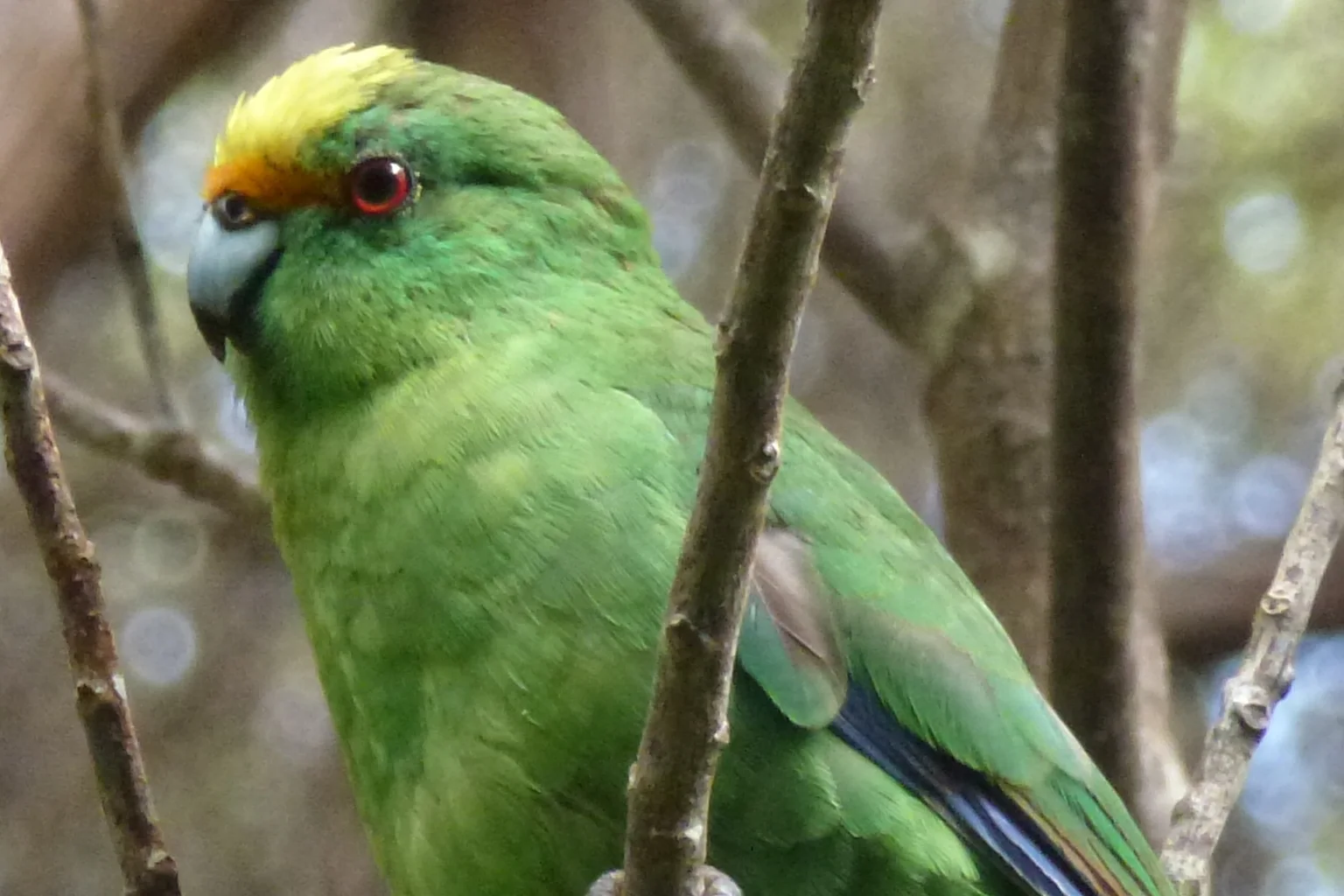
Sophia and Prince Polo, two elderly orange-fronted parakeets at Orana Wildlife Park in Christchurch, New Zealand, had been officially retired from breeding. According to reports published Nov. 23, they now have four chicks about a month old, and Sophia has laid a second clutch of eggs.12
That matters because these birds, called kākāriki karaka in te reo Māori, are critically endangered. The species has twice been declared extinct, and its population is estimated at about 450 birds.12
“The fact that this pair is breeding is a huge win for the kākāriki karaka recovery program,” said Wayne Beggs, who leads the Department of Conservation’s recovery program, in comments reported by Chris Lynch Media.2
A retirement that didn’t take
Because of their age, the pair had been moved off breeding duty and into a display area where visitors can see them. Neither bird’s exact age has been reported.12
Sophia was first paired with a male named Poldark. After he died, keepers introduced Prince Polo, another retired male, to keep her company.12 The plan was companionship. The birds had other ideas.
“Incredibly the magic happened and Sophia laid a clutch of eggs,” Catherine Roughton, Orana’s native fauna manager, told RNZ.1 Four chicks hatched. Then, about four weeks after that first clutch, with the chicks barely a month old, Sophia laid another one.2
For most couples, retirement means a quieter life. Sophia and Prince Polo kept the scenic new address and skipped the quiet part.
“Prince Polo has clearly ignited something in her,” Roughton said, as reported by Chris Lynch Media. She also offered a simpler review: “Prince Polo is a legend.”2
Why these particular birds are valuable
Both parakeets started life as eggs collected from wild nests in Canterbury’s Poulter Valley about eight years ago. That gives them important genetics, and Beggs said their chicks are valuable both to the captive breeding program and to the genetic diversity of the wild populations that captive-bred birds join.12
In a species this small, genetic diversity is a big deal. A wider mix of genes helps a population stay healthy and adaptable instead of relying on a handful of related birds.
Most of the remaining kākāriki karaka live on offshore islands and at the Brook Waimārama Sanctuary near Nelson, with a small population still hanging on in Canterbury.2
A busy season at Orana
Orana is one of only two facilities breeding the species for release, and it has bred more than 150 orange-fronted parakeets that have gone into the wild.23 The park had five breeding pairs this season, and all five females had either laid eggs or were showing interest in nesting, the NZ Herald reported.3
In a recent release, 12 birds went back to the Hawdon Valley near Arthur’s Pass, four of them bred at Orana.2
The recovery program is led by the Department of Conservation and Te Rūnanga o Ngāi Tahu, with Orana and The Isaac Conservation and Wildlife Trust as breeding partners.2
The goal is a wild population that no longer needs that help. “Ideally, we want to get to the stage where they can be self-sustaining but we’re not there yet,” Beggs said.2 Four chicks from a pair that was supposed to be done breeding are a step in that direction.
Did this make your day? Give it a cheer.
Sources
- 'Retired' pair of critically endangered kākāriki karaka stun keepers with two sets of eggs RNZ, 2026-11-23
- Retired lovebirds spark unexpected baby boom at Orana Wildlife Park Chris Lynch Media, 2026-11-24
- Orana Wildlife Park faces $2m funding gap despite council grant NZ Herald, 2026-11-06