Record 117 Baby Sturgeons Caught in One Night on Georgia's Rioni River
Fauna & Flora says its team on Georgia's Rioni River has caught more critically endangered sturgeons in 2026 than in the previous eight years combined.

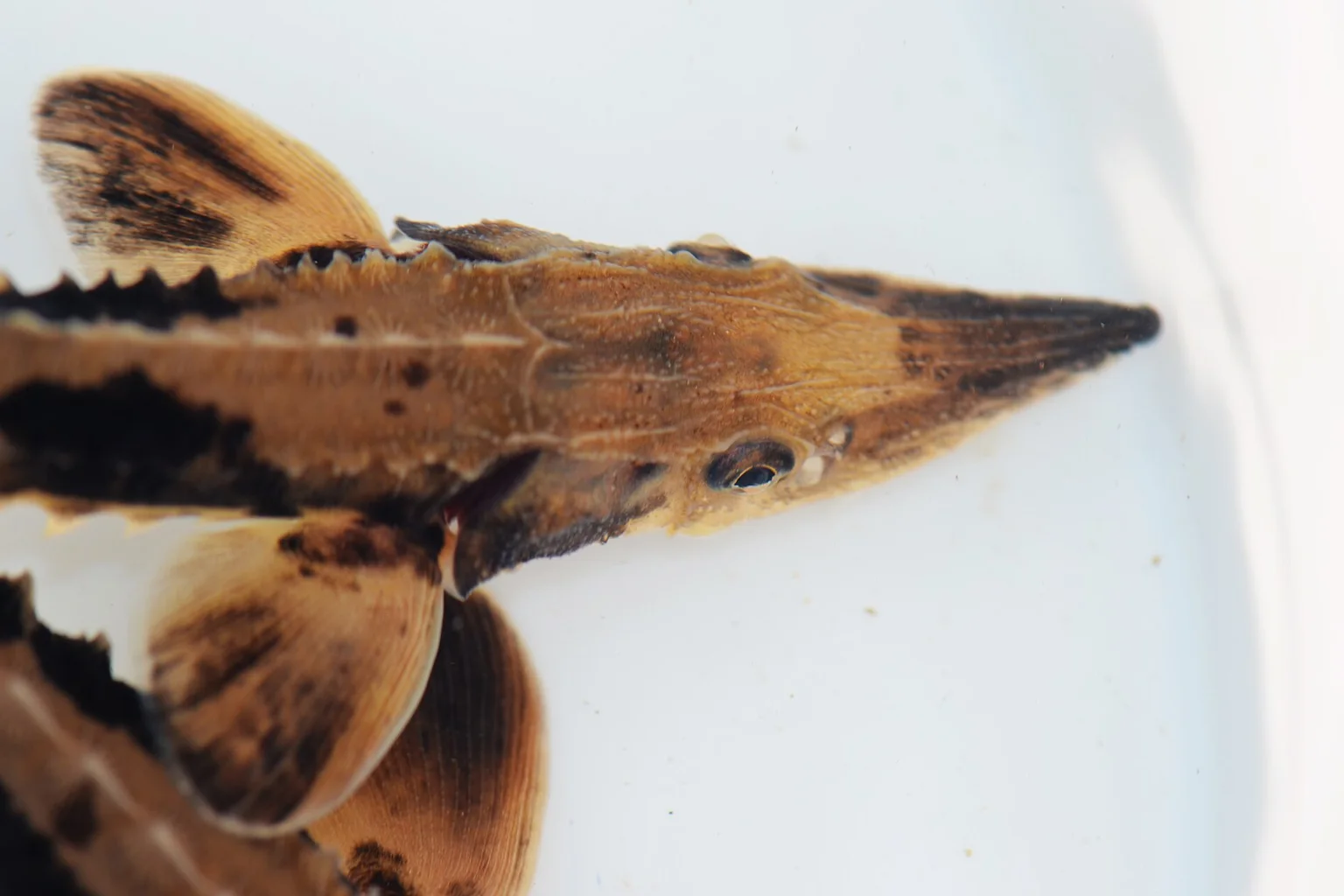
In a single night on the Rioni River in western Georgia, a research team caught 117 baby sturgeons, a record, according to an announcement from the conservation charity Fauna & Flora. Every fish was measured, sampled for DNA and released.1 (That’s the Georgia on the eastern shore of the Black Sea, not the one with the peaches.)
The charity, which leads the team with local partners, says it has caught more sturgeons this year than in the previous eight years combined. Both figures come from Fauna & Flora’s own announcement.1
Young fish are the important part. They show that sturgeons are still reproducing in the river. They do not show that sturgeon numbers are recovering.
Why baby sturgeons are big news
Fauna & Flora says that, according to the IUCN Red List (the global ranking of extinction risk), sturgeons are more critically endangered than any other group of species on Earth. All but four of the world’s 27 species are dangerously close to extinction.1
These fish once swam in Europe’s major rivers. Overharvesting, poaching and the loss of spawning grounds virtually wiped them out. Fauna & Flora calls the Rioni one of the last three sturgeon refuges left in Europe.1 Discover Wildlife describes the river, which runs about 200 miles, as one of just three spawning river systems that remain in Eurasia.2
“It is very promising to have recorded such an unprecedented number of juvenile sturgeons in Georgian waters this year,” Bianca Roberts, Fauna & Flora’s Projects and Development Manager for the Caucasus Region, is quoted as saying by Discover Wildlife.2
Years of work on the Rioni
Fauna & Flora has worked on the Rioni’s sturgeons since 2017. Its baseline studies in 2018 were the first ever done for Georgia’s sturgeons. A juvenile stellate sturgeon caught then was the first evidence of recent reproduction.13
In 2020 the team caught two juvenile ship sturgeon, a species widely believed to be extinct.1
The team works on the river from early spring to autumn. With Ilia State University, it takes genetic samples from the sturgeons it catches to identify which species survive.1 Fauna & Flora also supports 17 “citizen inspectors” who patrol the river and watch for illegal fishing, Discover Wildlife reports.2
Protection for the spawning grounds
The haul was announced months after a separate piece of news. In late May, Georgia’s parliament approved the Rioni Strict Nature Reserve in Samtredia Municipality, with 74 votes in the third reading. The 554-hectare reserve includes the stretch of river where sturgeons spawn.4
WWF Caucasus describes the area as the last remaining natural sturgeon spawning grounds in Georgia and on the eastern side of the Black Sea.5 Fauna & Flora says the reserve follows a protected area created in the Rioni delta in 2024. The two areas connect with an existing marine protected area, giving protection across freshwater, coastal and marine zones.1
The fish are still critically endangered, and Fauna & Flora says much remains to be done.1
Did this make your day? Give it a cheer.
Sources
- Little fish, big deal – Record haul of baby sturgeons offers hope for the future Fauna & Flora, 2026-10-13
- Ancient animal found in "unprecedented" numbers in Georgian river Discover Wildlife
- Sturgeons Fauna & Flora
- Parliament approves creation of Rioni nature reserve for sturgeon protection Georgia Today, 2026-05-29
- Protection of Critical Sturgeon Habitats in Georgia: From Kolkheti Expansion to Rioni Sanctuary WWF Caucasus
- Little fish, big deal—Record haul of baby sturgeons offers hope for the future Phys.org, 2026-10