One Atoll Has More Giant Tortoises Than Seychelles Has People
A study estimates almost 183,000 adult and sub-adult giant tortoises on Aldabra Atoll, Seychelles, where 19th-century exploitation left fewer than 1,000.

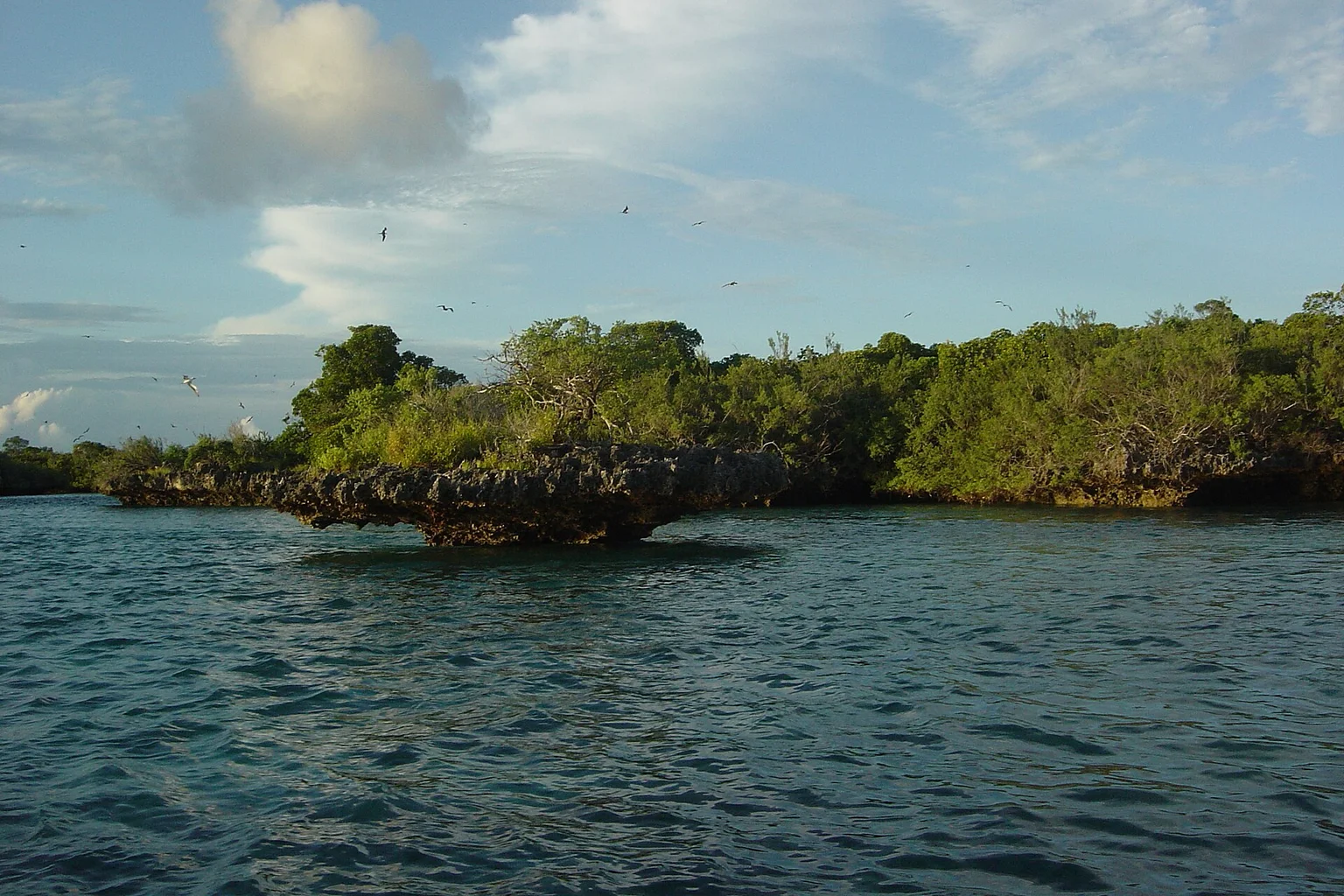
One atoll has more giant tortoises than the entire nation of Seychelles has people. A study led by the Seychelles Islands Foundation and the University of Exeter puts Aldabra Atoll’s population at almost 183,000 adult and sub-adult Aldabra giant tortoises, a modeled estimate and the highest figure ever recorded for the species.13
That is a remarkable number for an animal that nearly disappeared. Heavy exploitation in the 19th century cut Aldabra’s tortoises to fewer than 1,000. The atoll became a strict nature reserve in 1981 and a UNESCO site in 1982.13
Aldabra is one of only two places where giant tortoises live in the wild. The other is the Galapagos, which has a much smaller population.1
“More than 180,000 giant tortoises roaming freely on our atoll is proof of what long-term commitment to conservation can achieve. This is wonderful news for Seychelles, for the world, and for everyone who has worked to protect Aldabra.”
Dr Frauke Fleischer-Dogley, CEO of the Seychelles Islands Foundation, in the University of Exeter’s announcement
A record estimate, not a doubling
The researchers are careful about what the new figure does and doesn’t show. It does not mean the population nearly doubled since the last big survey, which put the number at about 100,000 in 1997 (published in 1999). A 1978 study had estimated about 150,000.24
Neither older survey corrected for tortoises that were present but never spotted, so both were most likely too low. The researchers say the population has also genuinely grown, but part of the jump comes from better counting.12
The population looked relatively stable over the study period. That finding covers only a few recent years, and whether the tortoises are still increasing remains an open question.12
How you count a slow animal that hides well
Foundation staff collected the counts between 2018 and 2022. Two observers walk fixed lines across the atoll, divided into 50-meter sections, once each wet season (November to April). They walk from sunrise to 9 a.m. and note how far each tortoise sits from the line. Greek Reporter says there are 17 routes.24
Earth.com reports that the headline figure averages four wet seasons, 2018 to 2021, which stayed fairly steady. The 2022 season was left out because only about half as many sections were walked, and the skipped ones tended to hold fewer tortoises.2 Greek Reporter gives the average as 183,274.4
The team then used a statistical approach called Bayesian hierarchical distance sampling. In plain terms, it corrects for animals the walkers missed and for how hard each habitat is to see into.1
Tortoises were densest on grassland that researchers call “tortoise turf,” followed by open exposed ground and open mixed scrub. They were harder to spot in dense scrub, mangrove and a shrub called Pemphis.12
“By modelling what we didn’t see, as well as what we did, we’ve produced the most reliable baseline yet for this iconic Seychelles species, establishing a benchmark we can use to track the population for decades to come.”
Dr Nancy Bunbury, study co-author, University of Exeter, in the university’s announcement
Room for more, and real threats
The authors argue the estimate challenges the idea that Aldabra had already hit its carrying capacity, the most tortoises the land can support, in the late 20th century. They suggest the atoll may hold more as vegetation recovers and invasive species are removed.24
Feral goats were eradicated in 2012, but feral cats and black rats still eat eggs and hatchlings, and removing the remaining invasive mammals is planned. Longer, more frequent droughts are predicted to cut shade and food, and rising seas threaten the atoll’s low-lying areas.12
The count also leaves out young tortoises hidden in thick vegetation. The team recommends adding studies that follow individual tortoises and track hatchling and juvenile survival, and surveying at least 1% of the atoll’s land each season.2
“But it’s important to remember that the numbers provide a baseline – not an endpoint.”
Dr Dave Hudson, University of Exeter, in the university’s announcement
The study, “Inferring the Abundance of an Island Megaherbivore From Semi-Structured Distance Sampling,” appears in the journal Ecology and Evolution.13
Did this make your day? Give it a cheer.
Sources
- New study reports largest-ever population estimate for Seychelles' giant tortoises University of Exeter News, 2026-10-07
- Thousands of giant tortoises have been overlooked in the Seychelles Earth.com, 2026-10-15
- Giant tortoises now outnumber people in the Seychelles Popular Science, 2026-10-09
- Giant Tortoise Population Reaches Record 183,000 in Seychelles GreekReporter.com, 2026-10-12
- Giant tortoises outnumber people in Seychelles, with nearly 183,000 on Aldabra Phys.org, 2026-10-08