Barreleye Fish Interrupted a Deep-Sea Commute and Got 20 Minutes of 4K
MBARI filmed a barreleye fish 600 meters down off Central California, only its 11th sighting in about 7,000 dives and its first in 4K.

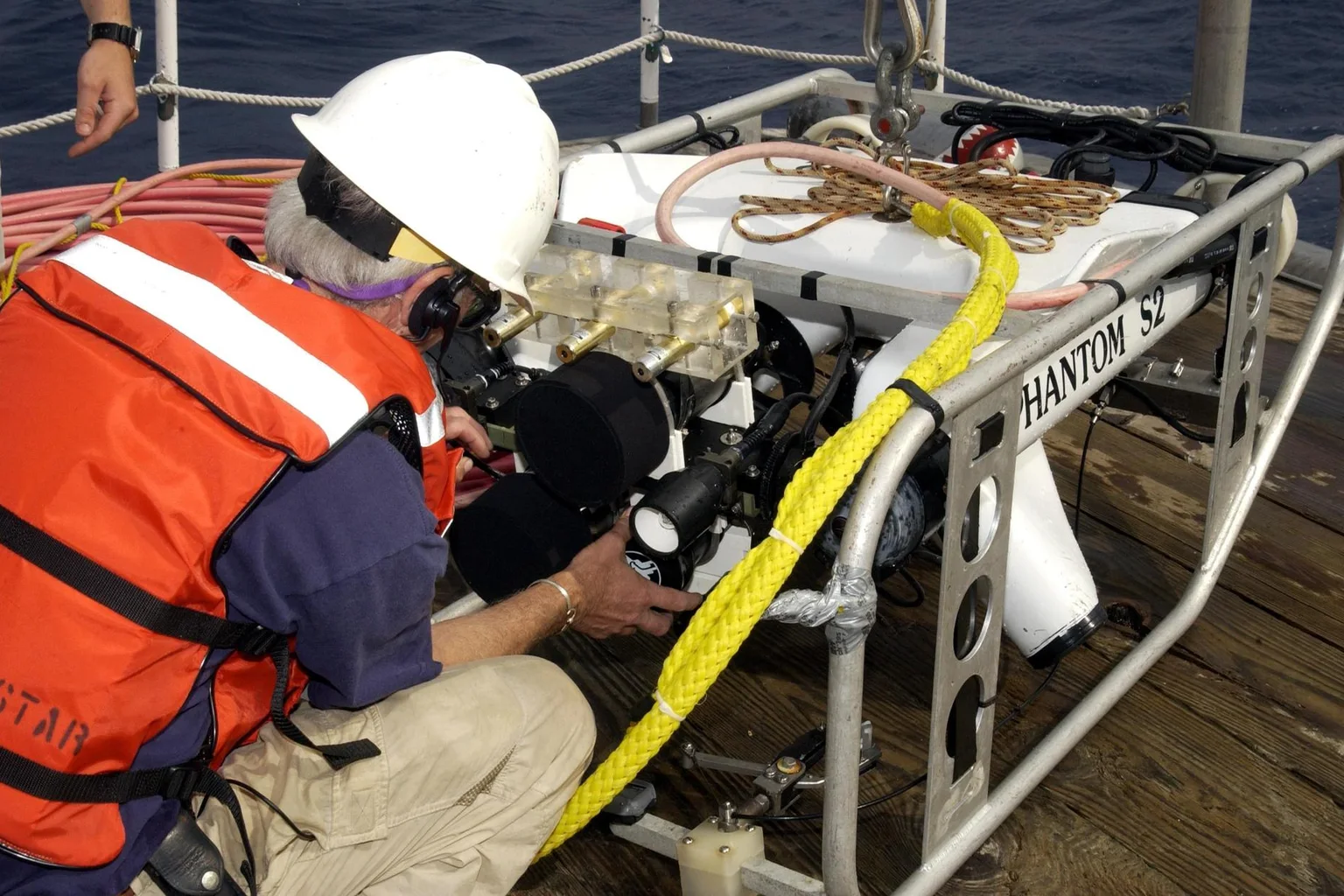
Scientists from the Monterey Bay Aquarium Research Institute (MBARI) filmed a barreleye fish, a deep-sea species with a transparent head, about 600 meters (1,970 feet) down and roughly 90 kilometers (55 miles) off Central California. MBARI announced on Oct. 28, 2026, that this was its first barreleye filmed in 4K and only its 11th sighting of the species.1
To show how rare that is, MBARI says that in nearly 40 years it has made about 7,000 dives with remotely operated vehicles (ROVs, the uncrewed submersibles that scientists steer from the ship) and recorded more than 41,000 hours of video. The last barreleye sighting before this one was in 2021.1
Spotted after the workday ended
The encounter came during an eight-day expedition called “Diving Deep for Delicate Drifters,” which studied gelatinous animals such as jellies, siphonophores and ctenophores. MBARI’s Biodiversity and Biooptics Team was filming and collecting animals with the ROV Doc Ricketts, working from the institute’s new flagship research vessel, the David Packard.14
The day’s science work was already finished. The ROV was being flown back to the surface when Research Specialist Shannon Johnson spotted the fish and asked the pilots to stop. The barreleye turned up on the commute home.1
The team watched the barreleye for about 20 minutes with the ROV’s 4K camera and tried different lighting to show off its clear head shield. Pilot Cameron Law also got close enough to record 3D stereo footage with the vehicle’s VR camera.1
“Seeing a barreleye fish is a rare treat. Crew from across the ship joined the science team in the control room, mesmerized by this remarkable animal. Deep-sea animals capture the imagination, creating wonder and awe that we hope will inspire stewardship of the largest living space on Earth,” MBARI Senior Scientist Steven Haddock said in the institute’s announcement.1
Eyes beneath a transparent dome
The barreleye, Macropinna microstoma, lives in the twilight zone, the dim layer of ocean that starts about 656 feet down, where there isn’t enough light for photosynthesis.2
It drifts there and scans the water above for the silhouettes of prey. Its tubular eyes sit beneath a dome of transparent tissue and can rotate to keep a target in view. The effect is something like a pilot looking up through a cockpit canopy, except the canopy is the fish’s own head.12
The shield is also practical protection. The barreleye plucks small crustaceans caught in the stinging tentacles of siphonophores, and the gelatinous dome guards its eyes while it does.1
“Macropinna reminds us of the surprising ways that animals have adapted to thrive in the ocean’s midwater,” Haddock said in the announcement.1
What the footage is for
MBARI did not collect the fish. The team says the footage and its close look at the barreleye’s eyes will help researchers understand how vision works in the twilight zone. The fish’s green lens pigments are thought to work like those of the strawberry squid.1
Earlier in 2026, MBARI researchers on a Schmidt Ocean Institute expedition in the mid-Atlantic also recorded footage of a different barreleye species, the binocular fish (Winteria telescopa).1
Did this make your day? Give it a cheer.
Sources
- MBARI researchers film rarely seen deep-sea barreleye fish in 4K MBARI (Monterey Bay Aquarium Research Institute), 2026-10-28
- Scientists Catch a Rare Glimpse of a Fish With a See-Through Head Nautilus, 2026-11-12
- Rare footage of barreleye fish with see-through head Oceanographic Magazine, 2026-10-29
- Scientists Filmed a Fish With a Transparent Head in 4K. It's Even Stranger Than It Looks ZME Science, 2026-11-03