A Godwit Named Phil Crossed the Arctic Ocean and Stopped on 3 Norwegian Islands
A six-gram tracker followed one bar-tailed godwit from the Wash in England to Siberia and back, the RSPB says, showing the wetlands he depends on.

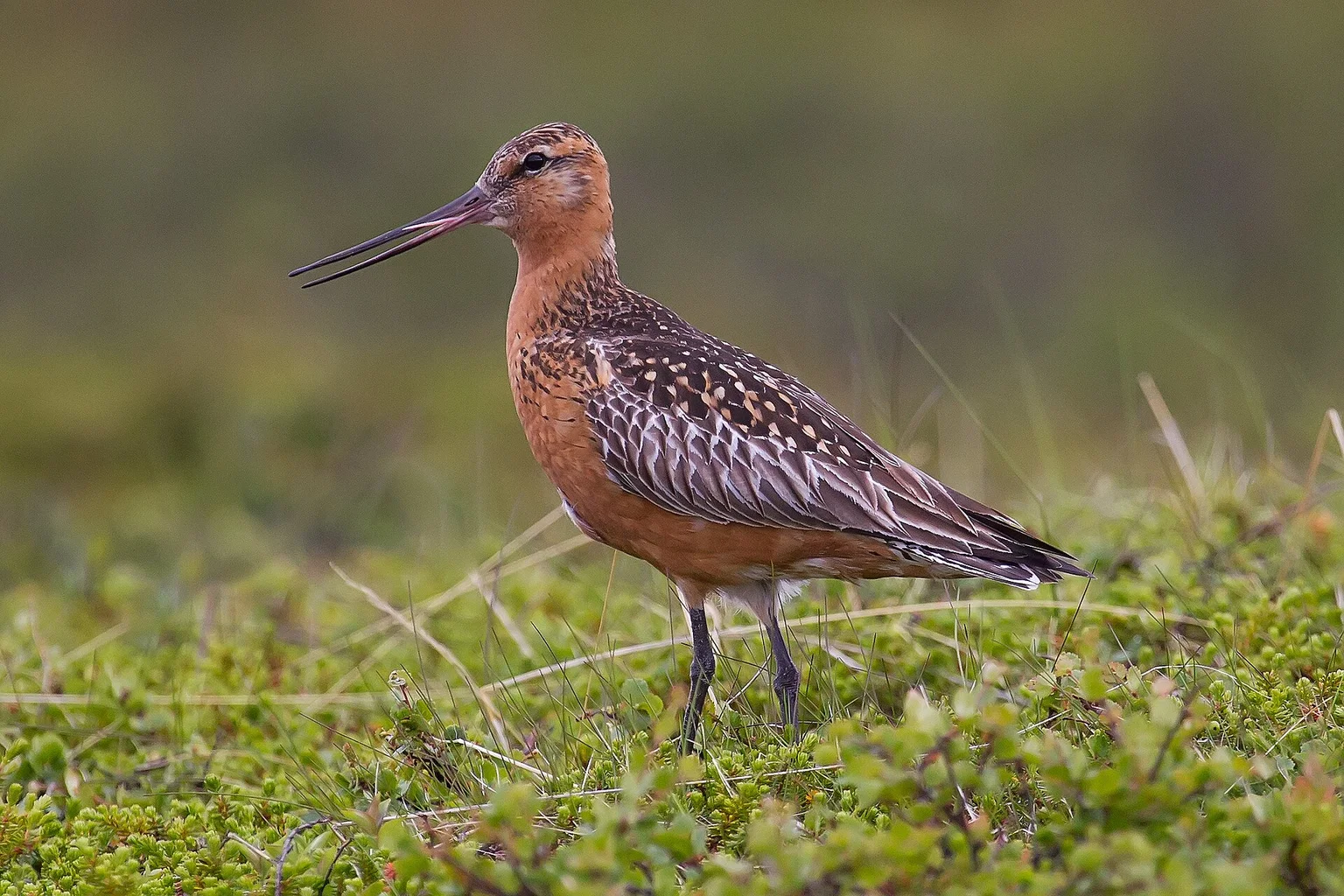
A bar-tailed godwit named Phil has completed a round trip of roughly 6,800 miles from the Wash in eastern England to Russia’s Taymyr Peninsula and back, the RSPB announced on Nov. 18. A six-gram tracker fitted in January recorded his whole route, which the charity says is the first time a UK-wintering godwit’s journey has been mapped in this detail.12
That 6,800 miles works out to about 10,950 kilometers, flown by a bird a little bigger than a pigeon, with long legs and a long bill.34
The point of all this is practical. Until recently, the exact routes of individual bar-tailed godwits wintering in the UK were largely unknown, and knowing where these birds stop shows which wetlands they depend on.2
Where Phil went
The Wash Wader Research Group fitted the tag in January. The bird is named for Phil Ireland, who led the group for many years.13
In March, Phil left the Wash, which sits on the border of Norfolk and Lincolnshire, for the Wadden Sea, the tidal coast shared by the Netherlands, Germany and Denmark. By late May he had reached the Taymyr Peninsula in central Siberia.2
He did not simply retrace his steps on the way home. Phil crossed the Arctic Ocean to northern Norway and stopped on three small Norwegian islands, then headed back through the Wadden Sea and arrived at the Wash.23
Bar-tailed godwits are known for the longest non-stop migratory flight of any bird.4 By the standards of his species, then, Phil took the version of the trip with rest stops.
“It’s amazing to think that a bird we tagged here on the Wash in January has travelled thousands of miles to Siberia and made it all the way back again.”
That was Jeff Kew, the RSPB’s coastal advisor, in the charity’s announcement.2
What one bird can and can’t tell us
Phil is a single tagged bird, so his trip shows one godwit’s route, not how every godwit wintering in Britain travels. The first-time claim and the 6,800-mile figure come from the RSPB.1
Godwits that visit the UK use the East Atlantic Flyway, a migration corridor running from the Arctic to South Africa. Phil’s trip shows how much a bird on that route depends on a chain of wetlands in different countries.2 Dr. Nigel Clark of the Wash Wader Research Group said in the announcement that “tracking birds like Phil the Godwit shows us how connected the Wash is with the rest of the flyway.”2
Kew made a similar point: “By tracking Phil, we’re reminded why protecting migratory birds needs to be a global effort.”3
The Wash is described as the UK’s most important coastal wetland for migratory waders. The East Coast Wetlands between the Humber and the Thames were recently put forward as a potential UNESCO World Heritage Site.23
Phil, meanwhile, is spending the winter at RSPB Snettisham on the Wash, alongside thousands of other waders.23
Did this make your day? Give it a cheer.
Sources
- There and back again: bird makes remarkable return to England's east coast RSPB, 2026-11-18
- Meet Phil: nature's ultimate endurance athlete whose 6,800-mile migration has been mapped for the first time Inside Ecology, 2026-11-19
- Tracked Bar-tailed Godwit completes 10,950-km round trip from Norfolk to Siberia BirdGuides, 2026-11-19
- Researchers tracked a bird named Phil. He just flew a whopping 6,800 miles Discover Wildlife, 2026-11-19
- Phil, the bar-tailed godwit, tracked in 6,800-mile migration to Siberia and back ITV News, 2026-11-18