A Fishing Cat Too Hurt to Eat Now Wears a Satellite Collar
A fishing cat rescued with a dislocated jaw grew from 5 kg to 12 kg in rehab. A 200 g collar will now track how he fares on a Bangladesh tea estate.

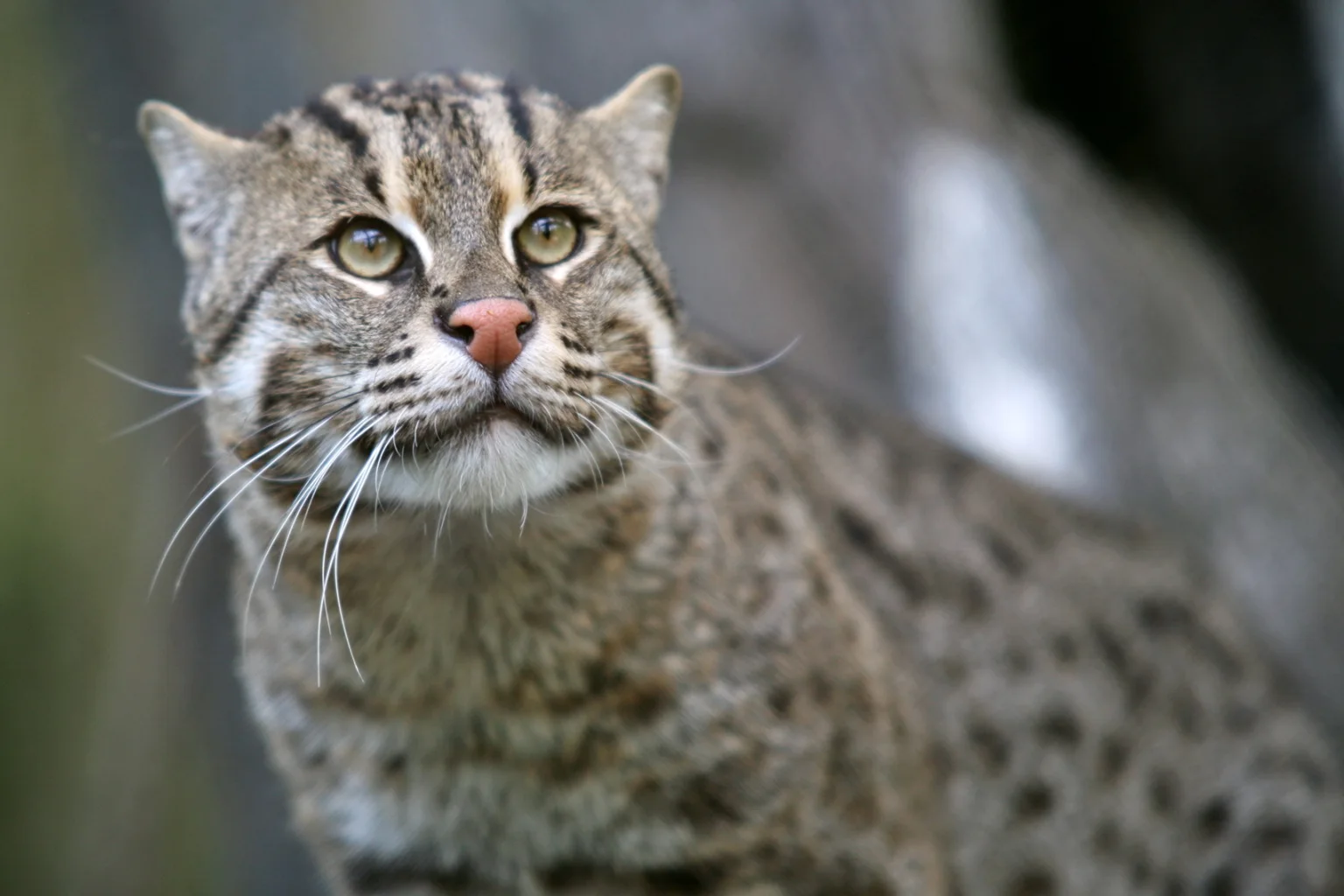
A male fishing cat that arrived at a rescue center in northeastern Bangladesh unable to feed himself, weighing barely 5 kg, has been released onto a tea estate. He now wears a satellite collar, Mongabay reported.12
Roughly 95% of the fishing cat’s range in Bangladesh falls outside protected areas.1 The collar is meant to show how the cat moves through the tea estate and uses the surrounding wetlands, and how rehabilitated fishing cats adapt to landscapes shaped by people.234
From 5 kg to 12 kg
The Bangladesh Forest Department rescued the cat in February 2026. It sent him to the Jankichara Wildlife Rescue and Rehabilitation Centre, which is run by the Creative Conservation Alliance (CCA).13 His jaw was dislocated, probably from being beaten by people, and he could not eat on his own.1
“We had very little hope that he would survive.”
That was CCA chief executive Caesar Rahman, speaking to Mongabay.1 After weeks of tube feeding and veterinary care, the cat recovered and reached 12 kg (26.5 lb).1 The Dhaka Tribune and The Business Standard call him Alfie.34
A slow return, with a tracker
Before he went free, Alfie spent more than eight weeks in a soft-release enclosure on the Ooterbhag and Indanugger Tea Estate.12
He was then fitted with a 200 g satellite collar, which is under 2% of his body weight, and released on the estate. The estate is surrounded by wetlands suited to fishing cats.24 The partners included the Forest Department, the tea estate, Ritsumeikan University, SCOPE Foundation’s Project Fishing Cat and the Fishing Cat Conservation Alliance.23
Why tea estates
Rahman says at least 135 estates in northeastern Bangladesh could host similar efforts.1
“It is still early days, but this could become a useful model for conservation in a densely populated region.”
The IUCN says there may be as many as 7,500 fishing cats in the wild.1 A study that Mongabay covered earlier found that 31% of media reports about fishing cats from 2005 to 2021 were about their deaths. Nearly half of those involved fish and duck farmers killing the cats on sight.1
An outside view
Muntasir Akash, a zoologist at the University of Dhaka who was not involved in the project, offered a more measured description in Mongabay:1
“Every life matters. But from a rewilding perspective, it is not rewilding per se. It is a conflict translocation.”
Akash also says time in rehab does little to build the spatial memory a free-ranging cat needs. He still calls the collaring a milestone for studies of how animals use space in Bangladesh.1
Whether Alfie thrives is not yet known, because the tracking has only just begun. The collar should show where a cat that was once too hurt to eat goes when he is on his own.13
Did this make your day? Give it a cheer.
Sources
- Fishing cat rescue-and-release offers potential model for conservation in Bangladesh Mongabay, 2026-10-29
- Rehabilitated fishing cat released into wild with satellite collar The Daily Star (Bangladesh)
- Rehabilitated fishing cat 'Alfie' returns to wilderness with satellite collar Dhaka Tribune, 2026-10-26
- Rescued fishing cat Alfie released with satellite collar after rehabilitation The Business Standard (TBS News), 2026-10-25