Dwayne Ferguson Likes to Run Alone. His Marathon Entry Took a Whole Crew
A Marine veteran in addiction recovery and a 22-year-old from Brooklyn trained for the Nov. 1 New York City Marathon with help from running groups and mentors.

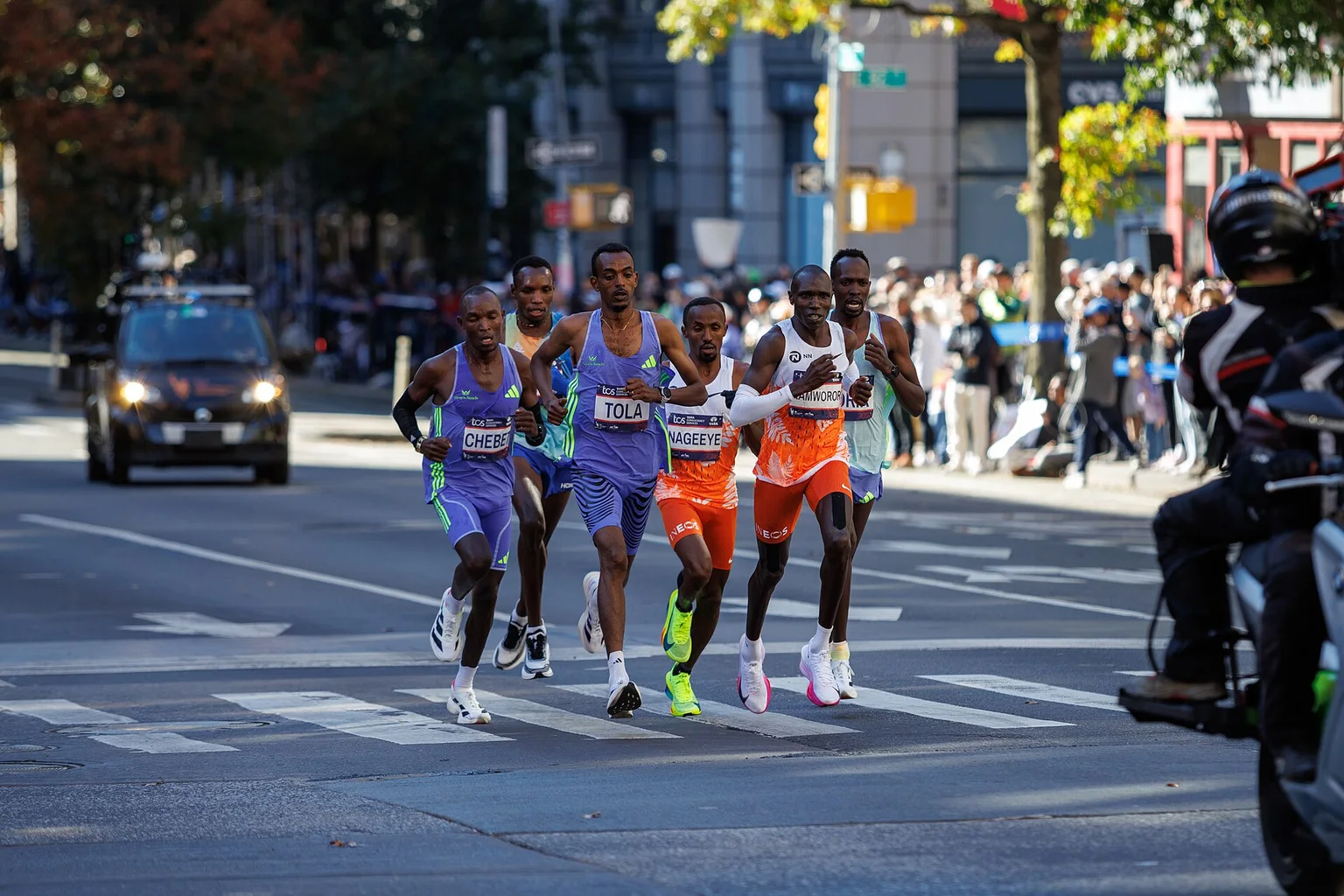
Two men who have faced homelessness, Marine Corps veteran Tim Blackmore, 42, and Dwayne Ferguson, 22, of Brooklyn, were preparing to run their first New York City Marathon on Nov. 1, according to a CNN profile published Oct. 31. Both say running has brought them calm and confidence through hard years, with help from nonprofits and mentors.1
Neither man treats running as a cure. Each one leaned on several kinds of help: a recovery shelter, a running nonprofit, sponsors and people who made a phone call on their behalf. Running is the part that gets them out the door in the morning.2
Tim Blackmore: from detox to a starting line
Blackmore’s mother died in 2023. Afterward, he told CNN, he turned to alcohol and cocaine, left his job and his apartment on Long Island, and kept relapsing in a recovery program. He went through detox and in 2025 moved into a shelter that supports people in recovery.2
That shelter connected him with Back on My Feet, a nonprofit that partners with shelters and uses running and community to support people experiencing homelessness. He ran nearly every day at first and finished a half marathon within months. The group later sponsored his marathon entry.2
“If it wasn’t for running, I probably wouldn’t be sober.”
Tim Blackmore, to CNN2
Today Blackmore works as a union laborer in construction and runs about three times a week for his mental health and his training. He says he is maintaining his sobriety, and he was preparing to move into his own apartment in December. He hoped to finish the marathon in under three hours. He has also set his sights on an ultramarathon, a race longer than a marathon.2
He invited his twin brother, Daniel, to train with him. Daniel now volunteers with the group, so the family now has one runner and one volunteer in it.2
He wasn’t the only one from the program in the race. CNN reported that nine other runners connected to Back on My Feet were also entered. Four were experiencing homelessness, and the rest were alumni who had found housing and jobs.23
Dwayne Ferguson: a writing class, a running crew and a shoe sponsor
Ferguson has stayed with his girlfriend’s family since a disagreement with his mother left him without a home. He wanted to avoid a shelter. He is interning with a program that feeds children and families, is saving to rent a room, recently earned his GED and hopes to go to college.2
His route to the marathon ran through a writing class. Next PAGE is a creative writing program for young people in detention and reentry that takes trauma into account. Its founder, Emily Palmer, encouraged him to enter and introduced him to the running group Harlem Run. Group leader Jesse Liriano sponsored his registration, and the group helped him land a shoe sponsor.2
His goal was simply to finish. He says running helps him sleep and think more clearly.2
“It takes a lot of stress off my shoulders, to be honest.”
Dwayne Ferguson, to CNN2
Both men say they plan to keep running after race day.2
What their stories suggest for the rest of us
- Find a group, not just a route. Back on My Feet CEO Nathan Watt told PIX11 that the program pairs group runs with workshops, personalized support and one-on-one mentoring. Researcher Amy J. Kemter, who coauthored a 2022 study of a pilot running program for people experiencing homelessness and substance use disorder, told CNN that running can build confidence and social connection.32
- Hard wins carry over. “To know that you’re good at something that’s really hard has really put so much more confidence in me for other hard things in my life,” Blackmore told CNN. A 2024 systematic review coauthored by Jo Dawes of University College London found that physical activity can support well-being, social connection and a sense of achievement for adults experiencing homelessness.2
- Make it fit your actual life. Ferguson usually runs alone in the morning, and he has struggled to find training time between work, school and money worries. Blackmore went from almost daily runs to about three a week once he was working.2
“Whether we have a home or not, we’re all humans, we all have our needs, we all need to be well,” Dawes told CNN.2
The race they trained for was held on Nov. 1. New York Road Runners, which organizes it, says it became the first marathon ever to pass 60,000 finishers.4
Did this make your day? Give it a cheer.
Sources
- 'Runner's calm' steadies two first-time NYC marathoners without a home (CNN, nyc-marathon-homelessness-recovery-wellness) CNN, 2026-10-31
- 'Runner's calm' steadies two first-time NYC marathoners without a home (CNN Wire via KEYT) KEYT / CNN Newsource, 2026-10-31
- From rehab to NYC Marathon runner: 'You can do anything' PIX11, 2026-10-31
- 2026 TCS New York City Marathon First Marathon EVER to Exceed 60,000 Finishers New York Road Runners (NYRR), 2026-11-02
- FundRace - Back on My Feet Back on My Feet