Retirees May Find Mahjong Supplies the Challenge Work Did, Minus the Meetings
University of Iowa experts say games like mahjong, bridge or crosswords, shared with other people, can support healthy aging through challenge and connection.

On Nov. 5, experts from the University of Iowa’s nursing, gerontology and business programs said in a Q&A published by Iowa Now that mentally stimulating activities done with other people, such as bridge, crosswords or learning mahjong, can support healthy aging. Learning a new game stretches working memory, they said, while a familiar favorite still offers valuable regular stimulation.1
This is not a new study. It is a university Q&A in which its own experts sum up what research suggests: activities that combine a mental challenge with social connection can play an important role in healthy aging and well-being.1 The prescription is affordable and sociable, and it involves snacks more often than most prescriptions do.
Here is what the experts said, and where the evidence is still thin.
Your favorite game still counts
If your weekly card game is the same one your group has played for decades, nobody is asking you to quit. Juliana de Souza Talarico, an associate professor in the UI College of Nursing, said in the Q&A that “regular cognitive stimulation, not necessarily one particular game, is what matters.”1
Janel Meints, a recreation therapist at the Csomay Center for Gerontological Excellence, compared old and new games this way: “The difference is maintenance vs. growth.” A familiar game draws on long-term memory and strategies you already know. A new one works your working memory and your cognitive flexibility, which is the ability to adjust to new rules, situations and strategies.1
“There is nothing wrong with continuing to play the same game over and over again, but a new game will help build new skills and promote continued cognitive growth.” Janel Meints, in the Iowa Now Q&A
Why new rules feel harder with age
Cognitive aging differs from person to person, the experts noted. On average, though, “fluid” abilities such as processing speed, working memory and solving unfamiliar problems get harder earlier. “Crystallized” abilities such as vocabulary, knowledge and expertise generally hold up longer.1
So the part that feels toughest about a new game, remembering which tiles do what, is the kind of thinking it exercises.
Mahjong is promising, not magic
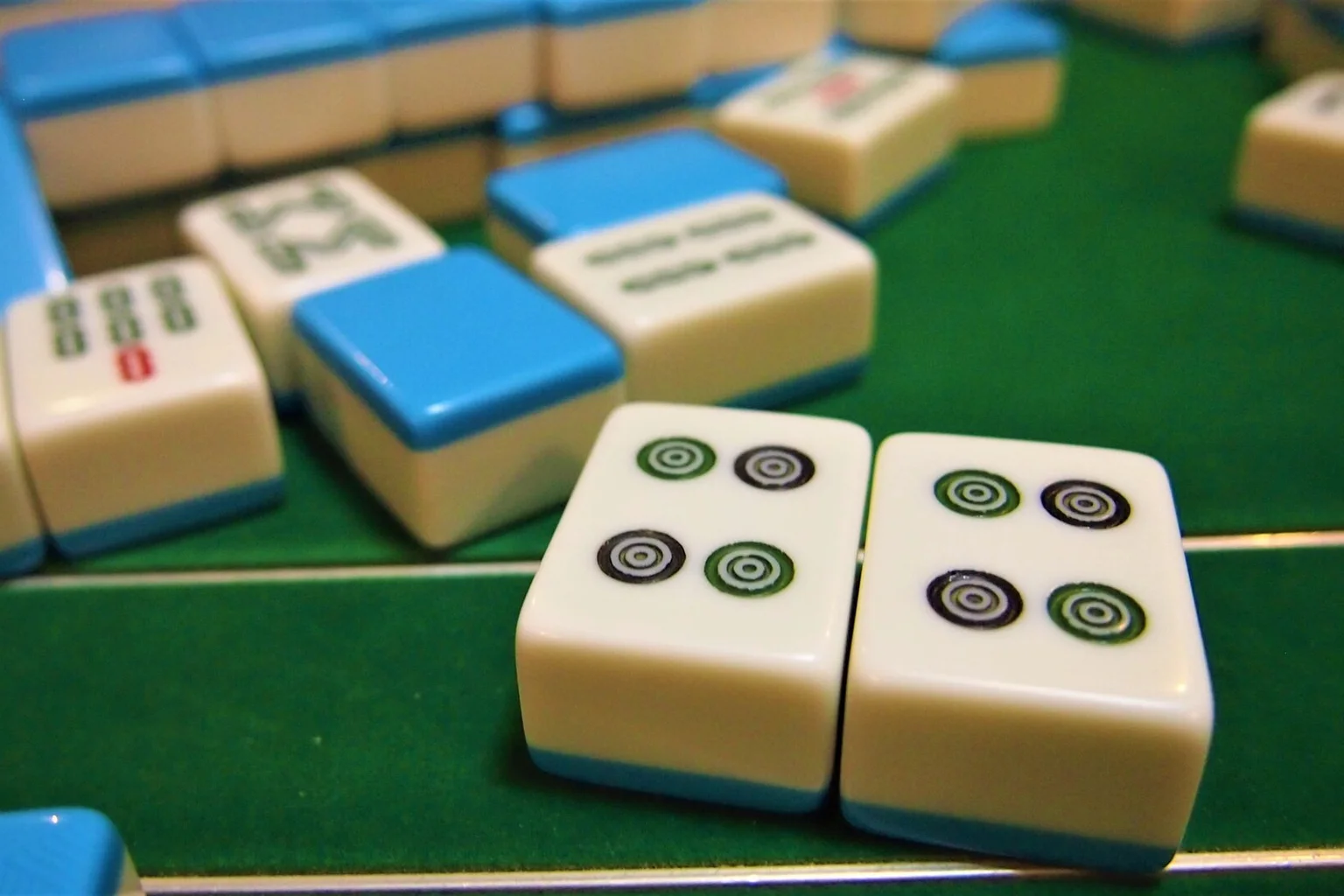
Mahjong is a tile game that asks players to spot visual patterns, hold information in mind, pay attention, plan ahead and change strategies on the fly. A few studies suggest it may benefit executive function, the mental skills behind planning, focus and switching between tasks. The Iowa experts were careful to add that researchers cannot yet say mahjong is better for the brain than other mentally engaging games.1
Some of the supporting research comes from China. A 2025 study in Frontiers in Public Health looked at 36,934 adults aged 45 and older and found that playing mahjong or bridge was linked to higher reported well-being, with social interaction and cognitive ability helping explain the link.2 That study used cross-sectional data, a snapshot of people at one point in time, so it shows an association rather than proof that the games caused the benefit.
The “with other people” part matters
Jen Jones of the Csomay Center said positive social relationships are central to quality of life and health. Social isolation and loneliness are associated with higher blood pressure, poorer health, worsening chronic conditions and a weaker sense of purpose. Some health providers now use “social prescribing,” which means connecting isolated people with community activities.1
The National Institute on Aging has made similar points. It says isolation and loneliness can affect older adults’ physical and mental health, and that older adults who reported them showed poorer cognitive function four years later.3 An NIA-funded analysis reported that feeling lonely raises dementia risk by 31%.4
Especially helpful during big life changes
Amy Colbert, a professor in the Tippie College of Business, said these benefits matter most when a life transition takes away other sources of challenge and connection. New parents are one example. Retirees are another.1
“People who have retired may find that learning mahjong provides the challenge that they used to find at work,” Colbert said in the Q&A.1 Unlike work, nobody will schedule a meeting to discuss the tiles.
Did this make your day? Give it a cheer.
Sources
- Want to age well? It's time to start playing well with others Iowa Now, University of Iowa, 2026-11-05
- The effect of mahjong/bridge intellectual sports on the subjective wellbeing of middle-aged and older adults: an empirical analysis from the mixed cross-section data of CHARLS in China Frontiers in Public Health (via PubMed/PMC), 2025-05-01
- Social isolation, loneliness in older people pose health risks National Institute on Aging, 2019-04-23
- Social Isolation and Loneliness National Institute on Aging, 2025-01-16