Small Blues Were Never Recorded on This Sussex Farm. 2 Years Off Wheat, 85 Were Counted
Halnaker Hill Farm swapped four decades of wheat for wildflowers. Surveyors have now logged 28 butterfly species, including two nationally important newcomers.

For about four decades, the fields at Halnaker Hill Farm in West Sussex grew wheat. The last crop came off in 2024. This year, butterfly surveys on the same ground recorded 5,290 individual butterflies from 28 species, according to the project’s announcement.12
That total is a tally, not a headcount of one sunny afternoon. It adds up butterflies counted across three main surveys in May, June and July plus 127 additional counts. So it shows how much activity the site had over the season, not the exact size of any population.1
The result matters beyond one farm. The restoration is paid for by selling biodiversity credits to developers, a funding model some people distrust. Its backers say Halnaker is evidence that the approach can deliver real wildlife gains.2
Two new arrivals on the list
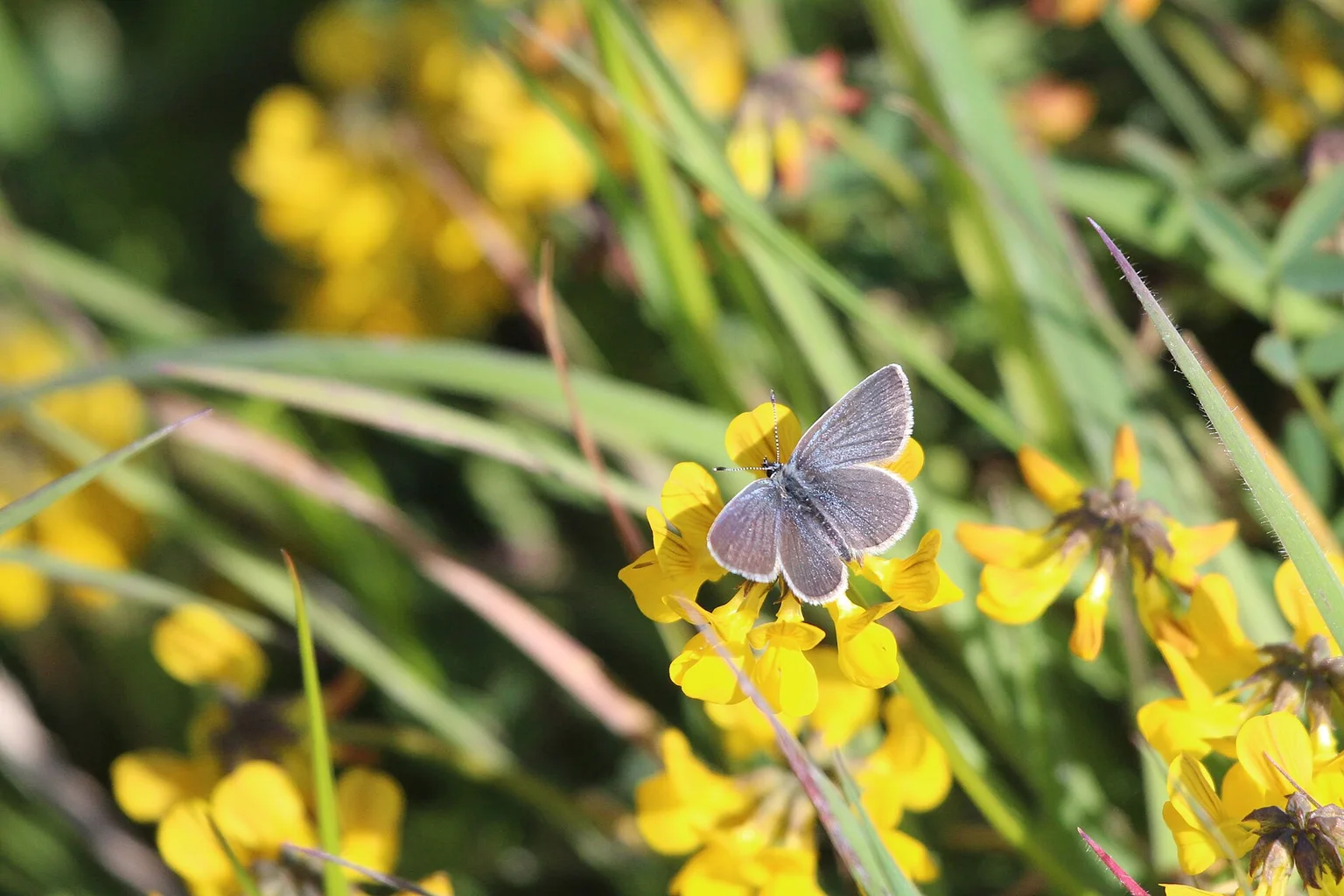
The surveys found 85 small blue butterflies and seven dingy skippers. The project says neither had been recorded at the site before.1 Both are listed as species of principal importance under the NERC Act 2006.1
Small heath butterflies, already known on the farm in smaller numbers, turned up 547 strong. Surveyors also counted eight sulphur pearl moths, a highly localized species usually seen in ones and twos.1 By sulphur pearl standards, eight is a crowd.
The surveys were carried out by Neil Hulme, a butterfly expert and conservationist who works with groups including the South Downs National Park Authority and Butterfly Conservation.1 Beyond the butterflies, he reported a profusion of skylarks, corn buntings, hobbies and dragonflies.2
“The speed has amazed me, from a sterile landscape to one brimming with butterflies,” Hulme said in the Guardian’s report.2
What changed on the land
The farm covers 330 acres (133 hectares) and is part of the South Downs National Park Authority’s ReNature program, which is working to transform more than 7,700 hectares.12
Since that final harvest, the fields have been sown with a specialist wildflower mix. Seven kilometers of hedgerow have been planted, seven hectares of woodland created, three ponds dug and 54 hectares of herbal leys seeded. On the existing chalk grassland, controlled mob-grazing was brought in.2
Hulme says boosting nature on chalk is relatively simple for a land manager: scrape off the nutrient-rich topsoil and sow specialist chalk grassland wildflowers. He notes this applies when the site is not near existing chalk grassland.2
In the project’s announcement, he said the data “clearly indicate how rapidly and spectacularly the rich mosaic of habitat types at Halnaker Hill Farm has developed, in terms of its ecological value, at a remarkably early stage in the project.”1
The money side
Halnaker is a commercial project. It is owned by Halnaker Hill Natural Capital, with its business side managed by Chichester-based Kingsbridge.13 It will deliver more than 850 biodiversity net gain (BNG) units. These are credits that developers, companies and individuals can buy to meet environmental obligations.13
Hulme acknowledges that some people are uneasy about BNG and the idea of putting a price on nature. He argues that projects like this one show it can work. “This isn’t greenwashing; this is the real deal,” he said in the Guardian’s report.2
That is his view, and the people quoted about the results all have ties to the scheme or its partners. Nick Heasman, head of natural capital at the South Downs National Park, called the results “extraordinary” and said “it’s exciting to see nature bouncing back at this beautiful site.”1
Did this make your day? Give it a cheer.
Sources
- Nationally important Small Blue and Dingy Skipper butterfly species found for the first time at Halnaker Hill Farm renaturing project Inside Ecology (republishing the project's press release), 2026-10-22
- ‘This isn’t greenwashing’: thousands of butterflies surprise experts on restored West Sussex farmland | Wildlife (republished Guardian text) newsbeep.com (copy of The Guardian), 2026-10-22
- South Downs rewilding project boosts butterfly numbers at beauty spot Sussex Express (Press Association photos and release material)
- Helping rare butterflies take flight again Halnaker Hill Farm