Hidden Cameras in the Spinifex Caught Dingoes Eating Feral Cats
Hidden cameras and dingo droppings in WA's Great Sandy Desert show dingoes eating feral cats, which could help bilbies if it means fewer cats.

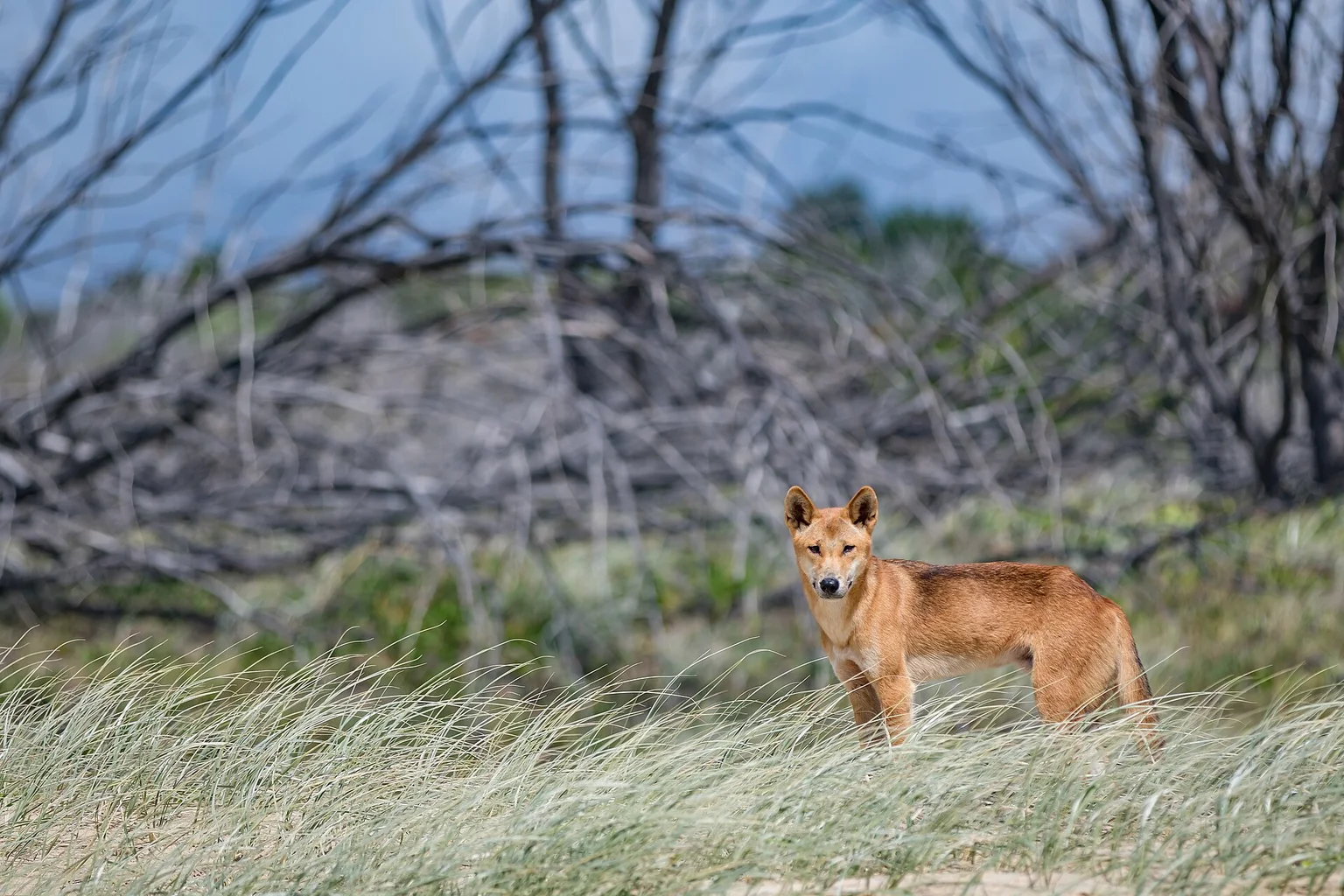
Motion-activated cameras hidden in the spinifex of Western Australia’s Great Sandy Desert have caught dingoes hunting and eating feral cats. The Nyangumarta rangers who work there are glad to see it.1
Early numbers suggest it isn’t a one-off. For the past six months, the Wartaji research project has studied dingo scat (droppings, the raw material of diet science). That work indicates feral cats now make up nearly 30% of what the dingoes eat. The figure is preliminary and has not been published.1
That matters because feral cats eat a great deal of native wildlife. According to WA’s Department of Biodiversity, Conservation and Attractions, a single feral cat roaming the desert kills more than 700 small animals a year.1 If dingoes keep cats down, native species could benefit. The project has not yet reported whether cat numbers have actually fallen or whether any species has recovered.
Rangers leading research on their own Country
The Nyangumarta Rangers commissioned the project in 2022 in partnership with Central Queensland University. Wartaji means “dingo” in the Nyangumarta language. The team wants to learn how dingoes move, what they eat, what role they play in the environment and how they interact with feral cats and foxes across the Nyangumarta Indigenous Protected Area.1
That is a lot of ground. The Great Sandy Desert is Australia’s second-largest desert, covering about 300,000 square kilometers from Eighty Mile Beach on the Kimberley coast to the Northern Territory.1 A 2024 paper in the journal Wildlife Research described how the Indigenous-led project was set up and how it builds monitoring skills among the rangers.4
The rangers see the dingoes as protectors of native animals. That view comes from what they observe on Country, not from measured outcomes.
“It’s good when the dingoes eat cats, because they are killing our precious animals, like the Greater Bilby and desert mouse,” ranger Roberta Hunter told ABC News.1
“It’s good the dingoes are bringing them down,” fellow ranger Elliot Hunter told the ABC.1
The cats in question aren’t small. Rangers report that feral cats in the area are larger than usual. The ABC noted that an average domestic cat weighs 4 kilograms, while feral cats regularly reach 6. That 6-kilogram figure is a general one rather than a local measurement.1
Four collared dingoes and a lot of walking
Researchers have fitted satellite collars to four dingoes named Venus, Elliot, Carlo and Robin. Elliot, Carlo and Robin are a family, and the team has located their den.1
“They travel around 80 kilometres a week together,” lead researcher Linda Harper of CQUniversity told the ABC. Venus covers more than 180 kilometers a week, which makes the family’s routine look like a stroll.1
What the wider science says
Whether dingoes really keep feral cats in check is still debated among scientists. A 2019 University of New South Wales study at the dingo fence in the Strzelecki Desert, a different region, found that dingoes did suppress feral cat numbers.3 Foxes are part of the Wartaji study, but no fox findings have been reported yet.1
An old relationship
The research builds on a much older bond. Mangala woman Djinaparli lived a traditional life with trained hunting dingoes near Punmu until a drought in the 1970s forced her family to leave the desert. She now lives in Bidyadanga.1
“We look after the dingoes, and then they look after us, our country,” Roberta Hunter told the ABC.1
Did this make your day? Give it a cheer.
Sources
- Research shows dingoes in WA's Great Sandy Desert protect native wildlife by eating feral cats (headline: Dingoes play vital role in protecting animals from feral cats in desert) ABC News (ABC Kimberley), by Natasha Clark, 2026-10-17
- Research shows dingoes in WA's Great Sandy Desert protect native wildlife by eating feral cats - Australia News Beep Australia News Beep, 2026-10-17
- Dogged researchers show that dingoes keep feral cats in check UNSW Sydney Newsroom, 2019-04-01
- Traditional owner-led wartaji (dingo) research in Pirra Country (Great Sandy Desert): a case study from the Nyangumarta Warrarn Indigenous Protected Area Wildlife Research (CSIRO Publishing / ConnectSci), 2024-09-01